

Prediction markets are attracting interest from trading platforms, sportsbooks, crypto companies and other operators, but long-term adoption in Asia will depend on regulation, liquidity, market design, local relevance and whether users return after headline events fade.
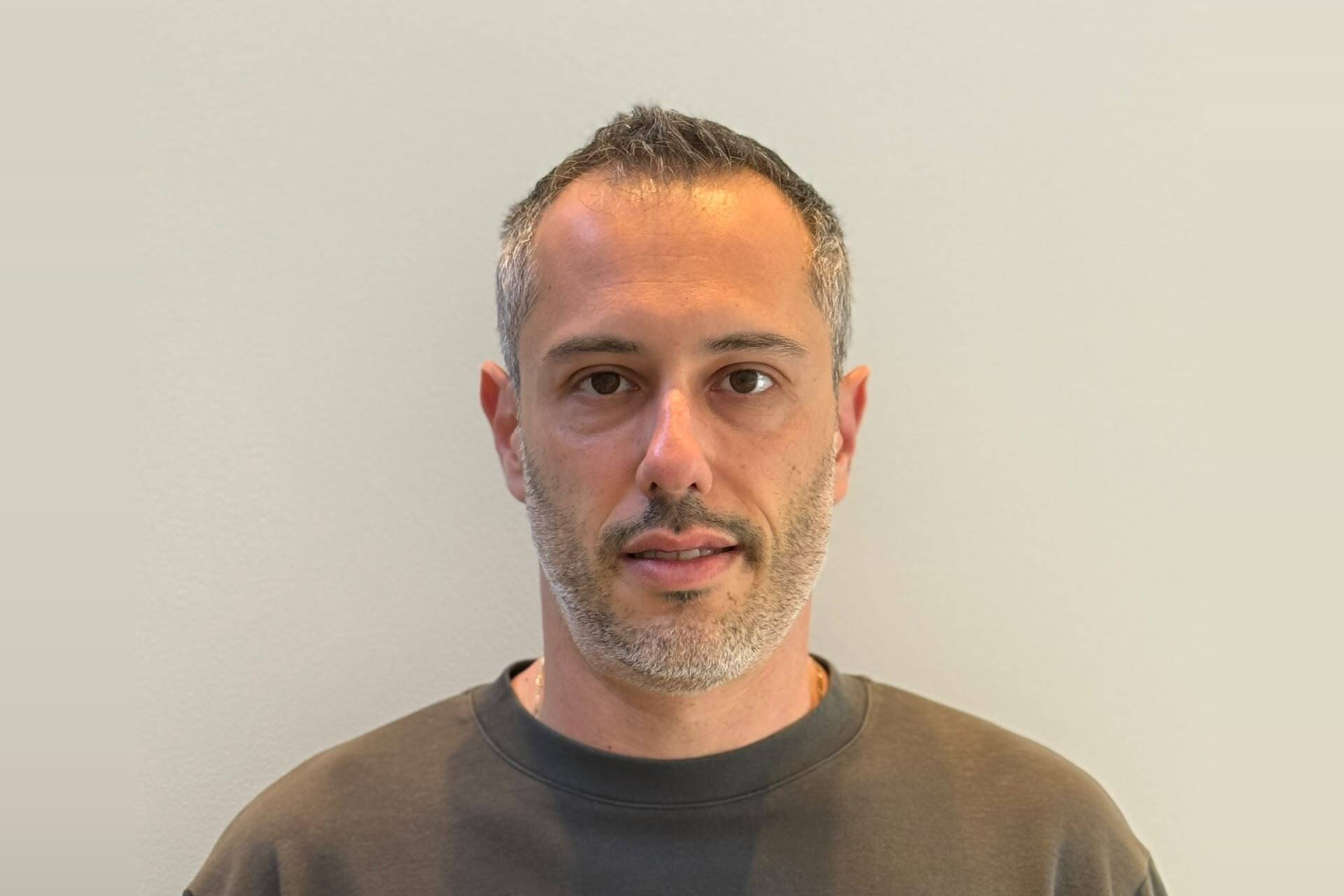
In this TNGlobal Q&A, Leon Okun, Founder and CEO of Plaee, discusses what would distinguish durable prediction-market adoption from novelty, how operators should approach fragmented Asian regulation and where responsibility sits between infrastructure providers and operators.
What is driving operator interest in prediction markets in Asia now, and how much of that demand is coming from actual users versus companies looking for the next trading or engagement product?
Both consumer- and company-side demand is driving this interest. Consumers across Asia are highly digitally engaged and closely follow real-world events. Prediction markets give them a new way to express a view on those events through a financial position, while also creating real-time signals of how collective expectations are changing.
At the same time, operators see prediction markets as a powerful new product offering. Prediction markets trade 24/7 and typically see the most activity around culturally relevant moments, opening a new, recurring revenue stream.
What would distinguish durable adoption from a short period of speculative interest or novelty? Which usage or retention metrics matter most?
Novelty gets users through the door, but utility is what keeps them there. Because event contracts are a fundamentally new asset class, it’s completely natural that early activity is driven by curiosity and traders testing out the mechanics.
Durable adoption happens when the market transitions from speculative novelty to genuine financial utility – specifically when event contracts are recognized as legitimate assets and integrated into broader trading strategies as hedging tools. Long-term value is unlocked when traders use these contracts to systematically manage macro, policy, or market risks alongside their traditional portfolios.
In terms of metrics, top-of-funnel sign-ups and short-term trading volume can easily mask temporary hype. The metrics that actually prove durable retention are open interest stability, 90-day cohort retention, and recurring trading frequency tied to macro risk cycles. When you see traders consistently returning to hedge specific real-world risks rather than just chasing headline spikes, that’s the inflection point from novelty to lasting adoption.
Asian markets take very different regulatory approaches to event contracts, gaming, derivatives and crypto-linked products. How should an operator decide where a prediction-market product can be offered responsibly?
Across Asia, the rules for prediction markets are still being discussed and developed alongside the industry itself. For operators, that means assessing each jurisdiction independently: whether existing financial, gaming, or other applicable laws allow them to serve users, and whether their infrastructure can meet existing licensing, KYC, and consumer protection requirements.
Operators should also understand how regulatory approaches are evolving by engaging with local regulators and counsel to ensure that compliance is baked into the architecture from the get-go, rather than bolted on as an afterthought.
What do operators most often underestimate when they enter the category: licensing, liquidity, market design, user acquisition, settlement, compliance or something else?
Most operators underestimate how interconnected those pieces are and the significant infrastructure required to maintain each. On the backend, you need risk controls, compliance rails, and sufficient liquidity, while maintaining a smooth interface, compelling event contracts, and strong user engagement features on the frontend.
The real challenge is infrastructure – building each of the components is a company-sized problem. Getting the entire stack to work together at scale is much harder – and exactly the problem Plaee was designed to solve.
How important is local market relevance? Beyond language translation, what kinds of topics, market structures or user behavior actually need to be localized?
Local relevance is a must, because prediction markets work only when people care about the events they are trading on. Operators need to know what their users pay attention to culturally, socially, and economically, and build locally relevant markets around those interests.
The product experience also needs to fit local behaviors. How users discover markets, the types of contracts they understand, how frequently they trade, and what drives them to return can differ significantly between audiences.
That is why operators need flexibility and ownership over the experience. The infrastructure can be global, but the experience needs to feel local.
Prediction markets depend on credible prices and reliable resolution. How should platforms manage thin liquidity, manipulation risk, disputed outcomes and the choice of data or resolution sources?
These are legitimate questions of market design that exchanges and regulators are working hard to standardize.
The underlying principle here is straightforward: market rules should be clear and participants should understand their risk tolerance and conduct appropriate due diligence before taking a position.
Where should responsibility sit between a white-label infrastructure provider and the operator for KYC, AML, market integrity, user protection and jurisdiction-specific restrictions?
Responsibility is shared, but the roles are different. A white-label infrastructure provider supplies the technology that enables operators to implement KYC, AML, geofencing, monitoring and other controls at scale. The operator is responsible for determining where and how it can offer its product, configuring those controls appropriately, and meeting the requirements that apply to its business in each jurisdiction.
It is no different from other areas of fintech – infrastructure providers like Plaee give operators the tools to configure their offering, but the responsibility for due diligence, meeting jurisdiction-specific requirements, and the like, remains with the operator.
The exact division of responsibility will depend on the regulatory framework and operating model, but the important point is that compliance cannot sit separately from the product. It needs to be built into the infrastructure from day one.
How do you prevent a prediction market from becoming primarily a high-frequency speculative product rather than a useful information or forecasting mechanism?
There is a fair distinction between short-term noise and true signal. High-frequency trading can certainly create rapid price fluctuations driven by market momentum rather than fundamentally new information.
However, unlike social media, expressing an opinion in a prediction market requires real capital, and every trade demands a counterparty who agrees on the price. While short-term speculative activity may at times supply liquidity that keeps markets active, event contracts have a built-in anchor: they inevitably settle against objective, real-world facts.
What types of companies are showing the strongest interest in adding prediction markets in Asia, and how do their business cases differ across trading platforms, sportsbooks, crypto companies and consumer brands?
The strongest interest is in businesses that already have the audiences and distribution channels but want to add a new product. These span trading firms, iGaming and sportsbooks, crypto exchanges and prop-trading companies as well as media and financial-information platforms. The breadth of demand is an important signal: prediction markets are no longer attracting just one type of operator.
Increasingly, we expect the next phase of growth to come when prediction markets move beyond standalone platforms and become integrated into regulated financial ecosystems.
Over the next 12 to 24 months, what evidence would convince you that prediction markets have found a sustainable place in Asia?
I would look less at Asia in isolation and more at whether global prediction market momentum translates into sustained local adoption. With trading volumes projected by industry estimates to hit US$1 trillion by 2030, the strongest signals for Asia are likely three-fold: i) repeat participation beyond major sporting or political events; ii) more prediction market offerings across a broader spectrum of operators; and iii) clearer local pathways for bringing these offerings to market responsibly.
Leon Okun is Founder and CEO of Plaee, a B2B prediction-markets infrastructure provider.
Editor’s note: This Q&A has been lightly edited for clarity and TNGlobal house style. The substance of the interviewee’s responses has been preserved.
Share your perspective: TNGlobal welcomes contributed insights and expert commentary from across Asia’s technology and innovation ecosystem. Submit a contribution for editorial consideration, or explore more conversations in our TNGlobal INSIDER and TNGlobal Q&A and Interviews archive.
ViaBTC’s Jeff Ko on how AI infrastructure demand is reshaping Bitcoin mining [Q&A]