

The International Monetary Fund (IMF) projects global growth will slow to 3.1 percent in 2026 before recovering to 3.4 percent in 2027, while within Southeast Asia, Vietnam at 8.4 percent growth and Malaysia at 5.2 percent can lead the region.
In the October 2026 edition of its World Economic Outlook (WEO), the IMF said the outlook is uneven. Countries that export technology goods or benefit from favorable terms of trade, the ratio of export prices to import prices, have a cushion.
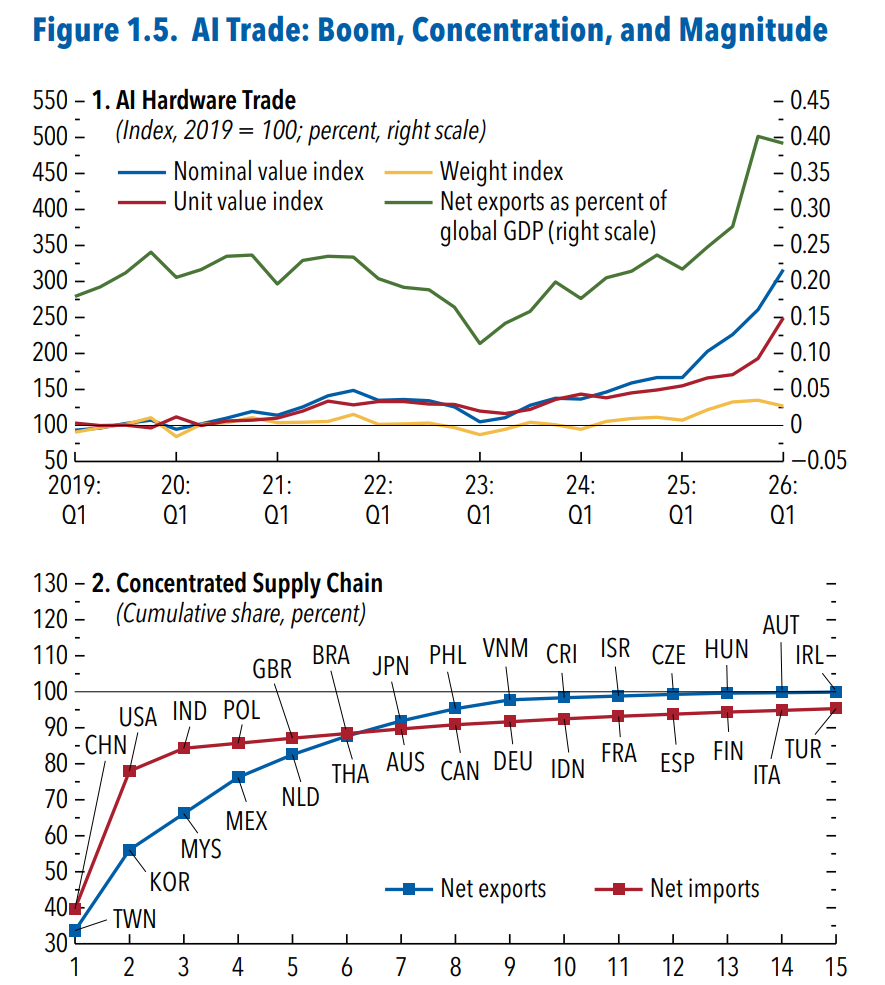
The AI-driven technology cycle is the main offset to geopolitical headwinds. In the short term it is lifting exports and investment, and over time broader adoption could change productivity. Regarding chip infrastructure, China and the United States accounted for more than 75 percent of net imports of AI computing hardware in 2025 and 57 percent of newly built data centers since 2024.
Production of advanced chips is concentrated as Taiwan and South Korea accounted for 62 percent of net trade in AI-related computing hardware in 2025.
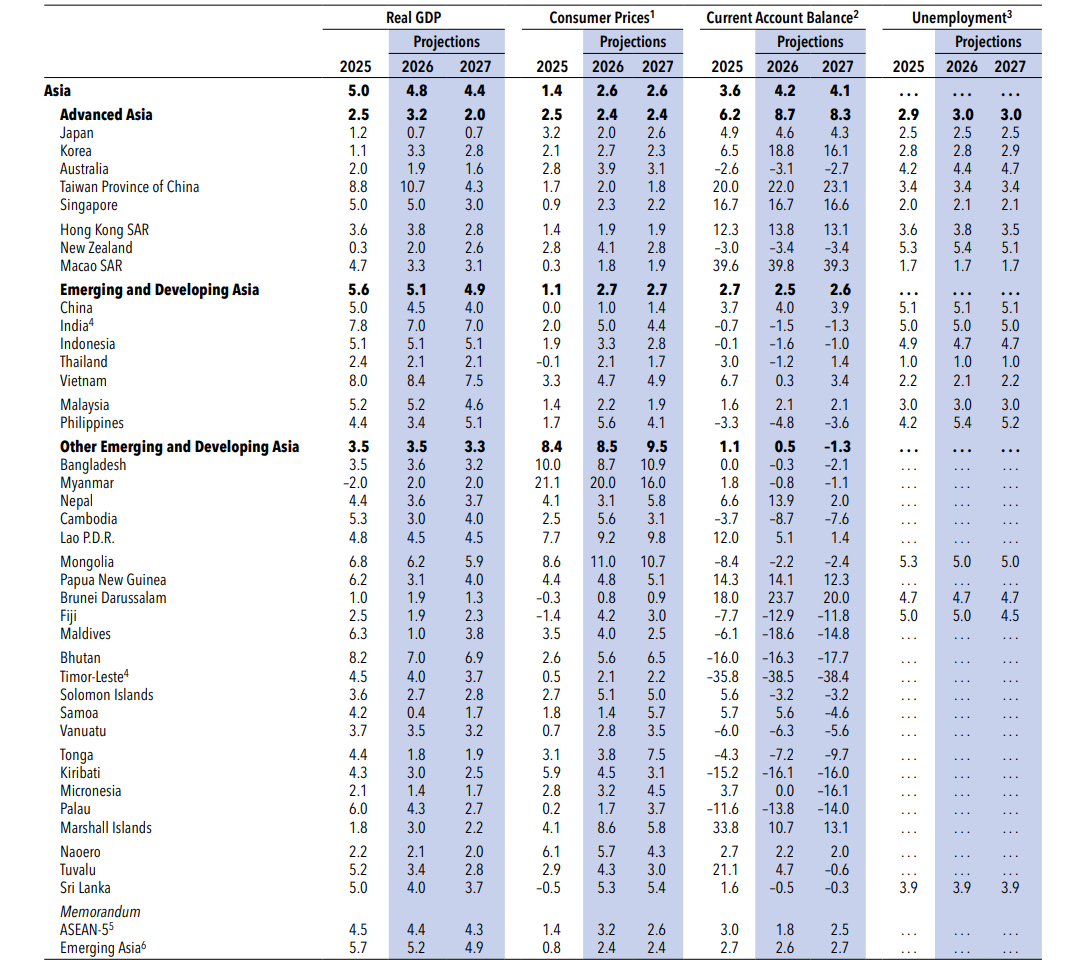
Southeast Asia’s exposure to the AI cycle runs mainly through trade and manufacturing rather than through building AI infrastructure itself. The IMF’s estimates show the largest spillovers from Korean and Taiwanese technology exports reaching Singapore, where manufacturing and services account for most of the effect. It is followed by Vietnam, Malaysia, and the wider ASEAN group, where manufacturing carries much of the impact.
Growth across Southeast Asia is projected to stay firm. Vietnam can lead the region, with growth of 8.4 percent in 2026, easing to 7.5 percent in 2027. Indonesia is projected at 5.1 percent in both years, and Malaysia at 5.2 percent in 2026, slowing to 4.6 percent in 2027.
Thailand is projected to grow 2.1 percent in both years. Singapore can grow 5 percent in 2026 and 3 percent in 2027.
AI trend to boost Southeast Asia’s GDP growth, Vietnam tops region at 7.4%: WB