

Physical AI depends on more than vision and language. Machines operating in warehouses, hospitals, construction sites and other real-world environments also need ways to interpret contact, force, slip and other physical signals.
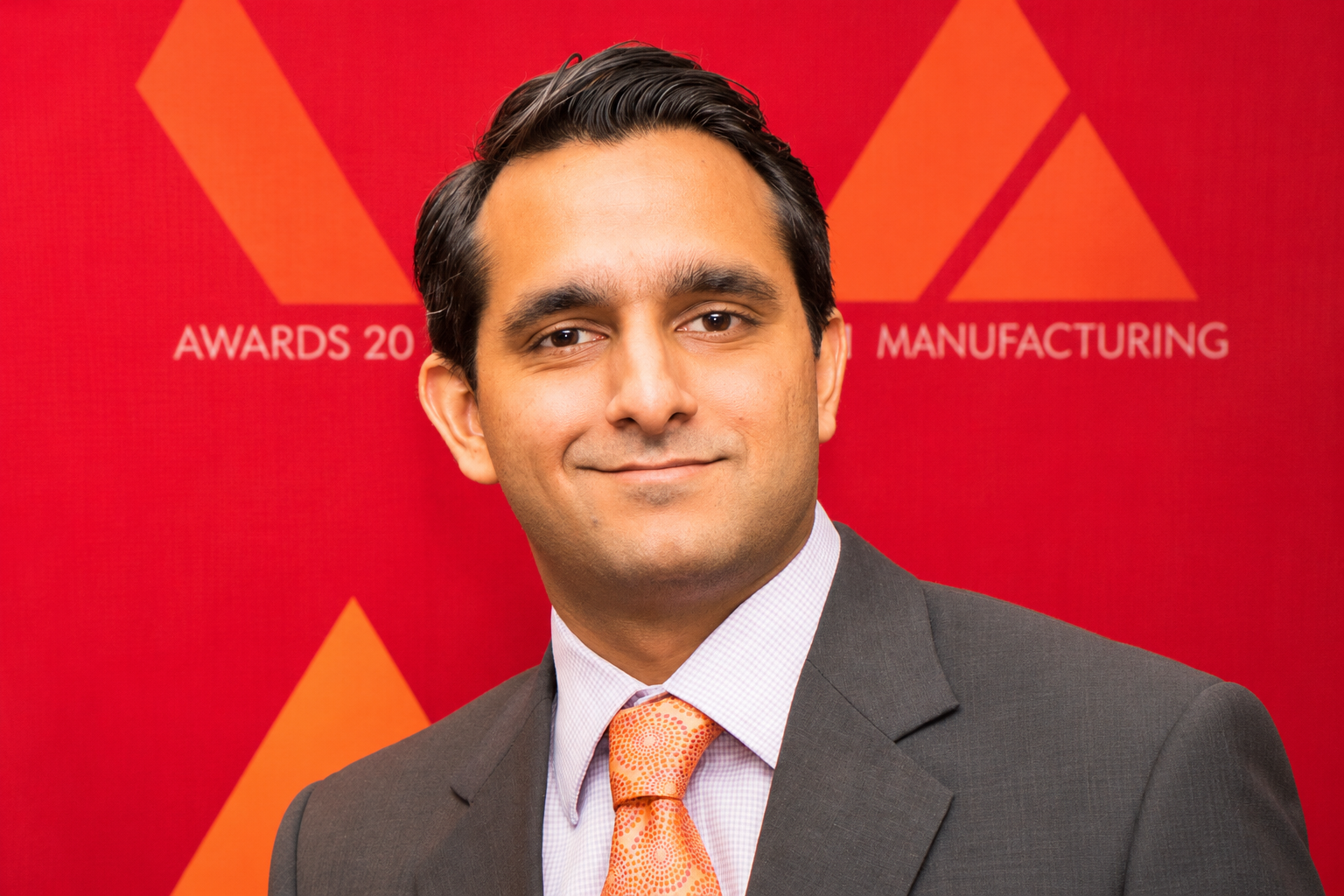
TNGlobal previously reported that Singapore and California-based TacnIQ.ai raised $1.5 million from In Group Holdings as part of a $3 million pre-seed round. In this TNGlobal Q&A, Aashish Mehta, Co-Founder and CEO of TacnIQ.ai, discusses how the company builds tactile datasets, evaluates transferability across sensors and industries, handles safety and data governance, and what would make tactile AI a reusable platform layer rather than a series of bespoke deployments.
TacnIQ.ai says it has accumulated more than 5,000 hours of tactile interactions. What types of physical interactions make up that dataset, how are they labeled, and which parts come from commercial deployments rather than controlled experiments?
Our data pipeline runs in three stages. The first is what we internally call “wild data,” meaning real signals captured from sensors deployed in live, real-world environments. The second is physics labeling, where we characterize the fundamental physical states in that data, things like slip, contact, and shear. This essentially teaches the model what touch is, independent of any specific task. We think of this stage as the model’s “first touch,” learning the basics of physical interaction before it specializes.
The third stage, application-level labeling, is where we fine-tune for a specific task. Because the model already understands the underlying physics by that point, this final stage requires far less data than building a model from scratch.
Tactile data can vary significantly across sensors, materials, force, temperature and operating conditions. What makes a tactile foundation model transferable across industries rather than becoming a collection of application-specific models?
Tactile signals do vary a lot by sensor, material, and force, and that’s exactly why we don’t train separate models per application. We train on data spanning different industries, tasks, and operating conditions from day one, so the model learns the underlying physical relationships, such as contact, slip, and force transfer, rather than memorizing one sensor’s quirks on one surface. That’s what lets us deploy the same foundation model across logistics, healthcare, or construction instead of rebuilding it each time.
What benchmarks do you use to determine whether a tactile model is reliable enough for deployment? Which error rates or failure modes matter most when a system is interpreting physical contact in real time?
We think about reliability less in terms of abstract accuracy scores and more in terms of how much new data a deployment needs before it performs reliably in the field. In several applications we’ve tested, fine-tuning our foundation model on top of what it already knows required roughly 95 percent less task-specific data than training a model from scratch to achieve the same accuracy. That’s the benchmark that matters most to us commercially since it’s what makes fast, repeatable, robust deployments possible.
You already have paying customers across logistics, construction, e-commerce, hospitality and healthcare. Which use cases have moved furthest beyond pilots, and what measurable operational value are customers seeing?
Our initial deployments let us validate the model in real operating conditions before scaling. Healthcare and logistics are the two verticals moving fastest, and we’re now seeing customers in those sectors request quotes for rollouts several times larger than a pilot, which signals a shift from evaluation to planning for broader operational use. That’s the clearest sign so far that tactile AI is proving its value beyond a controlled trial: customers aren’t just testing the technology; they’re sizing up what it would take to run it across more of their operations.
How dependent is the model on TacnIQ.ai’s own sensing hardware? Could the intelligence layer eventually work across third-party sensors, or is tight hardware-model integration necessary for reliable performance?
We’re designing the intelligence layer to be sensor-agnostic. Different tactile sensing approaches each have their own physical trade-offs in cost, resolution, and durability, so rather than locking ourselves to one hardware type, we’re building a unified software layer that can characterize and adapt across sensor modalities. Today, our own hardware gives us the tightest integration and fastest path to high-quality data. But the long-term goal is for the intelligence layer itself to generalize across sensing hardware, not just ours.
How does the collaboration with Synaptics fit into the product roadmap? Which parts of sensing, edge processing or hardware integration are you trying to improve through that relationship?
We’re working with Synaptics to close the gap between research and commercially ready tactile applications. The focus is on enabling systems to interpret complex physical signals reliably and in real time, and translating tactile intelligence into robust hardware that is ready for commercial deployment.
Physical-world data can contain commercially sensitive information about workers, processes and facilities. Who owns the tactile data generated in customer environments, and what controls do customers have over its use for model training?
Data governance is something we take seriously, and our approach is built around a clear separation between business information and physical sensor signals. We don’t collect or have access to our customers’ business or operational data. The information about their processes, facilities, or personnel stays entirely with them. The specifics of data rights and usage are addressed on a customer-by-customer basis as part of our commercial agreements.
In safety-related applications, how should customers think about false positives, missed events and human override? Where should tactile AI assist rather than automate a decision?
In safety contexts, we think tactile AI should assist human judgment, not replace it. That means flagging anomalies or unsafe conditions for a person to act on rather than making autonomous decisions in high-consequence situations. A missed event is generally more costly than a false positive, so we tune systems conservatively, with human override always available.
What does the current $1.5 million investment allow you to build immediately, and what milestones would you want to reach before completing or extending the broader $3 million pre-seed round?
Our next milestone is largely about automation and repeatability: moving from manual physics-primitive labeling to an automated labeling pipeline and building a turnkey process that takes a new deployment from data collection, through cross-sensor adaptation, to model development and edge deployment, with minimal custom engineering each time. Hitting that milestone is what would give us the confidence to complete the broader $3 million pre-seed round, since it’s the clearest proof that tactile AI can scale as a platform, not a bespoke integration for every customer.
Over the next 12 to 24 months, what would convince you that tactile AI has become a practical platform layer for physical AI rather than a specialized sensing technology?
We’d consider tactile AI a true platform layer once customers are building new applications on top of our model without us custom engineering each one, and the foundation model generalizes well enough that onboarding a new industry or task is primarily a data and integration exercise, not a research project. If we’re fielding requests to extend into use cases we didn’t originally design for, that’s the signal.
Aashish Mehta is Co-Founder and CEO of TacnIQ.ai, where he leads development of Backy, a wearable tactile data node aimed at workplace safety applications. He previously worked at National Instruments and was involved in far-field wireless power transfer at TransferFi. The company says its deployments have logged more than 5,000 hours of real-world use and have reduced high-risk postures by up to 67 percent in tested deployments.
Editor’s note: This Q&A has been lightly edited for clarity and TNGlobal house style. The substance of the interviewee’s responses has been preserved.
Share your perspective: TNGlobal welcomes contributed insights and expert commentary from across Asia’s technology and innovation ecosystem. Submit a contribution for editorial consideration, or explore more conversations in our TNGlobal INSIDER and TNGlobal Q&A and Interviews archive.
Singapore’s TacnIQ.ai raises $1.5M from In Group Holdings in pre-seed round