

Singapore-headquartered Bitdeer is expanding its infrastructure strategy beyond bitcoin mining into artificial intelligence and high-performance computing, using sites in the United States, Europe and Southeast Asia to support a mix of colocation and AI cloud workloads.
Following TNGlobal’s coverage of Bitdeer’s Rockdale expansion in Texas, we asked Pretesh Dahya, Senior Director and Head of Investor Relations at Bitdeer, how mining infrastructure can be adapted for AI/HPC, what constrains new capacity, and how the economics differ between the two businesses.
Bitdeer has been expanding beyond bitcoin mining into AI and high-performance computing. How much of the company’s planned capacity, including the Rockdale expansion, is now intended for AI/HPC rather than mining, and how do you expect that mix to change over the next few years?
Bitdeer is not managing its portfolio toward a fixed percentage split between AI/HPC and Bitcoin mining. We evaluate each site based on its infrastructure, customer demand and the risk-adjusted returns available to us.
Today, Bitdeer has secured approximately 206.5 MW of AI Cloud data-center capacity across Malaysia, Norway and the United States, representing approximately 59% of Bitdeer AI’s target of up to 350 MW of AI Cloud capacity by the first quarter of 2028. Separately, we have contracted 121 IT MW at our Tydal, Norway campus under a 16-year AI/HPC co-location agreement.
Rockdale provides additional flexibility rather than representing a predetermined allocation. Following our recent land acquisition, Bitdeer owns or operates approximately 255 acres and 742 MW of existing and pipeline power capacity in Milam County. The site’s existing large-load interconnection and transmission infrastructure make it attractive for AI/HPC development, while allowing us to maintain our existing Bitcoin mining operations as we develop the newly acquired property.
We expect AI/HPC to become a substantially larger part of Bitdeer’s infrastructure and revenue base over the next several years. However, we will continue allocating capacity according to contracted demand, site suitability and expected returns and availability of financing rather than setting an arbitrary company-wide split.
Mining infrastructure and AI data centers both require large amounts of power, but their technical requirements are quite different. Which parts of Bitdeer’s existing mining infrastructure can be reused for AI/HPC, and which parts need to be redesigned around networking, cooling, redundancy and power quality?
The most reusable assets are also among the hardest and slowest to secure: controlled land, large-load grid interconnections, transmission and substation infrastructure, power agreements, access roads and an experienced data-center operating organization.
The compute environment itself is different. Bitcoin mining facilities are generally designed around high-volume airflow, relatively simple networking and flexible loads. Modern AI infrastructure requires much higher rack densities, liquid cooling, high-speed networking, greater redundancy, more stringent power quality and more robust backup power, security and uptime.
Conversion is therefore not simply a matter of replacing mining rigs with GPUs. Some sites can reuse portions of their electrical and physical infrastructure, but the data halls and supporting systems must be redesigned around the intended GPU platform and customer requirements. At Tydal, Norway, this means converting existing mining infrastructure into an AI co-location facility designed for NVIDIA’s Vera Rubin platform under our agreement with Volta.
Across our AI Cloud development pipeline, we are designing facilities around the requirements of next-generation GPU systems. In Malaysia, A102, A201 and A202 are being designed specifically for liquid-cooled, rack-scale NVIDIA systems. At Rockdale, TX, we have recently purchased 200 acres of land, where we expect to build AI/HPC infrastructure.
Power availability has become one of the main constraints on AI data-center development. How does Bitdeer evaluate sites and grid access, and what tends to be more limiting today: generation capacity, interconnection timelines, electricity cost or transmission infrastructure?
Sites are typically assessed based on how quickly and reliably power can be delivered and at what capacity. Long-term energy cost is also important and is largely dictated by geography. Today, interconnection timelines tend to be the biggest constraint, making a clear and credible path to energization at an affordable power price a key priority.
We also evaluate transmission and substation infrastructure, land availability and size, zoning and permitting, water and fiber access, cooling requirements and construction timelines.
Rockdale illustrates many of these attributes. The site has 563 MW of interconnected grid capacity, established transmission and substation infrastructure, and plans to scale to 742 MW. Tydal, Norway offers renewable hydropower and an expected PUE of approximately 1.1. In Malaysia, locating A201 and A202 on the same Johor campus allows us to extend existing power, cooling and network infrastructure, shortening the path to energization.
What type of AI/HPC demand is Bitdeer primarily targeting: hyperscalers, GPU cloud providers, enterprise customers, sovereign AI projects or other workloads? How much visibility do you have into committed demand versus capacity being built ahead of customers?
We target AI/HPC demand through two distinct businesses, each with a different customer offering and level of committed demand.
(a) Co-location
Our co-location business provides dedicated data-center infrastructure for large-scale AI customers. At Tydal, Norway, we have allocated 121 IT MW to be configured for NVIDIA GPUs serving a leading AI lab through our agreement with Volta. The 16-year agreement represents approximately $4.7 billion in contracted payments over the initial term, providing long-term visibility into committed demand.
(b) AI Cloud
Bitdeer AI’s GPU Cloud business serves AI-native companies and enterprise customers through GPU compute, data hosting and full-stack AI services. As of August, we had 4,328 GPUs deployed, with 3,998 under external subscription, approximately 92% utilization and approximately $86 million in annualized run-rate revenue.
For our AI Cloud expansion, the 9.5 MW A102 facility in Malaysia is fully committed under five-year offtake agreements representing more than $800 million in expected revenue. Other projects are at earlier commercial stages. A201 was in late-stage negotiations as of our latest update, while A202 had secured the underlying data-center capacity, with customer AI Cloud contracts yet to be announced.
Our approach is to develop data-center capacity consistent with customer demand and deploy GPUs and related computing capital against executed contracts. Our active AI Cloud pipeline exceeds an estimated $7 billion and includes opportunities under commercial discussion. That figure is not a backlog, contracted revenue or a binding customer commitment.
From a capital-allocation perspective, how do the economics of AI/HPC infrastructure compare with mining? Which assumptions around utilization, contract duration, hardware refresh cycles and power costs matter most when deciding where to deploy capital?
The economics are different and complementary. Bitcoin mining offers operating flexibility and direct exposure to Bitcoin economics, but returns are affected by Bitcoin price, network difficulty, machine efficiency and electricity costs. AI/HPC requires significant upfront investment in data-center infrastructure, networking, cooling and, where Bitdeer provides cloud services, GPU hardware. In return, well-structured AI/HPC agreements can provide longer-duration and more predictable revenue visibility.
Tydal, Norway demonstrates the co-location model. The 121 IT MW agreement has an initial 16-year term, approximately $4.7 billion in contracted payments, an average rate of approximately $202 per kW per month, 3% annual escalators and electricity reimbursed by the tenant. Bitdeer estimates an approximately 90% net operating income margin and approximately $500 million of remaining capital expenditure, or roughly $4 million per IT MW.
The AI Cloud model has a different risk-and-return profile because it includes the computing layer. AI Cloud economics can be significantly more attractive than co-location or Bitcoin mining, depending on the deployment and Bitcoin prices, but also require substantial capital investment. At A102, five-year commitments represent more than $800 million in expected revenue across 9.5 MW. Bitdeer generally seeks customer prepayments covering more than 50% of the associated capital expenditure, reducing the amount of capital placed at risk before revenue begins.
For GPUs, we generally consider a four-to-five-year depreciation period as industry practice, although this can vary by deployment. Useful economic life can differ materially from the depreciation period, and we are seeing market trends suggesting that continued demand for compute could support significantly longer operating lives. We depreciate Bitcoin mining equipment over three years.
The most important assumptions include contracted utilization, customer credit quality, contract duration, pricing, financing costs, power costs and pass-through provisions, construction timing, GPU procurement costs and the useful economic life of each hardware generation.
GPU availability and rapid hardware obsolescence can materially affect data-center economics. Does Bitdeer plan to own accelerator hardware itself, provide powered shells and infrastructure for customers, or use a mix of models depending on the project?
We expect to use a mix of models depending on the project, customer requirements and risk-adjusted returns.
Under our AI Cloud model, Bitdeer procures and operates accelerator hardware and provides customers with GPU compute and related AI services. As of August, we had 4,328 GPUs deployed across H100, H200, B200, B300, GB200 and GB300 platforms. We have also procured 133 racks of GB300 systems for our A201 facility in Malaysia.
We manage the risk associated with owning this equipment by aligning GPU deployment with executed customer contracts. We generally seek to structure longer-term commitments with customer prepayments covering more than 50% of the associated capital expenditure. This reduces speculative hardware purchases and provides greater revenue visibility before deployment.
Our co-location model is different. At Tydal, Bitdeer is providing the data-center infrastructure under a long-term lease and services agreement, while the facility will host NVIDIA systems for the end customer. That allows us to earn long-duration infrastructure revenue without necessarily deploying our own GPU capital.
Maintaining both models gives us flexibility. We can own the computing layer where the contract structure and expected returns justify it, while using co-location for customers that want dedicated infrastructure and greater control over their hardware.
Large AI facilities are drawing more scrutiny around grid impact, water use and local infrastructure. How is Bitdeer approaching these constraints as it expands existing sites into AI/HPC campuses?
Bitdeer has always operated on a community-first approach in data-center development. We work proactively to understand concerns through sustained engagement with stakeholders across federal, state and municipal levels, including local communities.
Through constructive dialogue, these considerations are addressed during site selection and design. We assess power availability and reliability, transmission and substation capacity, cooling requirements, water access, permitting and potential effects on surrounding infrastructure. For instance, we self-funded a new substation and built a $5 million sound wall to reduce ambient noise for nearby residents as part of our Masillon, Ohio site development.
In key markets, we work closely with local officials and community leaders to proactively share information about our projects and respond to concerns around grid strain, noise and environmental impact.
Rockdale, for example, already has a large-load interconnection and established transmission and substation infrastructure, while the Milam County sites have access to a dedicated water supply. At Tydal, the facility benefits from dual grid connectivity, renewable hydropower and an expected power usage effectiveness (PUE) of approximately 1.1. In Malaysia, locating A201 and A202 on the same Johor campus allows us to extend existing power, cooling and network infrastructure rather than recreating those systems at separate sites.
Globally, we also participate in grid load-balancing programs, work with trade associations to share accurate energy and water use data and make targeted community investments aligned with responsible environmental and social stewardship. These efforts help us maintain strong community relationships as we expand our AI/HPC infrastructure.
Bitdeer is headquartered in Singapore but much of the physical expansion is taking place in markets with abundant land and power. What role does Singapore play in the company’s AI/HPC strategy, capital allocation and customer relationships across Asia?
Bitdeer is an international organization with operations and infrastructure across the globe. Singapore serves as our global corporate headquarters and the headquarters of Bitdeer AI, supporting our strategy, operations and customer relationships across Asia. Our physical infrastructure is deployed in markets where we can secure the appropriate combination of power, land and connectivity.
In Southeast Asia, that currently means pairing our Singapore headquarters with significant AI Cloud development in Malaysia, including A102 and the 86.8 MW Johor campus comprising A201 and A202. Singapore also connects us with the region’s broader technology ecosystem, while Bitdeer AI provides GPU Cloud, AI Studio and AI Agent Builder services to customers across markets.
Our global leadership structure extends beyond Singapore. San Jose serves as our U.S. headquarters and the base for our capital-markets and investor-relations functions, reflecting Bitdeer’s status as a U.S.-listed company. Our ASIC research and development capabilities for Bitcoin mining are co-located in Singapore and San Jose.
We are also developing a manufacturing facility in the United States that is expected to become operational in January 2027, further expanding our U.S. footprint and supporting our vertically integrated technology platform.
Mining revenues can be volatile, while AI infrastructure is also capital intensive and exposed to fast technology cycles. How do you think about the risk of operating both businesses at scale, and what would make the AI/HPC transition successful over the next three to five years?
We view the two businesses as complementary uses of a common foundation in power, data-center development and large-scale computing operations, but we manage their risks differently.
Mining provides operating flexibility and exposure to Bitcoin economics, while AI/HPC can provide longer-duration, contracted revenue. Mining is sensitive to Bitcoin price, network difficulty, hardware efficiency and power cost. AI infrastructure requires more upfront capital and is exposed to construction execution, customer concentration, utilization and rapid hardware cycles.
Our approach is to avoid making the AI transition dependent on a single model. We are developing long-term colocation projects such as Tydal, where the infrastructure is supported by a 16-year agreement, alongside AI Cloud facilities where GPU deployment is tied to customer commitments and prepayments. We are also maintaining mining operations at sites where mining remains the best use of the available power. We currently have an AI Cloud pipeline of more than $7 billion.
Geographic diversification and vertical integration provide additional flexibility. We control a global portfolio of power and land, operate data centers and develop our own mining systems, while building AI capacity across the United States, Europe and Southeast Asia. That allows us to evaluate the highest-value use of capital on a site-by-site basis.
Over the next three to five years, success would mean delivering on our project roadmap, contracting capacity before significant capital is deployed, maintaining high utilization, securing a strong and diverse customer base and generating durable cash flow from AI/HPC without undermining the economics of the mining business. It would also mean demonstrating that our power portfolio can support several revenue models rather than relying on a single market cycle.
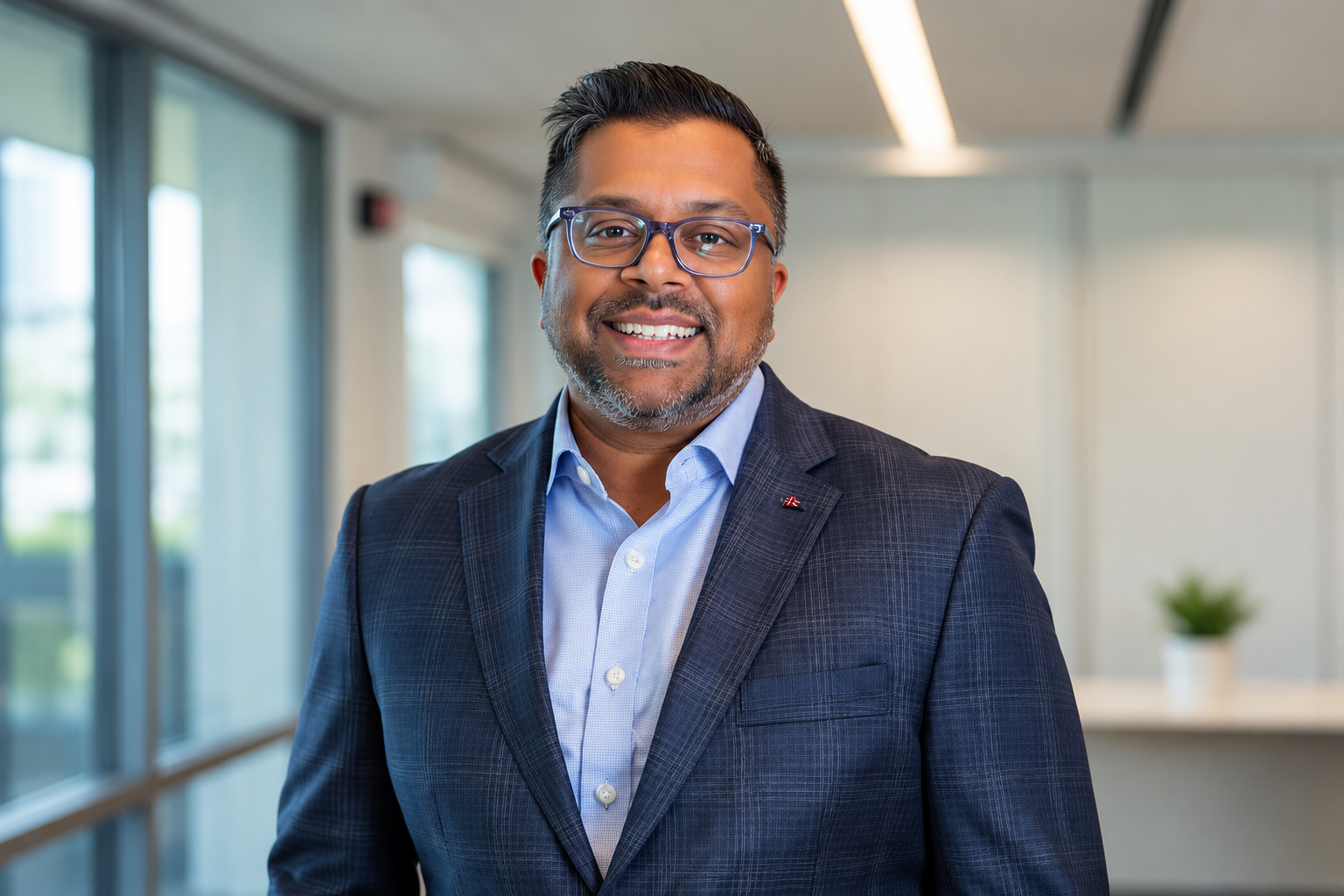
Pretesh Dahya is Senior Director and Head of Investor Relations at Bitdeer.
Editor’s note: This Q&A has been lightly edited for clarity and TNGlobal house style. The substance of the interviewee’s responses has been preserved.
Share your perspective: TNGlobal welcomes contributed insights and expert commentary from across Asia’s technology and innovation ecosystem. Submit a contribution for editorial consideration, or explore more conversations in our TNGlobal INSIDER and TNGlobal Q&A and Interviews archive.
Singapore’s Bitdeer buys 200 acres in Texas for $100M for AI data-center expansion