

Digital weight-management programs increasingly combine medication access with diagnostics, clinician consultations, coaching and ongoing monitoring. For platforms built around GLP-1 therapies, some of the harder operating questions concern what technology should track, where clinical judgment must remain decisive, and how outcomes should be measured when treatment changes or stops.
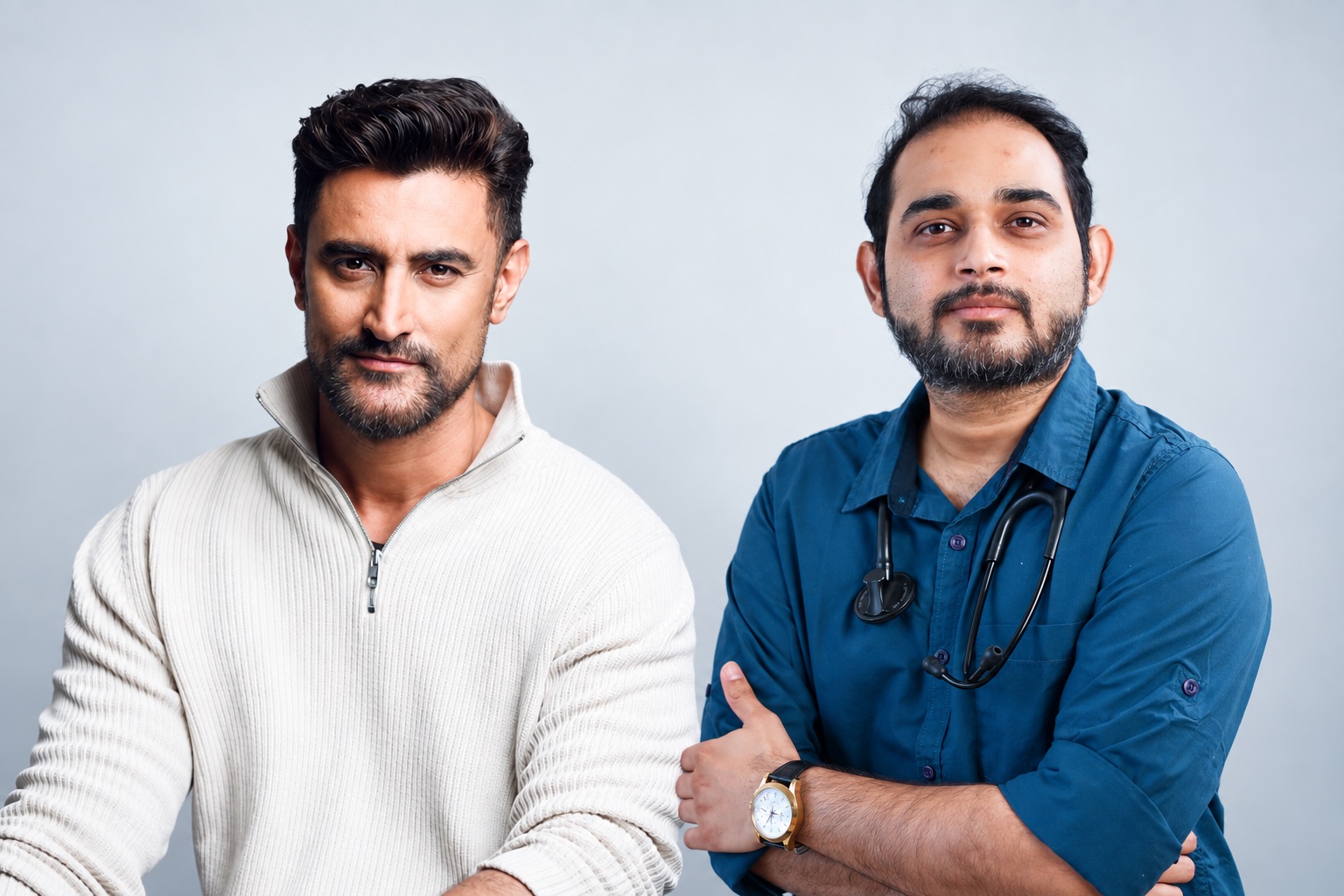
In this TNGlobal Q&A, Kunal Kapoor, Co-Founder of MetaGO and Dr. Kaushal Patel, Cardiologist and Consultant Physician at MetaGO, discuss the technology, clinical governance and operating model behind doctor-led digital GLP-1 care.
Beyond access to medication, what technology layer actually adds value in a GLP-1 care model?
Kunal Kapoor: I think the important thing is not to look at GLP-1 therapies in isolation. Medication is one part of the care journey. The bigger question is what happens around it.
At MetaGO, we bring together clinical assessment, diagnostics where appropriate, doctor consultations, personalized treatment plans, medication management, nutrition, physical activity and behavioral support, along with ongoing tracking of weight and other health markers. Technology helps connect all of those elements and makes the experience more seamless, but it is really the combination of clinical expertise and continuous support that drives meaningful outcomes.
For example, a lab report can tell you what someone’s numbers look like, but it cannot necessarily tell you that they are struggling with persistent nausea, inadequate hydration or nutritional intake, finding it difficult to meet their nutritional needs, or losing motivation. Those things often emerge between consultations. That’s where continuous support becomes important.
Technology can help us keep track of what is happening between consultations and give the care team a much better view of the patient’s trajectory over time. It can also help identify when something needs clinical attention.
With medicines used for obesity management, I don’t believe patients should be left to figure things out from a prescription and a printout. There needs to be a clinician who understands their medical history, treatment goals, response to therapy and any adverse effects, and who can step in when something changes.
That’s really how we think about technology at MetaGO. It should support clinical care, not replace it. The goal is to make care continuous, personalized and responsive rather than episodic.
Where is the boundary between software-assisted decision support and decisions that must remain with a licensed clinician?
Kunal Kapoor: I think technology can be extremely useful in helping clinicians make better and more informed decisions. It can bring information together, identify changes over time and flag patterns that may need attention. But the clinical decision itself needs to remain with the appropriate licensed clinician.
For example, software can flag a change in someone’s weight trajectory, repeated side effects, medication adherence issues or changes in relevant health data. That gives the clinician a clearer picture of what is happening and helps them decide what needs to be done.
But decisions around diagnosis, treatment eligibility, contraindications, prescribing, dose escalation or reduction, and management of adverse effects require much more context. The clinician needs to understand the person’s medical history, existing conditions and medications, treatment goals, response to therapy, symptoms, risks and preferences before deciding what is appropriate.
Dr. Kaushal Patel: Even the initial assessment should go beyond a single number such as BMI. Depending on the individual, it may involve looking at measures of adiposity, central adiposity, obesity-related complications, metabolic risk, insulin resistance, previous treatment history and other relevant clinical factors.
Kunal Kapoor and Dr. Kaushal Patel: This becomes even more important as these technologies become more capable. There is a lot that AI can help with, particularly when it comes to organizing information, identifying relevant patterns and helping clinicians work more efficiently. There is a real opportunity to use that capability well, while operating within appropriate clinical oversight, validation and accountability.
What data does a digital GLP-1 program need to capture over time, and what evidence should providers use to determine whether digital engagement is improving adherence or long-term outcomes?
Kunal Kapoor and Dr. Kaushal Patel: More data isn’t necessarily better. What matters is collecting the right information consistently and then doing something clinically useful with it.
Depending on the patient, that can include weight and waist trajectory, body composition and lean mass, medication and dose history, adherence, adverse effects, blood pressure, glucose and other metabolic markers, obesity-related complications such as liver health, cardiovascular risk, sleep apnea and glycemia where clinically appropriate, as well as nutrition, physical activity, sleep and relevant aspects of quality of life and functional health.
Where appropriate, it can also be useful to understand changes in body composition rather than looking only at total body weight. During significant weight loss, maintaining muscle and overall nutritional adequacy is an important consideration.
But the bigger question is what you do with that information.
Someone can open an app every day and still not be getting better care. So I don’t think logins, messages or screen time should be the main definition of success. Those are engagement metrics. They’re useful, but they’re not clinical outcomes.
We should be asking whether engagement actually changes something clinically. Are patients taking treatment as intended? Are adverse effects being identified and managed appropriately? Are they achieving clinically meaningful improvements in weight, adiposity, metabolic health or obesity-related complications? Are those improvements translating into better function and quality of life? And what happens when treatment changes or stops?
I think that’s the standard digital health should ultimately be measured against. Technology should show up in better care and better patient outcomes, not simply higher app usage.
What safeguards are needed when platforms use algorithms or AI around sensitive health information?
Kunal Kapoor: I think the important thing is to make sure the technology is being used responsibly, particularly when you’re dealing with information that can affect someone’s health and is also highly personal.
There is a lot that AI and other technologies can help with. They can bring together health information, identify changes over time and flag things that may need attention. But when technology is being used to support a clinical decision, there should be a clear understanding of what information it is using, what it is recommending and how the clinician has used that information.
Patients also deserve to understand how technology is being used in their care. They don’t need to understand the technical architecture of an AI model, but they should know when technology is helping analyze their information and that there is a clinician involved in their care.
For me, the basic principle is simple: AI should help make healthcare more informed and more responsive, while keeping the right clinical oversight around the patient.
A major challenge in weight-management programs is what happens when treatment changes or stops. How should digital-health providers measure outcomes beyond short-term weight reduction?
Kunal Kapoor and Dr. Kaushal Patel: Weight loss is an important outcome, but it is not the whole story.
Our focus is metabolic health, so we’re interested in helping people become healthier overall, not simply helping them reach a particular number on the scale. Depending on the individual, that can include improvements in metabolic risk, obesity-related complications, physical function, quality of life and other health outcomes.
At MetaGO, we think of maintenance as an important part of the journey, not something that happens after the program is over. The goal isn’t to keep someone on medication simply for the sake of continuing it. Treatment duration should be individualized based on clinical response, benefits, risks, tolerability, patient preferences and the likelihood of maintaining health gains.
Where discontinuation or dose reduction is clinically appropriate, this should be planned carefully with ongoing monitoring and support because some patients may experience weight regain after treatment is stopped, while also working with them to build the habits that can help them maintain the results they’ve achieved.
That’s where the doctor and health coach play an important role. The doctor manages the clinical side of treatment, while the coach works with the patient on nutrition, activity and the day-to-day behaviors that become increasingly important as the medication is reduced.
So for us, success is not just about how much weight someone loses while they are taking the medication. It’s also about whether they are able to maintain those results as treatment changes, whether healthier habits have become part of their routine, and how confidently they can manage their health over the longer term.
I think that’s an important distinction. The medication can be an important tool in helping someone get to a healthier place, but the longer-term goal is to give people the support and habits they need to stay there even as their treatment changes.
GLP-1 care also raises questions around affordability, access and incentives. How can a platform build a sustainable commercial model without creating pressure to prescribe, retain or upsell patients?
Kunal Kapoor and Dr. Kaushal Patel: The starting point has to be the patient, not the product. People need to be able to figure out what kind of care plan is right for them, because not everyone needs the same treatment or the same level of support.
At MetaGO, we’re a clinician-led, patient-centered company. The doctor looks at the patient’s history, health, goals and response to treatment, and the care plan is personalized around that. For some people, medication may be appropriate. For others, a different approach may make more sense. The important thing is that we’re making the right decision for that particular patient.
That’s also how we think about affordability. We want to make good care accessible, but we don’t think that means putting everyone through the same care plan or assuming that more treatment is always better. The goal is not necessarily the lowest possible body weight. Treatment goals should be individualized around health risk, complications, function, quality of life and what is clinically meaningful for that patient.
For us, the measure of good care is whether the patient is getting the right care and making progress toward better metabolic health. The technology helps us deliver that care in a way that is convenient and scalable, but the clinical decision has to come first.
As MetaGO expands, how much of its technology and care model can be standardized across markets, and what needs to change because of differences across Asia Pacific?
Kunal Kapoor: There is a common technology backbone that can travel across markets, but I don’t think you can simply copy and paste a clinical model from one market to another.
The fundamentals are fairly consistent: how you collect information, maintain the patient’s health record, monitor progress, support adherence and involve the clinical team when something needs attention.
What changes is the environment around them. Prescribing rules differ between countries. Access to diagnostics and medications differs.
Dr. Kaushal Patel: Healthcare systems, affordability, cultural expectations and patient relationships with doctors, coaches and digital health can also vary significantly.
Even the clinical context can differ across populations. Patterns of metabolic risk and obesity-related disease are not necessarily identical across populations, so assessment and care pathways need to be locally appropriate rather than simply translated from one market to another.
Kunal Kapoor: So our approach is to build the technology in a consistent way, while adapting the care model to each market. That is also why I think local clinical expertise is important as we expand. The technology can provide consistency, but the care itself has to make sense for the patient and the healthcare system they’re actually in.
Ultimately, we’re trying to build something that can scale without becoming generic. That’s the balance we’re looking for.
Kunal Kapoor is Co-Founder of MetaGO and Ketto. At MetaGO, his role focuses on strategy and building the company’s doctor-led metabolic-health platform. He previously co-founded medical crowdfunding platform Ketto and is also active as an entrepreneur and investor.
Dr. Kaushal Patel is a Consultant Physician and Cardiologist at MetaGO with experience in preventive healthcare, cardiology and metabolic disease management. At MetaGO, he oversees the clinical care journey, including patient evaluation, treatment planning, ongoing monitoring and clinical oversight. His previous work includes healthcare technology, wearable cardiac monitoring, telemedicine and clinical practice.
Editor’s note: Responses have been lightly edited for clarity and TNGlobal house style. The discussion is for general informational purposes and does not constitute medical advice.
Share your perspective: TNGlobal welcomes contributed insights and expert commentary from across Asia’s technology and innovation ecosystem. Submit a contribution for editorial consideration, or explore more conversations in our TNGlobal INSIDER and TNGlobal Q&A and Interviews archives.
Flam’s Shourya Agarwal on turning interactive AI content into repeatable enterprise workflows [Q&A]