

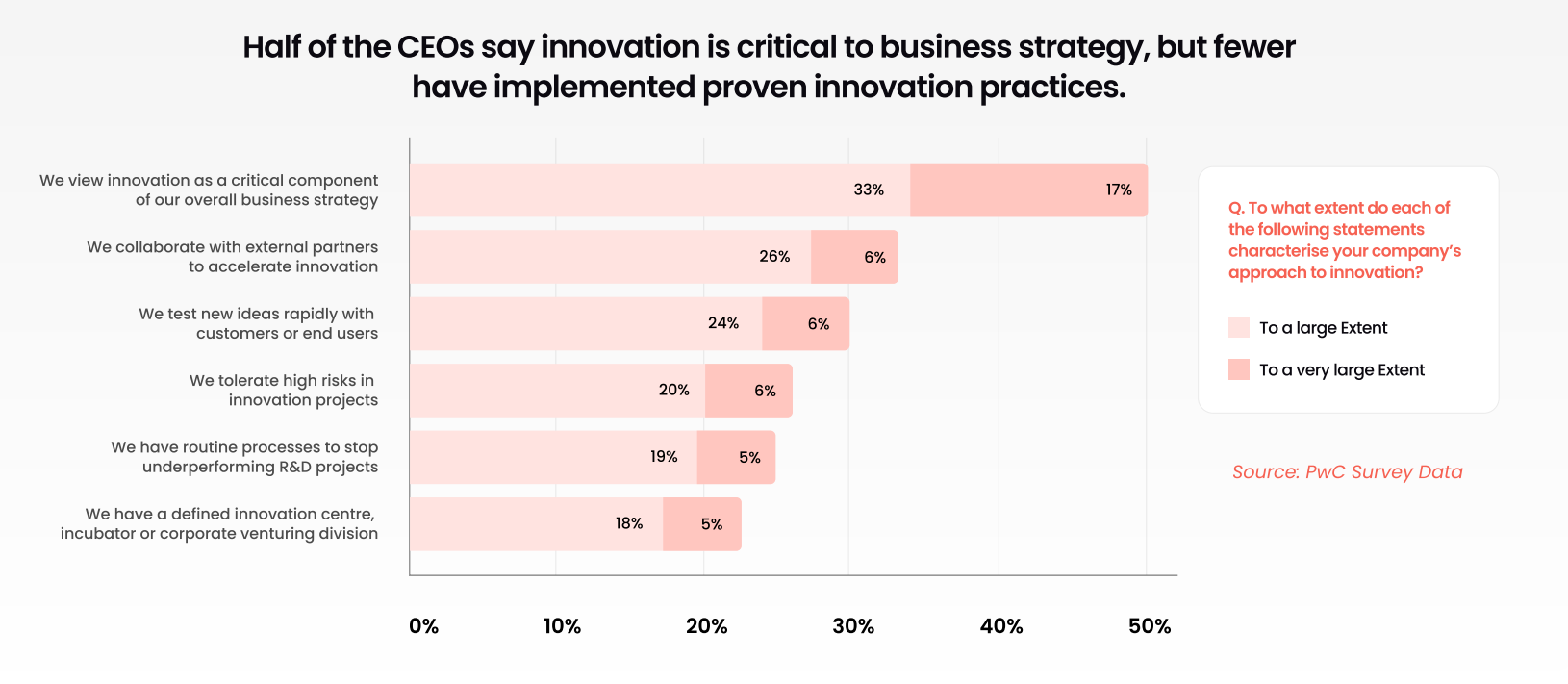
Half of CEOs in Southeast Asia say innovation is critical to their business strategy, yet 32.5 percent of employees say they do not feel confident in innovation, influence, and cross-functional collaboration, according to a report of AI-powered payroll platform Omni HR.
Omni HR’s newly-release “What Southeast Asia’s Performance Culture is Costing Business” report, based on data from more than 10,000 employees, showed that despite the “half” figure, only 32% collaborate with external partners to accelerate innovation and only 26 percent tolerate high risks in innovation projects.
It also showed that performance management practices across the region are producing “robot employees,” typically workers who default to safe, reliable execution rather than initiative because performance systems do not reward or develop the skills employers say they need.
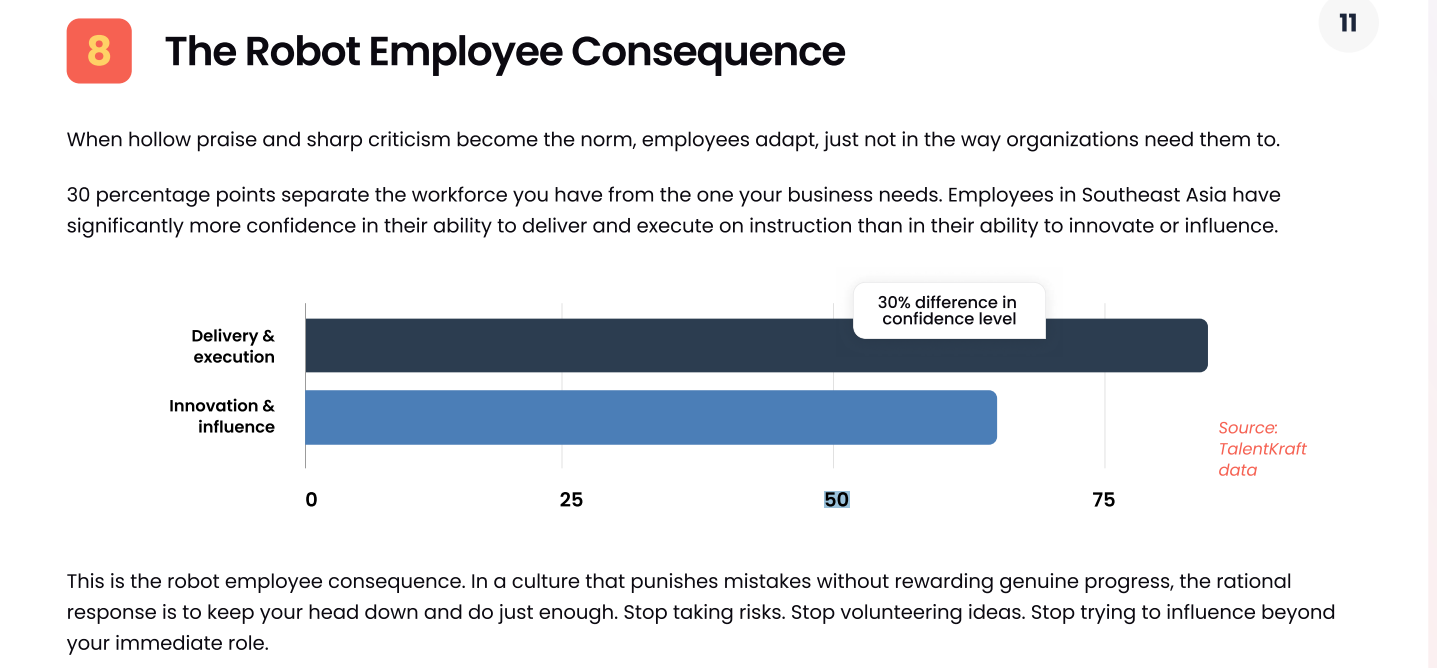
Employees are 30 percentage points more confident in their ability to deliver and execute on instruction than in their ability to innovate or influence, with delivery and execution confidence at approximately 75 percent compared with approximately 45 percent for innovation and influence. The gap points to a disconnect between what organizations say they need and what their performance systems are built to develop.
The report also warns that disengagement is difficult to detect in time. Employees contract gradually, pulling back from discretionary effort 12 to 18 months before the problem shows up in output metrics or engagement scores. By the time data indicates something is wrong, the people organizations most wanted to retain have already decided to leave.
Three further gaps emerge from the data. On coaching, 31 percent of employees say their manager does not adequately coach or mentor them. On career development, 38 percent feel their organization does not help them plan and grow their careers. On skills preparation, 30 percent say their organization does not help them understand which skills will matter ahead.
On performance reviews, the report finds that reviews for the bottom-rated quarter of employees average 37.5 words, compared with 28 words for top performers. Low scores come with a detailed paper trail while high scores often receive only brief acknowledgement, leaving top performers without guidance on how to keep growing and low performers without a clear path to improve.
Brian Ip, CEO of Omni HR, said organizations across the region are asking employees to be more innovative and agile at the same moment AI is reshaping what a job looks like. But that performance review processes that only surface once a year and focus on what went wrong cannot build a workforce capable of taking risks and bringing new ideas forward, the executive elaborated.
AI may affect nearly 80 million workers in the ASEAN region – ILO