

Workers aged 18 to 26 in Singapore are the least frequent daily users of AI among all age groups, at 20 percent, trailing those aged 27 to 39 at 25 percent and those aged 40 to 54 at 23 percent, according to the ADP Research’s People at Work Report 2026.
In a statement on Thursday, ADP said the report showed uncertainty over AI’s impact on jobs declining sharply even as adoption remains uneven across the workforce.
Only 10 percent of workers in Singapore are now unsure about how AI could change their jobs, down from 19 percent the previous year. Usage has grown alongside this confidence, with 56 percent of workers using AI multiple times a week and 23 percent using it daily overall.
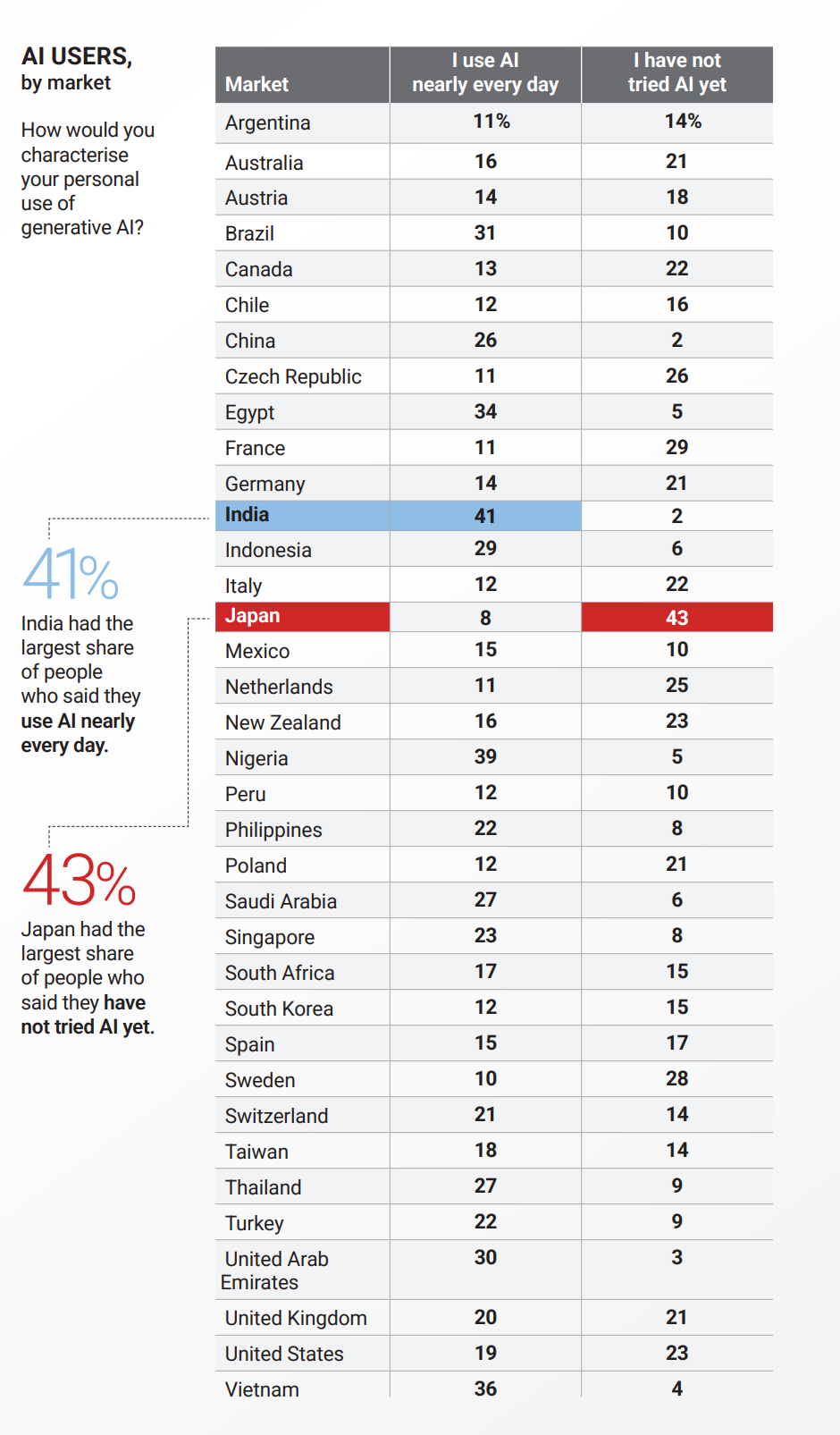
Adoption also varies by company size. Mid-sized organizations with 250 to 999 employees lead adoption with 34 percent using AI daily in the workplace, above the regional average. By comparison, daily usage among small organizations with 1 to 249 employees and large enterprises with 1,000 or more employees stands at 19 percent each.
Yvonne Teo, Vice President of HR for Asia Pacific at ADP, said Singapore’s workforce is becoming more confident about AI. Smaller firms may benefit from greater access to practical and cost-effective AI tools, the executive added. However, larger organizations may need to simplify processes to scale usage effectively, with mid-sized firms often showing what is possible with the right balance of resources and agility.
Despite rising usage, few workers are convinced of AI’s value to their work. In 2025, only 15 percent of workers in Singapore strongly agreed that AI would positively impact their job responsibilities in the next year. A similar perception gap is emerging globally, where 30 percent of daily AI users report feeling fully engaged, yet daily users are four times more likely than non-users to feel less productive.
Work type also shapes perceptions in Singapore. Knowledge workers are the most optimistic about AI’s impact on their job responsibilities at 22 percent, roughly double the share of skilled task workers at 11 percent and about three times that of repetitive task workers at 7 percent.
Nela Richardson, Chief Economist at ADP, said AI is changing not only how work gets done but also how people feel at work. Frequent users report higher engagement and lower stress, they also feel less productive, underscoring the importance of helping workers transition to new ways of working alongside the technology, the expert added.
Microsoft’s 2026 Work Trend Index shows Singapore workforce ahead on AI adoption