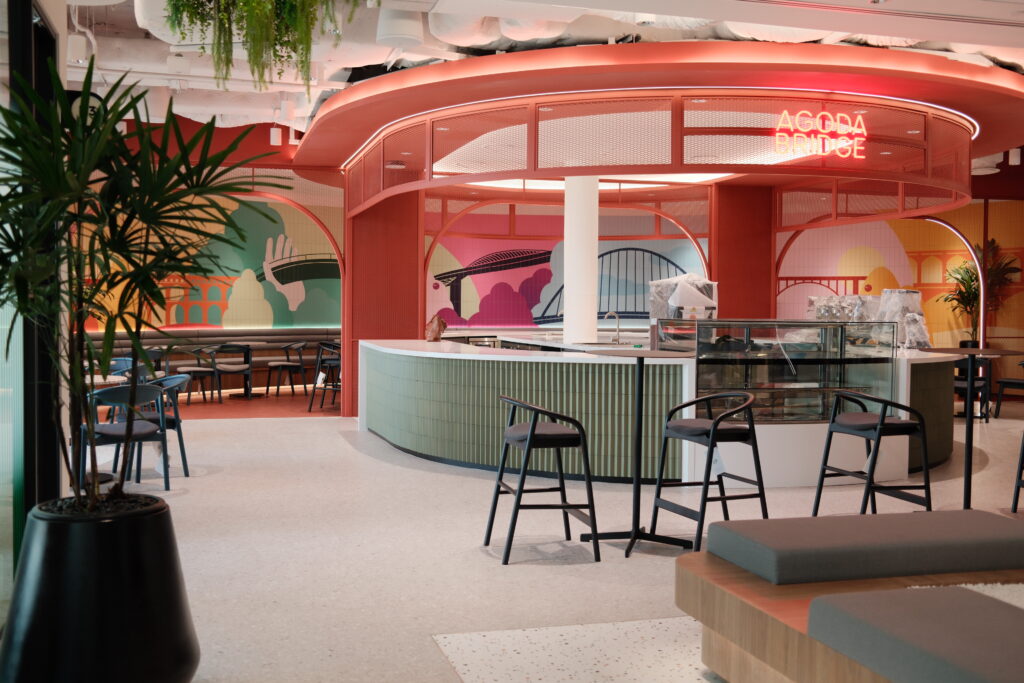

Editor’s note: TNGlobal reporter was invited to a sponsored trip to preview the new office in Bangkok, Thailand
Despite growing enthusiasm around autonomous AI agents such as OpenClaw, Asia-focused online travel platform Agoda has no plans to adopt the technology for now, with its chief technology officer citing security risks and a lack of control over the systems.
“Today, our approach to OpenClaw, our strategy, I can summarize it in one word — no,” Agoda CTO Idan Zalzberg said in an interview.
He said while the technology was “very exciting” and “very cool”, it remained too powerful and insufficiently controlled for enterprise use.
He pointed to risks associated with AI agents acting autonomously on behalf of users, including generating emails or taking actions without human oversight.
“That’s not cool because I read the entire email, and now you tell me after the fact that it was generated by some bot that thought it was a good idea at the time,” he said in an interview at Agoda’s newly-opened office in Bangkok, Thailand.
The comments contrast with remarks by NVIDIA CEO Jensen Huang, who in recent months said “every company in the world today needs to have an OpenClaw strategy,” as businesses race to deploy increasingly autonomous AI systems.
Zalzberg said Agoda’s internal security testing had shown current AI agents remained highly vulnerable to manipulation.
“We have a team in security that’s in charge only of trying to hack AI bots, and they’re always successful,” he said. “Having a bot with so much power, with access to all my keys, is super risky.”
He added that AI agents operating directly on employees’ laptops or systems could expose sensitive credentials and company data if compromised.
Still, Zalzberg said Agoda continued to monitor developments in the sector and believed the technology would eventually mature.
“It’s the right direction,” he said. “I don’t think it’s ready yet, but it will happen.”
Agoda is based in Thailand and Singapore and is a unit of the online travel giant, Bookings Holdings. Last month, Booking Holdings cut its annual revenue growth forecast and warned that the war in the Middle East could weigh on bookings through the end of June, Reuters reported.
“The impact of the conflict was also felt outside the Middle East region, as we saw changes in broader travel patterns, particularly in transit corridors, such as the one between Europe and Asia,” finance chief Ewout Steenbergen was quoted as saying on a post-earnings call earlier.
Agoda sees resilience in travel demand despite geopolitical uncertainty
Meanwhile, asked about the impact of geopolitical tensions in the Middle East and rising oil prices on travel demand, Zalzberg said Agoda was seeing some flight cancellations and booking disruptions, but not at levels comparable to the COVID-19 pandemic.
“Uncertainty is the right word. We are also uncertain,” he said, declining to make predictions about the outlook for 2026.
“Definitely, we see cancellations. Flights are being cancelled, so we see that in the business,” he said. “But it’s definitely not as harsh as what happened during COVID.”
Zalzberg said the travel industry had proven resilient during past crises, adding that demand typically rebounds strongly once conditions stabilize.
“Whenever things open up again, people want to travel back. That’s what we always see,” he said. “People prioritise travel. I think it’s a basic human aspiration.”
He added that while higher oil prices and disruptions to air travel were concerns for the industry, Agoda remained optimistic about long-term demand.
“We prefer that oil prices wouldn’t go up. We prefer that flights wouldn’t get cancelled,” he said. “But we’re very optimistic in the long term. In the short term, we watch the news like everyone else.”
Zalzberg said demand remained strong, particularly for domestic and shorter-duration travel, when asked about the outlook for Southeast Asia’s travel industry this year,
“What we’re seeing in terms of traveler intent based on our survey data is clear,” he said. “Interest in domestic travel in Asia has jumped sharply, with 35 percent of travelers now planning to explore within their own country, up from 15 percent last year.”
He said secondary destinations were growing 15 percent faster than traditional tourism hubs, as travelers increasingly sought food and cultural experiences rather than purely leisure-focused trips.
“People plan to travel more frequently but in shorter bursts,” he said.
Zalzberg also pointed to the growing role of artificial intelligence in travel planning, saying nearly two-thirds of Asian travelers say they are likely to use AI tools to organise their next trip.
“Trust is building,” he said.
Looking ahead, Zalzberg said easing travel restrictions, increased flight connectivity and improved cross-border payment systems would continue to support growth.
“We expect that to open up travel to more people and more places,” he said.
From a technology perspective, he said travel booking platforms were increasingly evolving beyond individual services such as flights or accommodation toward integrated trip planning experiences.
“The travel booking experience is centred more and more on the entire trip instead of individual segments,” he said.