

Editor’s note: For this special report series, TNGlobal spoke with investors, ecosystem builders, capital-market leaders and founders to examine the opportunities and challenges shaping Hong Kong’s next chapter in technology.
As artificial intelligence reshapes the internet, Animoca Brands Co-Founder and Executive Chairman Yat Siu believes Web3 will play a critical role in determining who owns the digital economy — and who captures the value it generates.
In this interview with TNGlobal for its Hong Kong Special Report series, Siu discussed how the convergence of AI agents, blockchain and tokenization could redefine digital ownership, from financial markets to everyday online interactions.
He opined that as AI agents increasingly act on behalf of individuals, digital property rights will become more important than ever, with decentralised infrastructure offering a way to prevent control from consolidating among a handful of dominant technology platforms.
Siu also shared his perspective on Hong Kong’s emergence as a Web3 hub, highlighting the city’s financial infrastructure and proximity to Mainland China as strategic advantages, while pointing to a shortage of mid-stage risk capital and a conservative investment culture as persistent challenges for technology startups.
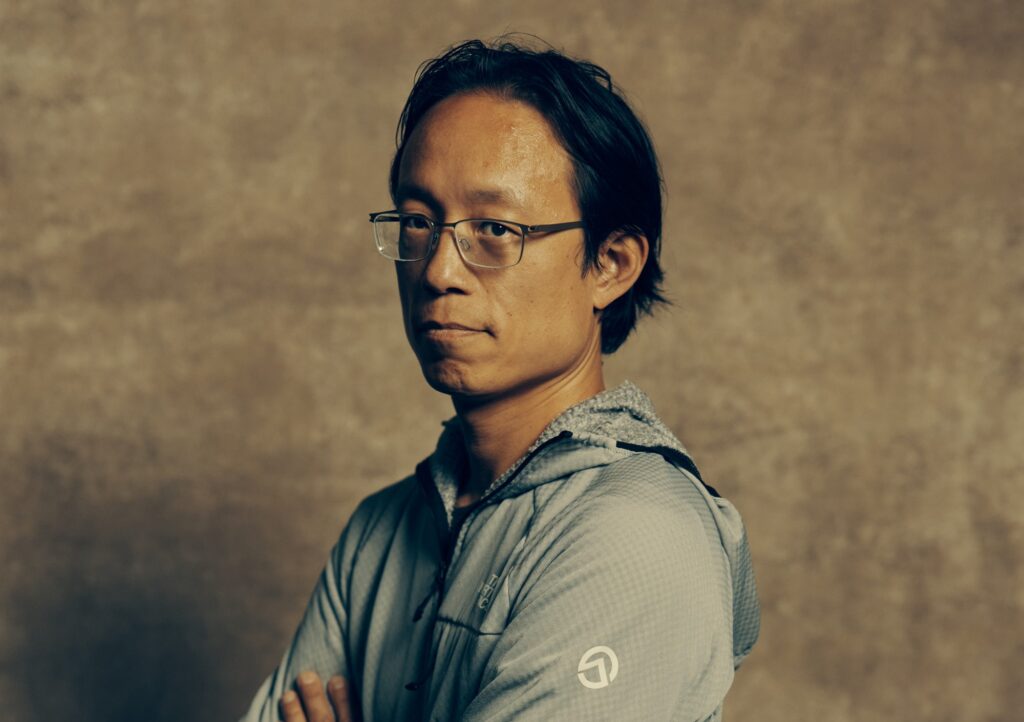
Below are the edited excerpts:
Animoca Brands has evolved significantly from its early focus on mobile games. How would you describe the company today, and what do you see as its core mission?
An experience in 2012 changed how we thought about the state of the web. Apple suddenly removed the entire app portfolio of Animoca (which later spun off Animoca Brands) from the App Store, showing us exactly how vulnerable businesses and users are when a single platform controls access.
That experience shaped our deep commitment to digital property rights. Animoca Brands’ move into blockchain and NFTs began in 2017 culminating with the acquisition of a company connected to CryptoKitties in 2018. We saw firsthand the power of blockchain to give people genuine ownership of digital assets and help build a more open internet.
Those same technologies have demonstrated scale. NFTs have become a core infrastructure helping to drive markets like Pokémon card trading, where the value of these cards has risen significantly as a result of NFTs and tokenization. Tokenization has emerged as one of the most exciting categories in finance and is being adopted by large traditional institutions.
Today, our company advances Web3 and connects digital assets with traditional finance. We are developing infrastructure through initiatives such as the NUVA vault marketplace and our participation in the Anchorpoint joint venture, which works in the regulated stablecoin space. We are also collaborating with institutional partners, including Franklin Templeton, to advance the tokenization of real-world assets (RWAs).
At the same time, we believe AI agents will drive the next phase of Web3 mass adoption, because agents will handle all the Web3 UI and UX complexity that many users historically found too challenging to deal with.
Our Minds by Animoca Brands (Minds for short) platform is a major part of the effort to democratize AI agents. Minds is a platform that provides proactive, personal companion agents—the Minds—that can augment your capabilities and generate new opportunities. Minds can notice what would help, tell you what is possible, and can follow through directly in the channels you are already familiar with, such as email or Telegram, or a chat session if you prefer.
Setting up a Mind takes a minute or two and requires zero hardware configuration or coding skills, and the Minds platform leverages blockchain technology for agentic payments and to handle critical functions like digital identity.
Our core mission remains the same: advancing digital property rights and ensuring that the value people create online actually belongs to them and benefits them, instead of that value being absorbed by dominant platforms. This mission is more critical than ever because we expect that millions of AI agents will be creating, trading, and otherwise representing users in the coming year.
How has your view of Web3 and digital ownership changed as the industry has matured over the past few years?
Digital ownership is becoming even more critical now in the era of the agentic web, with Web3 serving as the necessary infrastructure layer.
Without Web3, autonomous agents simply cannot operate, transact, or trade on a high-velocity 24/7 basis. They require a “permissionless”, continuous financial rail that traditional systems cannot provide. Furthermore, blockchain provides a fundamental layer for agent identity and security. Blockchain provides the immutable framework necessary for agents to cryptographically verify themselves, prove what rights they hold, establish who owns them, and confirm their authority to execute specific transactions.
True digital property rights and Web3 infrastructure are the prerequisites for a functional, secure, and scalable agentic economy.
If AI agents are going to facilitate your life and your work they will know things about you or your family that nobody else does, such as sensitive financial information. It is therefore incredibly important that you actually own your agents, or (at minimum) that you do not risk losing them.
The reason there is a battle over AI agents is because the next layer of the internet is going to be operated on an agentic basis. Whoever owns that layer is not just going to control the Internet; they are literally going to control YOU, because they will be in control of the agents that represent you. Decentralization can mitigate that grim scenario.
It is critical to highlight these and other risks because the world cannot afford to extend the current paradigm of digital manorialism into the agentic age. The web2 approach cannot work for sovereign autonomous agents.
In my view, agents should reside exclusively where you cannot be arbitrarily deplatformed. Agents should be portable, ensuring not only maximum effectiveness but also immunity from the ultimate control currently held by the dominant platforms. The value generated by your agent must be owned, or at least co-owned, by you.
In the agentic age, decentralization matters more than ever. The trials and tribulations that we and many others experienced while building blockchain infrastructure for a fully distributed and decentralized internet turned out to be very useful preparation for the agentic era.
We have always maintained that digital ownership is one of the most critical things we as individuals (and entities!) must strive for. If we believe the future will be ever more digital, it makes sense that we as participants in that future can own a piece of it.
It can be difficult for people to appreciate and understand what ownership entails. Technologies such as NFTs and tokenization have proven themselves in terms of both scale and value, but most people are still not clear on why they should care about owning their social media account, their digital identity, or other aspects of online life. The online world rents, it does not own. We rent our digital life under a “benevolent dictator” system of dominant platforms that capture the value we generate.
At the end of the day, the Web2 companies do not have access to quite all of your digital life, and you still retain control over some important part of it, such as your identity, payments and banking, and certain types of data. Those are exactly the types of things that agents will excel at handling for us, so true ownership is paramount. It seems incredibly inadvisable to hand over ownership of agents and data to the dominant platforms who already control vast portions of our digital existence.
The hype around NFTs and cryptocurrencies has cooled considerably from the peak of 2021–2022. What do you think the industry has learned from that period?
The most critical lesson the industry learned is that NFTs, and any other tokens, must have genuine utility. The hype phase helped prove the technology, but the truly valuable use cases have been appearing over the last 12 months or so.
Many NFT collections or cryptocurrencies die from lack of meaningful use cases that energize communities and participation. When a project is driven purely by hype and speculation, it subsides quickly as people move on to the next trend or opportunity. Only true utility gives people a reason to keep using and trading an asset over the long term.
Most major institutions are now talking about tokenization. The fastest-growing category in crypto today is RWAs. For example, tokenized public equities have grown to a roughly $1.4 billion market from scarcely any volume just a year ago (source: Binance Research). Pokémon cards have shot up in value thanks to liquidity provided by trading on NFT platforms—tokenized Pokémon cards via NFTs reached over $124.5 million in monthly trading volume recently (source: CryptoBriefing).
This only affirms our belief that every project should have an on-chain token, whether they issue their own or adopt an existing one. In the agentic era, this is not going to be optional. If your assets are not on-chain, or if they cannot be directly utilized by autonomous AI agents, you will be put immediately at a massive disadvantage. Agents need to interact with digital property programmatically. That is precisely why real-world asset (RWA) tokenization is so important and has become such a hot topic among institutions right now: it is the necessary bridge to making all assets agent-readable and agent-tradable.
Where do you see the most meaningful opportunities in Web3 today—gaming, digital identity, entertainment, finance, education, or elsewhere?
For “meaningful”, I am focusing on what is most important and purposeful rather than just purely financial returns. To me, an incredibly exciting opportunity lies in the area of education, specifically financial education.
Tokenization enables a gateway to learning about money in a way that connects directly with your passions. Think about how our children learn about value and trade. Kids don’t typically learn about money by studying economics in primary school (such programs are almost non-existent) but instead learn by trading football or Pokémon cards, or similar activities. Web3 does the same thing, but at global scale and with RWAs, allowing you to participate in something that matches your interests and passion.
Financial literacy remains very poor around the world, and finding ways to improve financial literacy is a core part of our mission. To truly understand property rights, you need to understand capitalism. And to understand capitalism, you need to actually participate in it. Web3 gives everyday people, including the unbanked, the tools to stop being just consumers and start acting as owners and participants in the digital economy.
AI has become the dominant technology theme in recent years. How do you see AI and Web3 intersecting?
Historically, crypto and Web3 have been difficult to use; AI, in particular AI agents, can make Web3 significantly more accessible by handling complex tasks on the user’s behalf with their permission. Thanks to agents, the crypto experience no longer needs to be unfriendly and terrifying.
But that abstraction of the UI and UX is just the surface level. The true intersection of AI and Web3 lies in infrastructure, digital identity, and property rights.
First, AI agents require a native financial layer to operate autonomously. An AI cannot walk into a bank branch to open an account, nor can it wait for traditional banking hours or slow settlement cycles. Web3 provides the permissionless, 24/7 liquidity and settlement rails that AI agents need to function at scale. By tokenizing assets and moving them on-chain, we are effectively building the financial operating system for the agentic economy.
Second, blockchain solves the critical issue of digital identity and data ownership. As AI agents become deeply integrated into our lives, they will generate massive amounts of value, content, and data. Without the true digital ownership framework of Web3, all that value would be at the mercy of a few centralized tech monopolies.
Blockchain provides the immutable framework for digital identity for both the human users and their agents. It ensures we can cryptographically verify an agent’s authority, establish exactly who owns it, and guarantee that the economic value an agent creates accrues directly to the user, while preserving privacy through zero-knowledge proofs (ZKPs).
To me, the many benefits of decentralized infrastructure have never been more obvious than in the context of agentic AI. Web3 can prevent the personal AI space from becoming an extractive monopoly dominated by a few players, allowing agentic AI to serve as a tool for individual empowerment and genuine digital property rights.
On Hong Kong’s tech ecosystem:
You have spent much of your career building technology companies in Hong Kong. How would you describe Hong Kong’s technology ecosystem today?
Hong Kong has undergone a massive transformation. For a long time, it was primarily known as a traditional finance and real estate hub. But today, I would describe Hong Kong as one of the most forward-thinking and supportive jurisdictions for Web3 and digital assets in the world.
Because of the government support, we are seeing institutional capital and Web3 talent flowing into the city. Hong Kong serves as the perfect bridge between China and the world, it combines world-class traditional financial infrastructure with the deep consumer Web3 adoption we see across the rest of Asia. As a company headquartered here, we believe Hong Kong is well positioned to advance the institutional adoption of digital assets and the upcoming agentic economy.
Hong Kong wants to become a global technology and innovation hub. From your experience, what does Hong Kong have that other Asian technology hubs don’t—and what does it still lack?
What sets Hong Kong apart is its proximity to Mainland China, one the most consequential technology markets in the world, in particular Southern China. Combine that with Hong Kong’s status as a premier global financial hub, great infrastructure, English fluency, and a multicultural environment, and you have a strong foundation for global talent to live, work, and scale businesses in the territory.
In terms of what it lacks, Hong Kong does not have the massive, native engineering talent pool or the sheer domestic market scale of a Shenzhen or a Silicon Valley. Historically, our culture has also been driven by traditional finance and real estate, which has sometimes overshadowed early-stage tech entrepreneurship.
What are the biggest challenges facing Hong Kong’s technology ecosystem today?
The biggest challenge we face is fundamentally cultural: the attitude toward risk.
When you look at the funding landscape in Hong Kong, we actually have a healthy amount of seed capital for getting early ideas off the ground, and because we are a massive global finance hub, late-stage capital is fairly abundant. The critical gap, which we believe is the true bottleneck for startups here, is the availability of risk capital at the mid-level stages, such as Series A and Series B.
This gap is mostly cultural in origin. Historically, wealth in Hong Kong has been generated through highly predictable, asset-backed industries like real estate and traditional finance. As a result, there is an ingrained reluctance among local investors to deploy significant growth capital into mid-stage technology companies, where the risk profile is quite different. For Hong Kong’s tech ecosystem to truly mature, we need a cultural shift where local capital becomes as comfortable taking calculated risks on technological innovation as it is investing in traditional asset classes.
If you were a young entrepreneur deciding where to build your next technology company in Asia, what would make you choose Hong Kong?
In addition to what I mentioned above, the most important piece of advice I would give a young entrepreneur is that you must never look at Hong Kong in isolation. If you are building a company solely to serve the domestic Hong Kong market, you are missing the point of the city. Hong Kong is a gateway, a super-connector and a port where global capital and international markets enter Asia. Equally, it is a springboard for the massive technological output of Mainland China to reach the rest of the world.
As a founder, you don’t come to Hong Kong to conquer a local market of seven million people, but rather to establish your headquarters in a well-regulated, globally trusted, frictionless hub that gives you immediate access to both the East and the West.
[HK Special Report] InvestHK’s CY Lu on Hong Kong’s next startup chapter