

Editor’s note: For this special report series, TNGlobal spoke with investors, ecosystem builders, capital-market leaders and founders to examine the opportunities and challenges shaping Hong Kong’s next chapter in technology.
Hong Kong’s startup ecosystem is expanding beyond its traditional strengths in finance, with artificial intelligence, biotechnology, robotics and other emerging technologies reshaping its innovation landscape. The city recorded 5,221 startups in 2025, employing nearly 19,800 people, as stronger connections among investors, universities, corporations and government agencies help drive the next phase of development, according to a latest survey.
For international founders, Hong Kong offers more than access to capital. Its financial infrastructure, international connectivity and proximity to the Greater Bay Area (GBA) position the city as a platform for companies looking to enter Mainland China, expand across Asia and reach global markets. The challenge is to turn these advantages into commercially successful businesses that can scale beyond the city’s relatively small domestic market.
In this instalment of TNGlobal’s Hong Kong Special Report, Invest Hong Kong Acting Head of Startups CY Lu examined how Hong Kong is positioning itself as an international innovation hub, the sectors offering the greatest growth potential, and the role of cross-border partnerships in connecting Asia-Pacific’s technology ecosystems. The interview also explored what it will take for Hong Kong to move from attracting startups to building globally competitive companies.
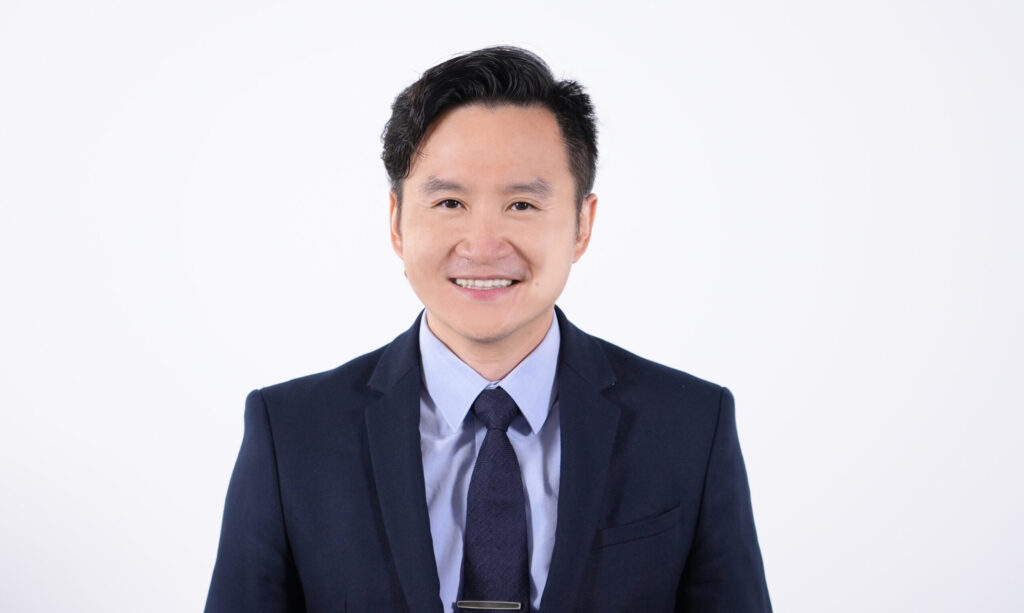
Below are the edited excerpts of the interview:
How would you describe Hong Kong’s startup ecosystem today, and what has changed most significantly in recent years?
Hong Kong’s startup ecosystem is now more mature, more diverse and more international. It has developed from a community centered largely on fintech into a broader innovation ecosystem covering fintech, AI, health technology, biotechnology, greentech, retail tech, robotics, Web3 and other emerging fields.
The latest Startup Survey recorded 5,221 start-ups in Hong Kong in 2025, employing nearly 19,800 people. This reflects both the resilience of the ecosystem and its increasing depth.
What has changed most significantly is the quality of the connections across the ecosystem. We now see stronger links between startups, investors, universities, research institutions, corporates and government. There is also greater emphasis on commercialization—turning research and technology into products, services and companies that can scale.
This is consistent with the direction set out in Hong Kong’s First Five-Year Plan for 2026–2030, which identifies the development of Hong Kong as an international innovation and technology centre and an international high-calibre talent hub as major priorities.
Hong Kong’s start-up ecosystem benefits from a vibrant network of incubators and accelerators, experienced angel investors and venture capitalists, and a welcoming entrepreneurial community.
StartmeupHK’s role is to connect founders to that ecosystem and help innovative and scalable companies establish or expand here. The next phase is not only about growing the number of start-ups. It is about helping more companies move from early-stage innovation to commercial scale, regional expansion and the public market, supported by the listing regimes for biotechnology and specialist technology companies and a strong IPO market in 2026.
What are Hong Kong’s biggest strengths for startups, and what are the biggest challenges?
Hong Kong’s biggest strength is the combination of capabilities available in one place: international finance, deep capital markets, the rule of law, strong professional services, world-class universities, international connectivity and access to the Chinese Mainland.
For a start-up, this means Hong Kong offers more than a place to incorporate. It offers access to investors, customers, strategic partners, universities, research institutions, corporates and professional advisers.
There are also practical advantages. These include Hong Kong’s simple tax system, low tax rate, access to international and regional markets, access to funding, business opportunities in Mainland China and free flow of information. Hong Kong’s role as a “super connector” and “super value-adder” is particularly important. We help companies connect with markets, capital, talent, technology and partners, while adding value through our financial, legal, professional and international business infrastructure.
According to the Global Wealth Report 2026 published by the Boston Consulting Group, Hong Kong is now the world’s largest cross-boundary wealth management center. The report projects that, from 2025 to 2030, cross-boundary wealth managed by Hong Kong will grow by 9 percent on average annually and maintain first place globally.
At the same time, we must recognise the challenges. Hong Kong is a highly competitive international city, and start-ups face pressure relating to operating costs, specialized talent, funding cycles and the time needed to commercialize research.
The local market is compact, so scaling usually means the GBA and overseas markets, and early-stage funding is more selective than it was a few years ago.
The response should not be to deny these challenges, but to address them systematically. That means strengthening the full pipeline from research and incubation to capital, adoption, commercialization and internationalization. The HK$10 billion ($1.27 billion) Innovation and Technology Industry-Oriented Fund and enhanced venture-capital measures under the Five-Year Plan are examples of this broader approach.
What are international founders looking for when they consider Hong Kong as a base, and has their perception of the city changed?
International founders are looking for a combination of market access, capital, talent, infrastructure and trust.
They want to know whether they can find customers and partners, raise funding, recruit specialised people, protect their intellectual property, operate within a predictable regulatory environment and expand into other markets.
Hong Kong is increasingly understood as a platform that can deliver these opportunities together. It is an international financial center, a gateway to the GBA and the Mainland, and a regional base for companies seeking to grow across Asia.
Many founders are looking beyond the Hong Kong market itself. They set up here to reach the GBA and the Chinese Mainland, while keeping an international headquarters. Hong Kong offers a free, open and predictable business environment, a simple and low-tax regime, and the free flow of capital, information and talent.
Perceptions have also changed. Hong Kong was traditionally viewed primarily as a financial center and a gateway to China. That remains an important part of the proposition, but the city is now increasingly recognised as an innovation and technology hub in its own right.
The number and diversity of start-ups have helped change that perception. So have the growth of incubators and accelerators, the expansion of the venture-capital community, and flagship platforms such as the StartmeupHK Festival.
Our 2025 Festival, held together with Hong Kong FinTech Week, attracted more than 45,000 visitors from over 120 economies, over 1,000 speakers, more than 800 exhibitors and over 30 Mainland and international delegations. That demonstrates the breadth of international engagement around Hong Kong’s innovation ecosystem.
For StartmeupHK, the objective is to make the opportunity tangible. We provide founders with practical, customised guidance and connect them with the relevant investors, partners, programmes, talent and market opportunities.
How does Hong Kong differentiate itself from other Asian startup hubs such as Singapore, Tokyo and Seoul?
We should not see Hong Kong, Singapore, Tokyo and Seoul as mutually exclusive. Asia benefits from having several strong innovation centers, and many successful companies will operate across more than one of them.
Hong Kong’s distinct proposition is the combination of international finance, Mainland access and global connectivity.
It is an international financial centre with sophisticated capital markets and a strong concentration of banks, investors, asset managers, insurers and professional services. It offers an internationally oriented business environment, robust intellectual-property protection, a common-law system and access to the GBA.
Hong Kong is also a compact, highly connected city. Founders can engage with investors, regulators, corporates, universities and service providers efficiently.
Our proposition is therefore not simply “choose Hong Kong instead of every other Asian city.” It is: choose Hong Kong when you need a platform that connects finance, technology, the Mainland, Asia and global markets.
Hong Kong is a two-way springboard: a place where international companies can establish, grow and expand into the Mainland and Asia, and where Mainland companies can use Hong Kong to go global.
This is also why Hong Kong has strong relevance for Japanese and Korean companies. Hong Kong is a platform for companies from those markets to expand into the GBA and ASEAN.
Hong Kong has traditionally positioned itself as a bridge between Mainland China and international markets. In the AI era, what role do you see Hong Kong playing in connecting innovation ecosystems across APAC?
In the AI era, Hong Kong’s bridge role becomes broader. It is not only about connecting the Mainland with Western markets; it is about connecting innovation ecosystems across the Asia-Pacific.
Hong Kong can play four complementary roles.
First, it can be a financing platform. AI companies need capital for computing, data, research, product development and market deployment. Hong Kong’s financial ecosystem can help mobilise both private and institutional capital.
Second, it can be a trusted platform for cross-border collaboration. Intellectual property, data governance, regulation, cybersecurity and commercial agreements become increasingly important when companies operate across jurisdictions.
Third, it can connect global companies to the GBA’s research, engineering, manufacturing and commercial capabilities. This is particularly relevant to AI hardware, robotics, smart devices, life and health technology and advanced manufacturing.
Fourth, it can help companies internationalise in both directions. Mainland companies can use Hong Kong to go global, while companies from Southeast Asia, Japan, Korea, Europe and the Middle East can use Hong Kong to access the
Mainland and wider Asian opportunities.
This is the practical meaning of being a “super connector” and “super value-adder.” It is not merely a geographic description. It is a role that requires capital, institutions, networks, professional services, infrastructure and people.
The Shenzhen-Hong Kong-Guangzhou cluster ranks first in the World Intellectual Property Organization’s Global Innovation Index. Within that cluster, Hong Kong’s strength lies in application, finance, regulation and cross-boundary go-to-market. Computing power is being strengthened through Cyberport’s Artificial Intelligence Supercomputing Centre.
The Five-Year Plan places strong emphasis on GBA cooperation and the building of global cooperation networks. InvestHK’s role is to convert those strategic connections into real business partnerships, investments and growth opportunities.
Every city wants to become an AI hub. From your perspective, what does it actually take to build a successful AI ecosystem?
A successful AI ecosystem requires more than attracting companies with “AI” in their names. It needs the full chain from talent and research to infrastructure, capital, deployment and trust.
The first requirement is talent: researchers, engineers, product developers, entrepreneurs and business leaders who understand how to apply AI in specific industries.
The second is capital across the company lifecycle, from research and pre-seed financing through venture capital, growth funding and eventual public-market access.
The third is infrastructure, including computing power, cloud services, data, testing facilities, laboratories and secure environments for experimentation.
The fourth is a strong research-to-market pipeline. Universities and research institutions must be connected to entrepreneurs and companies that can protect intellectual property, commercialise research and reach customers.
The fifth is the availability of real-world application scenarios. AI companies need customers in finance, healthcare, logistics, manufacturing, education, law, public services and other sectors.
The sixth is trust. Responsible innovation, cybersecurity, privacy, intellectual-property protection and appropriate regulation are not obstacles to AI development; they are conditions for sustainable adoption.
Hong Kong has many of these building blocks. It has strong universities and research institutions, an international financial system, professional services, global companies, access to the GBA and a government that is supporting innovation and technology development.
The low-altitude economy is a useful example. Hong Kong’s research capabilities, regulatory framework and global connectivity create a strong platform for developing regional innovation ecosystems. The same principle applies to AI: success comes from government, industry, academia and research working together around real applications.
How can Hong Kong help companies expand not just into China, but also into Southeast Asia and other global markets?
For international companies, it can be a base for entering the Mainland and the GBA. For Mainland companies, it can be a platform for going global. For Southeast Asian and other international companies, it can provide access to capital, professional services, partnerships and markets in both directions.
This is where Hong Kong’s financial and professional-services ecosystem matters. Banks, investors, lawyers, accountants, consultants, logistics providers, technology companies and multinational corporations can help businesses address the practical issues involved in expansion.
The city also provides a strong base for regional functions such as fundraising, treasury management, intellectual-property ownership, regional headquarters, research collaboration and international business development.
Hong Kong is the “homeport” for Mainland enterprises going global. InvestHK’s GoGlobal Task Force in providing one-stop support. The same principle applies to start-ups. A company may use Hong Kong as its headquarters, financing base, research and commercialization platform, or as one important node in a wider APAC operating model.
The measure of success is a company that establishes here and then builds business in the GBA, ASEAN or other international markets. The flagship platform for connecting founders, investors and corporates is Hong Kong FinTech Week x StartmeupHK Festival 2026 (Nov 2–6). The event brings together more than 45,000 global leaders from over 120 economies, with 1,000+ speakers, 800+ sponsors, exhibitors and start-ups, and 30+ Mainland and international delegations, creating opportunities for investment, partnerships and regional expansion.
Programs such as Global Fast Track have supported start-ups across eight verticals: fintech and insurtech; applied AI for financial services; green fintech, sustainability and greentech; blockchain and digital assets; healthtech and life sciences; AI and robotics; proptech and transport; and consumer, hospitality tech and creative industries. Support has included business matching, mentorship and market-readiness programs.
StartmeupHK supports that process by helping founders identify the right ecosystem partners, programmes, investors, corporates and networks. The objective is not simply to help a company enter Hong Kong. It is to help the company use Hong Kong to scale.
Which technology sectors do you think have the greatest potential to develop in Hong Kong over the next five to ten years?
I see strong potential in sectors where Hong Kong’s existing strengths meet major regional and global demand. Financial technology will remain important. Hong Kong’s financial markets, regulatory expertise, international investor base and offshore renminbi role provide a strong foundation for digital assets, payments, wealth technology, insurance technology, compliance technology and risk management.
Artificial intelligence and robotics have significant potential, particularly in finance, healthcare, logistics, infrastructure, smart-city applications and industrial solutions. AI will increasingly be an enabling technology across many sectors rather than a standalone category.
Life and health technology is another major opportunity. Hong Kong combines leading universities and hospitals with international research links and access to the wider GBA. Hong Kong has clear potential as a platform for biomedical commercialization and for companies seeking to scale across Asia.
The Chapter 18A listing regime supports the pathway from research to the public market. Advanced technology and manufacturing—including semiconductors, smart devices, sensors, new materials and robotics—can benefit from stronger links between Hong Kong’s research capabilities and the GBA’s industrial base.
The Northern Metropolis will provide longer-term innovation and technology capacity. Climate and green technology will also expand. This includes renewable energy, carbon management, green finance, climate resilience, sustainable buildings and circular-economy solutions.
I would add the low-altitude economy as an emerging area with considerable potential. It brings together AI, robotics, telecommunications, logistics, aviation, insurance, infrastructure and regulatory innovation. It is a strategic emerging industry and a potential new growth engine for Hong Kong.
These opportunities align closely with the Five-Year Plan’s priority areas: life and health technology, AI and robotics, semiconductors and smart devices, digitalization, and future and sustainable development.
If we look five years ahead, what would you like Hong Kong’s startup ecosystem to be known for?
In five years, I would like Hong Kong to be known as the place where ambitious companies come to build, commercialize and scale across Asia and the world.
That means being known for more than the number of start-ups. It means being recognized for producing and attracting companies with strong technology, international reach and meaningful commercial and social impact.
I would like Hong Kong’s ecosystem to be known for:
- A strong pipeline from research and innovation to commercial products.
- Leading companies in AI, fintech, health technology, advanced technology and sustainability.
- Deep connections between Hong Kong, the GBA, Mainland China, ASEAN and global markets.
- A diverse pool of founders, researchers, investors and technology talent.
- Responsible innovation supported by appropriate regulation and strong institutions.
- A culture of collaboration across government, industry, academia and the research community.
InvestHK remains committed to connecting global companies with Hong Kong’s ecosystem, empowering them to scale across Asia and beyond, driving innovation and commercialisation, and creating more cross-border collaboration opportunities.
For StartmeupHK, success will mean that founders see Hong Kong not simply as a place to launch, but as a place to build and grow.
Our ambition is to help create an ecosystem where companies can find capital, talent, partners, customers, infrastructure and international credibility. In that sense, Hong Kong’s future startup identity is clear: a trusted international platform, a “super connector” and a “super value-adder” for the next generation of companies.
Hong Kong should be known as a trusted international platform, a “super connector” and a “super value-adder”, measured by scale-ups and commercial outcomes.
[HK Special Report] Foxconn-backed Robocore sets sights on global expansion & potential IPO