

Rising rack densities and the spread of AI workloads are changing data center cooling requirements across Asia Pacific. In this TNGlobal Q&A, we asked Peter Huang, Global President of Data Centre & Thermal Management at Castrol, about liquid cooling, design decisions, operating costs and the company’s Castrol CORE service.
At what rack power densities or workload profiles does conventional air-cooling design begin to become impractical, and how quickly are operators in APAC approaching those thresholds?
Air cooling still works well for lower-density chips and racks. But once you get beyond about 50 kW per rack, it really starts to struggle. The issue is the pace of change. For twenty years, a CPU generation lasted around three to five years. Now we’re seeing two generations a year, with each one bringing more heat and higher rack density. Looking ahead, we’ll need to support performance of up to 1,000 kW.
In Asia Pacific, the speed of execution is striking. Malaysia and Indonesia are moving very quickly, while in Singapore they recently approved four projects with a capacity of 200mW. That’s why we’ve built a regional design team, so we can keep pace with what different customers are asking for.
Which cooling decisions need to be made at the earliest facility-design stage, and which problems become particularly expensive or difficult to solve through retrofit?
It’s much easier to get this right at the start. On a new build, you can design for the hardware that’s coming, not just what you’re installing today. Ideally, Castrol would be involved from the design consulting stage, and sometimes even earlier, at site selection and feasibility, when the question is whether a site can support liquid cooling at all.
We’re seeing brownfield projects across the APAC region with steel factories and chemical firms transforming to AI data centers. Retrofitting is harder because there’s more to check. For example, a 40-foot containerized cooling solution cannot simply be installed inside an existing factory as it requires a different design. You also need to consider factors as basic as: can the floor take the weight? Is the piping suitable, especially if you’re using utility water? Do the racks need redesigning for high-density servers? By my estimate, around 90% of existing sites aren’t yet ready. Our work is roughly 70% new build and 30% existing facilities, and we’re building an in-house design team to help customers with those retrofit constraints.
APAC data-center markets differ widely in climate, water availability, grid constraints and regulation. Which of those differences most strongly affect cooling architecture?
Yes, the APAC region is incredibly varied. Indonesia, Malaysia and Australia are key demand markets, while Japan, South Korea and India are also seeing significant growth.
Each has different constraints around power, water, land and permitting, and these directly affect cooling design. Singapore’s latest capacity allocation requires new facilities to achieve a PUE of 1.25 or better, while Malaysia only approves projects where sufficient power and water capacity is available. Australia is developing mandatory national standards that would require large data centers to support new renewable generation, respond flexibly to grid demand and minimize water use.
These differences mean there is no single cooling model for APAC. We tailor fluid formulations and concentrations to each project’s climate, infrastructure and regulatory requirements, while holding stock across the region so we can respond quickly to local needs.
How does the shift from centralized AI training toward more localized inference change where high-density computing is deployed and what operators need from thermal-management systems?
As computing moves closer to users, you get smaller, more distributed sites, and they still need high-density cooling. Air cooling takes up a lot of space, which limits where you can build. Liquid cooling scales better. But these sites also need to be simple to run. That means validated fluids and hardware, condition monitoring that feeds into the operator’s own systems, and local partners who can support the site when something needs attention. Castrol CORE provides this, combining coolant with design, system integration, testing and maintenance through hardware and service partners.
How do you see direct-to-chip liquid cooling, immersion cooling and hybrid approaches dividing the market over the next few years? What are the main adoption barriers for each?
I don’t think it will be a case of one winner. Our customer research shows that operators want partners who can help them coordinate multiple technologies and suppliers, so hybrid approaches will be common. We work with both direct-to-chip and immersion, and we launched a direct-to-chip fluid, Castrol ON Direct Liquid Cooling PG 25, at the end of 2024.
For immersion, the barriers are fairly consistent. In our Dipping Point research, the top concerns were fluid leakage, time to implement and ongoing maintenance. Those are legitimate worries in an industry where uptime is everything. None are insurmountable, but operators need proper support to address them. The experts we surveyed expected immersion to become the dominant technology around 2027.
Across direct-to-chip, immersion and hybrid approaches, supply chain constraints also affect how quickly operators can adopt liquid cooling. In APAC, availability of AI and high-density servers is a challenge, with long lead times for chips and other components. Delays in sourcing cooling distribution units (CDUs), valves, heat exchangers and printed circuit boards can also slow implementation. These challenges reinforce the need for support that brings the different elements together. We describe our offer as ‘product plus services plus design’, supporting customers from early design through specification, execution and operation.
Castrol Core moves the company toward a more integrated thermal-management service. What parts of design, commissioning, monitoring and maintenance will Castrol take responsibility for, and how should customers avoid excessive dependency on any one supplier?
CORE is our move towards a system orchestrator role. Coolant remains at the heart of what we do, but customers need the fluid, hardware, design, services and day-to-day operation to work together. We now have a design team and hardware integration capabilities, and we work with equipment makers, integrators and local service partners to bring those elements together.
Our role can start at design and specification, continue through commissioning, and extend into fluid monitoring and maintenance. The exact responsibilities depend on the project. Under a direct agreement, our technical team can test the fluid and work on site; where a contractor holds the wider mechanical scope, trained partners may carry out that work. What matters is that the customer knows who is responsible at each stage and has a clear point of accountability when something needs attention.
That doesn’t mean asking customers to commit to one supplier’s technology. We need to work across different cooling designs and with the operator’s chosen partners. Customers should ask for clear responsibilities, evidence that fluids and equipment work together, access to their monitoring data and service terms that let them make informed choices over the life of the facility. This is the system-level role we’re building towards with CORE.
What will Castrol CORE take responsibility for, and how should customers avoid dependency on any one supplier?
CORE is a shift from selling a product to offering an integrated service, to deliver a hassle-free solution that gives customers peace of mind. We work with customers from early design and specification, through commissioning and operation, to maintenance and eventually disposal. The coolant is still the core product, and the team around it comes from IT, data centers and design. Our team of experts across different essential divisions in the eco-system value chain delivers our commitment.
We take a system approach rather than a vendor’s approach, delivering with partners: integrators, mechanical contractors and local service providers. Customers get one point of contact, but not a closed system.
Our fluids are validated across multiple manufacturers’ equipment, and CORE is built to work with the customer’s chosen architecture and partners. Operators should still ask for open approvals and clear service terms from any supplier, including us.
Power usage effectiveness alone does not capture all cooling trade-offs. Which measures should operators use to assess energy, water, reliability, heat reuse and total operating cost?
PUE is useful but it only tells you part of the story. I’d add water usage effectiveness and carbon usage effectiveness, and I’d look at total cost of ownership over the life of the facility. Coolant is only around 2% of capital cost by my estimate, but it affects a lot of the outcome. Reliability matters too: what does downtime cost you, and how well is the fluid condition monitored? And where heat reuse is possible, it belongs in the calculation as well.
Where are you seeing the biggest skills or operational gaps as data-center teams move from familiar air-cooled environments to more complex liquid-cooling systems?
The main gap is practical experience. Teams know air-cooled environments well, but liquid cooling adds new tasks: testing fluids, monitoring their condition, handling changes safely and preventing leaks. This is a significant adjustment and one reason some operators hesitate.
Our customer research showed that operators wanted one point of contact and integrated, hassle-free support that reduces single points of failure. Our fluid management service is designed to meet that need, covering start-up, maintenance, break-fix support and disposal through trained partners, so operators don’t have to build all that expertise at once. Where we have direct agreements, our technical staff can also collect samples and work on site.
Over the next two to three years, what would a well-designed AI data center in APAC do differently from the facilities being built today?
Start with liquid cooling in mind, not as an afterthought. That means involving the cooling and fluid specialists at the specification stage, designing for much higher rack densities than today, and choosing fluid, hardware and distribution equipment that have been validated together.
We also need to build in fluid monitoring and lifecycle support from day one, and be ready to run more than one cooling technology. In this region, execution speed matters, so having local partners and stock in place is a real advantage.
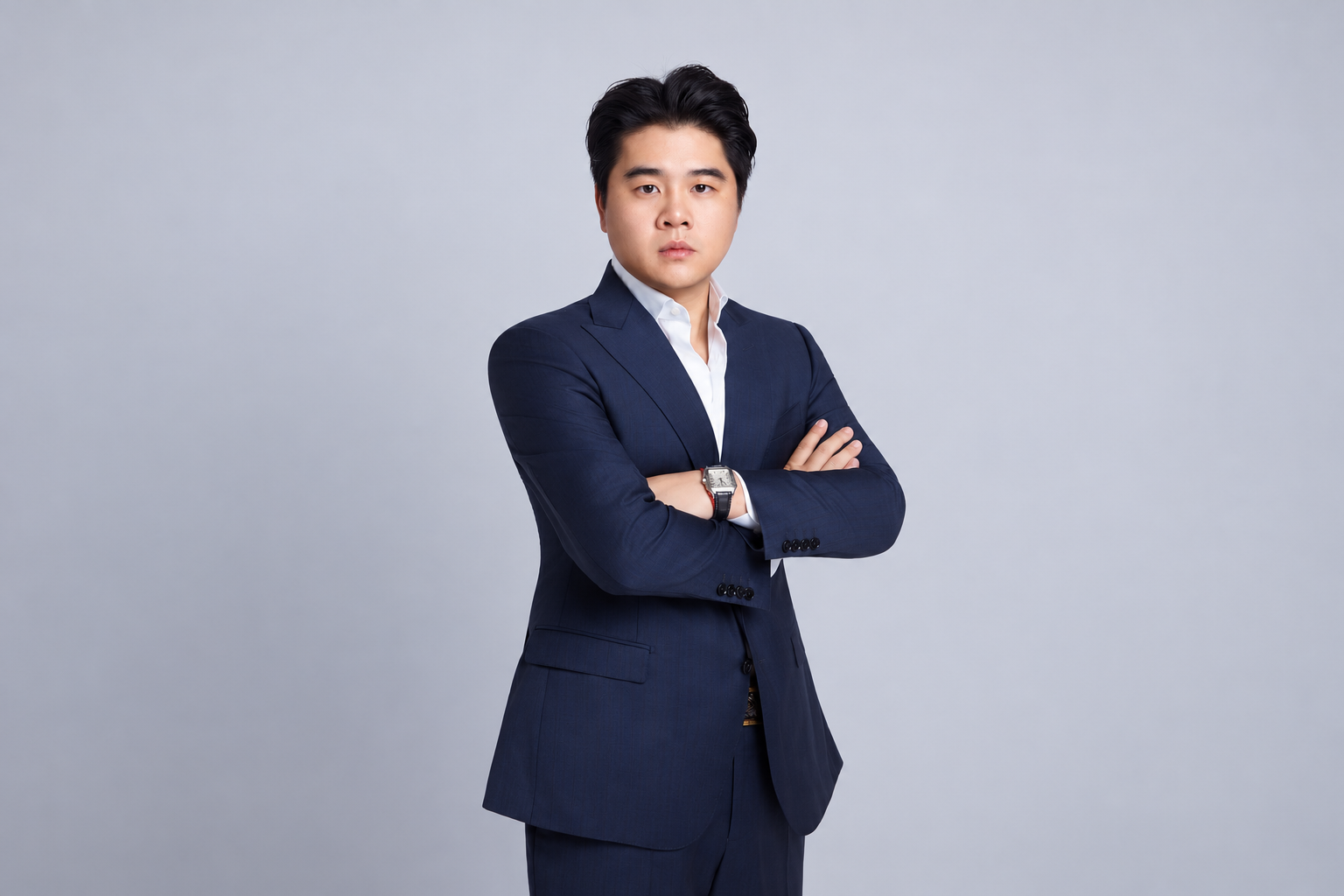
Peter Huang is Global President of Data Centre & Thermal Management at Castrol
Editor’s note: This Q&A has been lightly edited for clarity and TNGlobal house style. The substance of the interviewee’s responses has been preserved.
Share your perspective: TNGlobal welcomes contributed insights and expert commentary from across Asia’s technology and innovation ecosystem. Submit a contribution for editorial consideration, or explore more conversations in our TNGlobal INSIDER and TNGlobal Q&A and Interviews archive.
Expereo’s Eric Wong on digital sovereignty beyond data localization in APAC [Q&A]