

At AIMCONNECT 2026 in Singapore, industry leaders explored what it will take to make smarter mobility and financing work for consumers.
Artificial intelligence is moving beyond answering customer questions and suggesting products. In automotive finance, the bigger opportunity lies in connecting the many decisions between an initial enquiry and a completed transaction. Yet greater automation also brings greater responsibility: who sets the limits, who remains accountable and how can customers trust the outcome?
These questions shaped discussions at AIMCONNECT 2026, held on Oct 11 at Shangri-La Rasa Sentosa, Singapore. Organized by X Star Technology and Aimotion under the theme “Where Mobility Meets the Future,” the forum drew more than 250 senior leaders from 11 countries, representing more than 100 automotive organisations, over 60 financial institutions and around 20 technology organizations.
Opening remarks were delivered by Member of Parliament Tin Pei Ling and Federation of Motor and Credit Companies Associations of Malaysia (FMCCAM) President Tony Khor Chong Boon.
Keynote presentations, three industry panels and live technology demonstrations brought together perspectives from automakers, dealerships, financiers and technology companies. Speakers included representatives from BYD Singapore, Uber, Google Cloud, Deloitte, Carro and Deutsche Bank.
From faster decisions to accountable AI
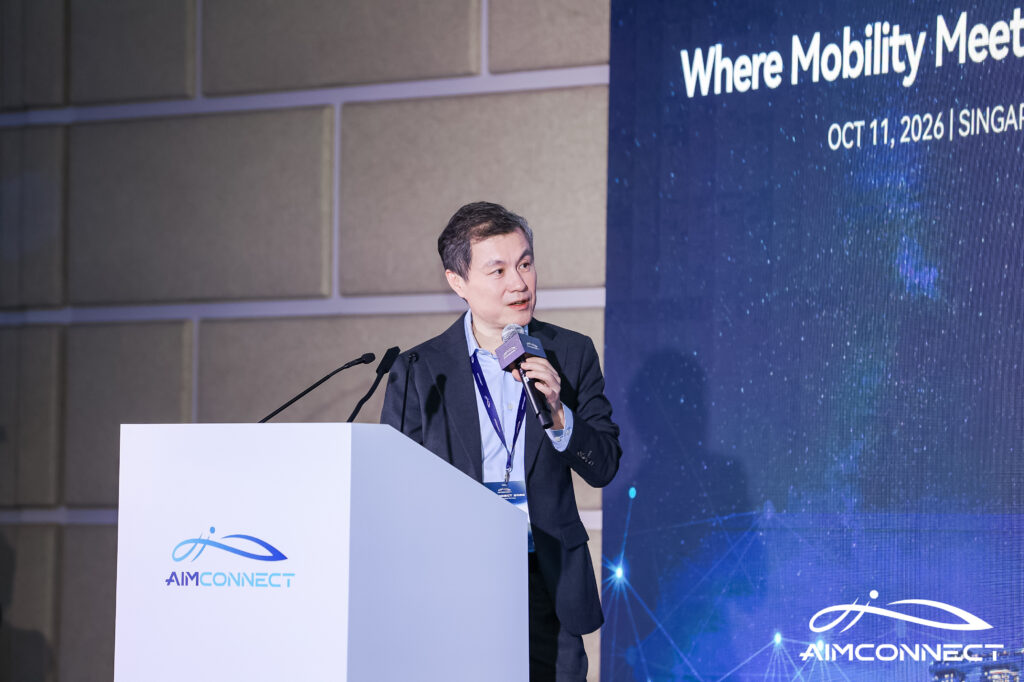
In his keynote, “The Next Mobility Economy: Intelligence, Connection, Trust,” X Star Technology CEO Shawn Yang pointed to a gap between growing digital engagement and the reality of completing a vehicle purchase.
Citing research from BCG, Cox Automotive and PwC, he noted that 90 percent of car buyers research online before visiting a dealer, 63 percent plan to use AI in their next vehicle purchase and 67 percent expect AI to guide their borrowing decision.
In Southeast Asia, Yang said, an estimated 60 percent to 80 percent of cars are purchased with financing, yet only around 10 percent of consumer prospects complete the process. “Customers are not lost in one stage; they are lost to the friction between them,” he said.
Removing that friction requires more than speed. As AI takes on tasks across the financing journey, lenders and dealers need a clear way to oversee decisions and intervene when necessary.
Yang described X Star’s proprietary Harness framework, which combines human oversight, boundaries for AI agents and traceable data. The approach is designed to block actions outside an agent’s parameters and escalate them for review.
“In auto finance, a single flawed decision risks customer harm and regulatory non-compliance. For AI to operate across the customer journey with true autonomy, trust cannot be an afterthought; it must be engineered into the architecture from day one,” Yang said.
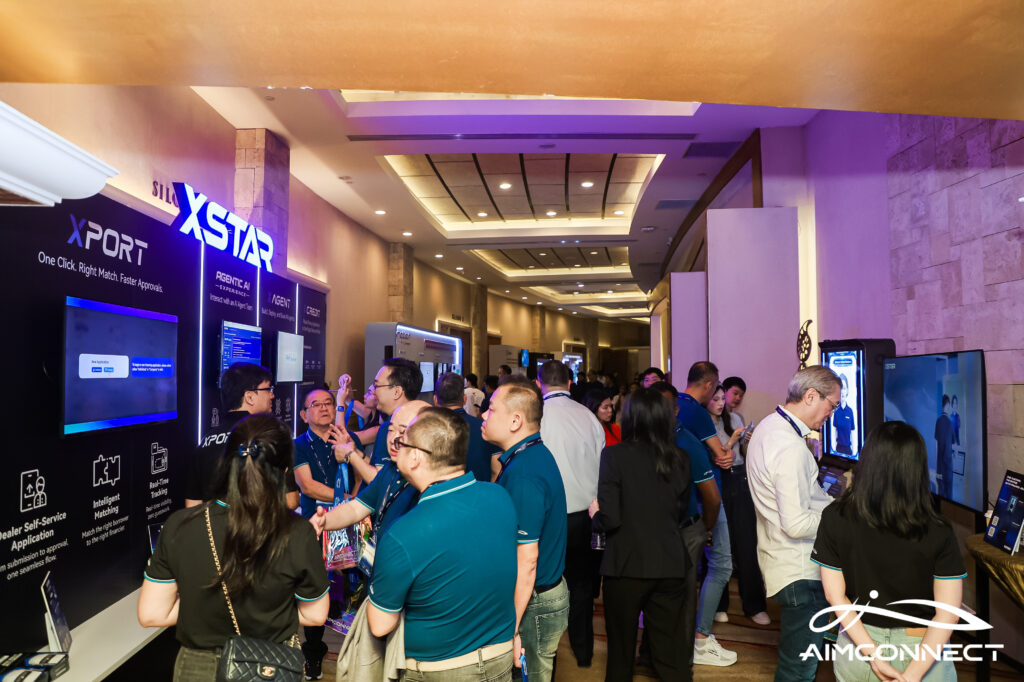
Live showcases offered a practical view of this direction. AI agents were demonstrated across dealership workflows, from lead qualification to automated underwriting. X Star’s Xport platform showed one-click lead-to-loan matching and real-time approvals, alongside exhibits from Aimotion, MStar, MK.X and AI Wingman.
Why better connections matter
A recurring theme was that progress depends on how well different parts of the industry work together. The panel “Building a Connected Auto Finance Ecosystem,” moderated by MStar CEO Zhang Peng, considered how richer data could improve credit decisions without adding complexity for customers.
Panellists from Deloitte, Deutsche Bank, The CEO Circle and JWT Bespoke discussed data privacy, cybersecurity, financial stability and accountability for decisions made by machines. “Better data infrastructure and connectivity can help the industry make more informed financing decisions, but technology must go hand in hand with trust,” Mr Zhang said.
Matthew Duncan, Director and CEO of JWT Bespoke, drew on Australia’s experience: “Regulation works best when it protects customers and still gives the industry room to improve how people buy and finance their cars.”
The audience placed particular weight on collaboration. In a live poll about improving the financing journey, 38 percent selected better connectivity across institutions, followed by stronger data infrastructure (28 percent), client centricity (18 percent) and consumer protection without stifling innovation (16 percent).
The result reflected an important distinction: better tools within individual businesses cannot, on their own, resolve the handoffs between them.
Rethinking the relationship with the car
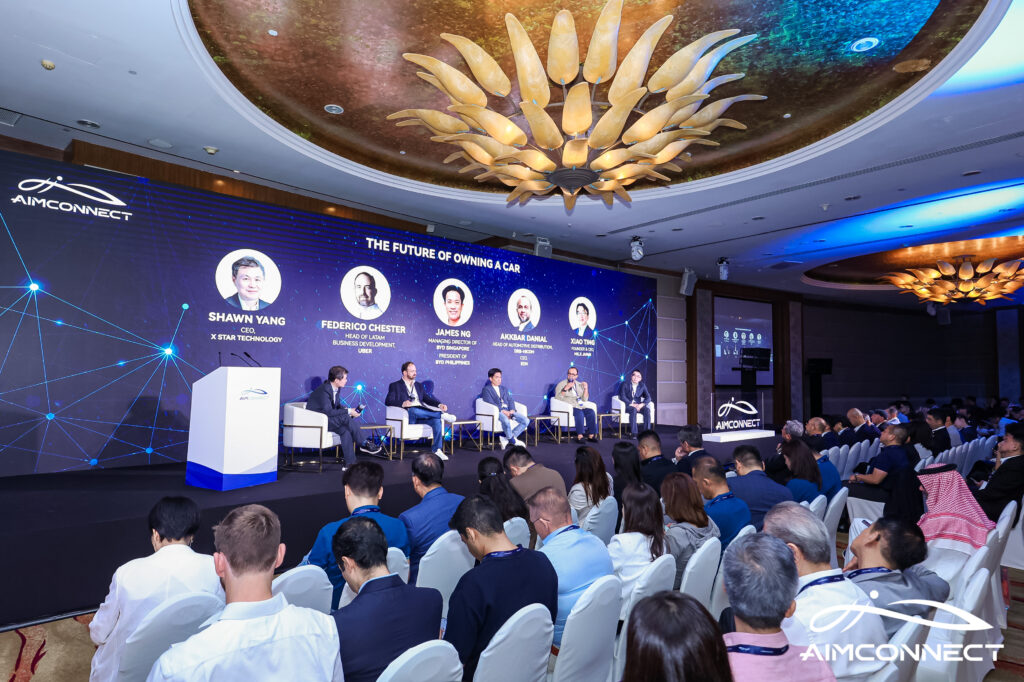
The conversation extended beyond financing to the future of mobility itself. In “The Future of Owning a Car,” moderated by Yang, panellists considered how leasing, subscriptions, car-sharing and ride-hailing could influence consumer choices. Delegates were closely split: 54 percent expected flexible mobility options to become the preferred choice within 10 years, while 46 percent believed ownership would remain dominant.
James Ng, Managing Director of BYD Singapore and President of BYD Philippines, outlined BYD’s evolving technology journey, moving from electrification towards intelligence and greater integration.
He highlighted AI’s growing role in enhancing the customer experience, alongside BYD’s broader identity as a technology and engineering company.
BYD’s first phase was electrification, delivering performance. The second phase is intelligence, using AI to enhance the customer experience. The third phase will focus on integration, he said.
“We are more than a vehicle company. We are a technology and engineering company,” Ng added. “Having established electrification as the foundation, our next focus is intelligence, leveraging AI to deliver a better customer experience.”
Other than New Energy Vehicles manufacturing, Ng said BYD’s technology like Battery Energy Storage System (BESS) can support data centres and the solar PV and BESS contribute to the broader technology in renewable energy ecosystem.
“For BYD, the journey is evolving through three phases: electrification, intelligence and integration at the whole ecosystem system, including
vehicles, energy system, transportation network and digital infrastructure,” Ng noted.
Looking ahead, he shared ambitions for BYD’s technological capabilities to contribute to wider industries and infrastructure, including data centres, reinforcing the potential for innovation and collaboration beyond the automotive sector.
For Xiao Ting, CEO of MK.X, more capable AI assistants could change the way people assess their needs: “The decision may increasingly be less about owning a car and more about finding the right mobility solution for each journey.”
The panel “How Is AI Reshaping Mobility?”, moderated by X Star Chief Technology Officer Michael Jia, examined the technology’s role beyond the point of sale. Panellists included Carson Zhang of Aimotion, Connor Liu of Google Cloud, Dr Harold Teng of MK.X Technology and Bryan Tan of Carro.
In a live poll, delegates ranked Personalised Ownership & Services as the area where AI would have the greatest impact, ahead of Choosing a Car, Buying & Financing a Car, and Smart Driving & In-Car Technology.
Tan, Chief Scientist at Carro Group and CEO of Carro Indonesia, described how an electric vehicle’s residual value is increasingly shaped by its battery condition and charging history, rather than mileage alone. He noted that Singapore is an exception, where the high cost of a Certificate of Entitlement continues to shape vehicle value.
But personalization has limits. Constant interventions can make technology feel intrusive rather than useful. As Dr Teng put it, “The focus must remain on delivering practical benefits, enhancing safety and making mobility more intuitive for consumers.”
The next challenge is collective
Across the three panels, a common view emerged: technology can improve individual stages of the mobility journey, but meaningful change requires cooperation across the entire system. That includes automakers, dealers, lenders, mobility platforms, technology providers and policymakers.
“No single company can transform the entire mobility journey on its own,” Xiao Ting said. Zhang Peng offered a measure of what progress should look like: “Progress should be measured not only by how quickly a loan can be approved, but by how well the industry works together to serve the customer.”
AIMCONNECT will continue convening the mobility ecosystem to examine how emerging technologiesvcan be put to work in practice.
For more information, visit https://event.aimconnect.net/
https://www.linkedin.com/company/aimconnectlive/
AIMCONNECT 2026 brings together dealers, OEMs, financiers, technology innovators and industry decision-makers through dialogue, thought leadership and live technology showcases, exploring how emerging technologies are reshaping automotive commerce and mobility.