

Editor’s note: For this special report series, TNGlobal spoke with investors, ecosystem builders, capital-market leaders and founders to examine the opportunities and challenges shaping Hong Kong’s next chapter in technology.
Since launching in 2015, Alibaba Hong Kong Entrepreneurs Fund (AEF) has evolved from a fund focused on backing Hong Kong startups into a broader platform supporting founders as they build, commercialise and scale their businesses. The fund combines investment with access to Alibaba’s broader technology ecosystem, including expertise, networks, technology resources and potential business connections. Its investment decisions go beyond market opportunity and technology, with the founders’ ability to execute, adapt and build sustainable businesses playing a key role.
As technology reshapes industries and startups increasingly look beyond their home markets, AEF is also placing greater emphasis on the path from innovation to commercialisation and international expansion. AI, robotics, fintech, healthcare, enterprise technology and deeptech are among the areas it continues to watch, while Hong Kong’s position at the intersection of Mainland China, the Greater Bay Area and global markets could give technology companies a platform for international growth.
In a recent interview with TNGlobal, Alibaba Hong Kong Entrepreneurs Fund Executive Director and Chief Executive Officer Cindy Chow discussed how the fund’s investment strategy has evolved over the past decade, what it looks for in founders and why it believes Hong Kong’s role could extend beyond being a gateway to becoming a launchpad for Asian companies going global.
Founded in 2015, AEF has invested in many well-known and high-value Hong Kong technology companies, including the enterprise payment platform Airwallex, digital insurance company AiFT, digital bank WeLab, and healthcare testing company Prenetics.
Chow is currently also serving on multiple committees, including the InnoHK innovation and research platform, the Standing Committee on Language Education and Research (SCOLAR) under the Education Bureau, the Occupational Safety and Health Council (OSHC), as well as academic institutions such as CUHK Innovation Limited and the HKUST Accounting Advisory Board.
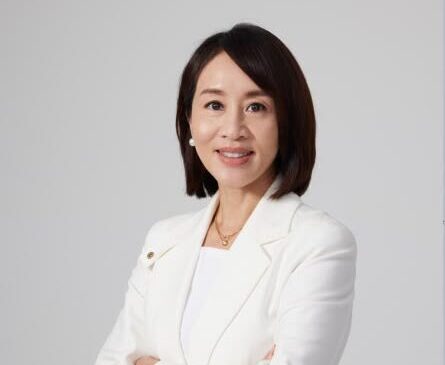
Below are the edited excerpts of the interview:
Alibaba Hong Kong Entrepreneurs Fund was established in 2015. What was the original thinking behind setting up the Fund, and how has that mandate evolved over the past decade?
Alibaba Hong Kong Entrepreneurs Fund (AEF) was established in 2015 with a simple objective: to support the next generation of entrepreneurs and help strengthen Hong Kong’s startup ecosystem.
AEF is a mission-driven evergreen fund. It is operated under a unique model – combining the commercial aspect of a conventional venture capital fund that drives for financial return and capital on exits and returns are reinvested into new generations of startups. This gives us the ability to take a long-term view and remain focused on supporting entrepreneurs and the ecosystem.
We are also fortunate that we can leverage on the resources of the vast Alibaba ecosystem globally to support our portfolio companies.
Over the past decade, our mandate has naturally evolved alongside the startup landscape. We have grown from primarily being an investor to becoming a broader platform for startup empowerment.
Today, we support founders and companies not only through capital, but also through connections, expertise, market access and opportunities to scale.
Looking ahead, our focus is increasingly on helping companies move from innovation to commercialization and scale, and supporting ambitious companies from Asia as they expand globally through Hong Kong.
How would you describe Alibaba Hong Kong Entrepreneurs Fund’s investment philosophy today? What qualities do you look for when evaluating an entrepreneur or startup?
We look for entrepreneurs with the ambition and ability to build companies that can create long-term value.
The market opportunity and technology are important, but we pay close attention to the founders themselves: their understanding of the problem they are solving, their ability to execute, their resilience, and their willingness to learn and adapt as the business evolves.
We also look beyond the current product or business model. We ask whether a company has the potential to build a sustainable business, expand into new markets and develop a meaningful competitive advantage over time.
Ultimately, we are looking for founders who are solving meaningful problems and have the ambition to build businesses that can grow beyond their initial market.
After a decade of investing, what have been some of the biggest lessons AEF has learned from working with startups and founders?
One of the biggest lessons is that building a company is rarely a linear journey. Markets change, technologies evolve and business models often need to adapt. The ability of founders and teams to learn and respond to change is therefore critical.
We have also learned that capital is only one part of what founders need. At different stages of a company’s journey, founders may need access to customers, industry expertise, talent, strategic partners, investors or international markets.
This has shaped the way we think about our role today. Rather than simply asking how we can invest in a company, we increasingly ask: what does this company need next to build, scale and thrive?
That is also why we are developing a broader startup empowerment platform around the different needs of founders and scale-up companies.
Alibaba Hong Kong Entrepreneurs Fund is backed by Alibaba, giving it access to an ecosystem that extends beyond traditional venture capital. How does this connection influence the way the Fund supports its portfolio companies?
The Alibaba ecosystem provides an important extension to what a traditional investor can offer. Depending on the needs of a company, this can include access to technology and digital infrastructure, industry expertise, networks, potential business connections and exposure to markets across Asia and beyond.
Our connection with Alibaba also gives us a practical perspective on how technology businesses can move from innovation to commercialisation and scale. We can draw on capabilities across areas such as cloud computing, AI and digital commerce, while also connecting founders with relevant people and resources within the broader ecosystem.
At the same time, we remain independent in our investment decisions. The value of the ecosystem is not about prescribing a particular path for portfolio companies, but about giving founders additional resources and connections that they can leverage when relevant to their business.
How involved is Alibaba Hong Kong Entrepreneurs Fund after making an investment? What kind of support can portfolio companies expect beyond capital?
Our involvement varies depending on the needs and stage of each company. We do not believe there is a one-size-fits-all model for supporting founders.
Beyond capital, we can help portfolio companies access networks, industry expertise, potential partners, customers, talent and investors. As companies mature, international expansion and access to new markets can also become increasingly important.
Our broader ecosystem includes an investor network, mentor network, technology resources and partnerships across different sectors. We aim to connect companies with the right resources at the right stage rather than simply providing support for its own sake.
The principle is straightforward: capital helps a company grow, but the right connections and capabilities can help it scale.
Has Alibaba Hong Kong Entrepreneurs Fund’s investment focus evolved as technologies such as AI, robotics, fintech and deeptech have become more prominent?
Yes. Our investment focus has evolved alongside technological and market developments. AI in particular has become a fundamental technology layer across many industries, rather than a standalone sector. We therefore look at how companies are using AI and other technologies to solve real-world problems, improve productivity and create new business models.
At the same time, we continue to look across sectors and technology areas, including robotics, fintech, healthcare, enterprise technology and deeptech. What matters is not simply whether a company is using a particular technology, but whether the technology creates a meaningful and defensible advantage and can translate into a sustainable business.
We also see an increasing distinction between early-stage innovation and companies that are ready to commercialise and scale. Supporting companies through that transition is becoming an increasingly important part of our work.
What do you think will be the biggest opportunities for Hong Kong’s technology ecosystem over the next five years?
We see significant opportunities at the intersection of technology, industry and international markets.
Hong Kong has strong foundations in finance, professional services, trade and international business. Combined with its proximity to the Greater Bay Area and access to Mainland China’s technology and manufacturing capabilities, this creates opportunities for companies that can connect technology with real-world commercial applications.
AI will be an important enabler across many of these areas, from financial services and healthcare to retail, logistics, property and professional services. The opportunity is not simply to build AI technology, but to accelerate the adoption and commercialization of technology across industries.
We also see an opportunity for Hong Kong to become a stronger launchpad for Asian companies looking to expand internationally. This is an area where Hong Kong’s international networks, business environment and professional services capabilities can create meaningful value.
Hong Kong is often described as a gateway between Mainland China and the rest of the world. Is that still enough of a competitive advantage, or does Hong Kong need to build a stronger technology identity of its own?
Being a gateway remains an important advantage, but we believe Hong Kong’s opportunity goes beyond being a point of connection.
Hong Kong can play a more active role in helping technology companies go global. That means providing not only access to markets and capital, but also the professional services, international networks, talent and partnerships that companies need when they scale internationally.
Hong Kong also has its own strengths in areas such as financial services, healthcare, logistics, professional services and research. Connecting these strengths with technology can create a distinctive ecosystem of its own.
The goal should therefore be to move from being simply a gateway between markets to becoming a platform for companies to build, scale and expand globally.
What are the biggest challenges currently facing Hong Kong startups—talent, funding, market size, regulation, cost, or something else?
There is no single challenge. Different companies face different constraints depending on their stage and sector. For early-stage startups, access to talent, funding and customers can be critical.
As companies grow, the challenge often shifts from raising capital to finding the right talent, developing repeatable business models, accessing larger markets and building the capabilities required for international expansion.
Market size is another important consideration. Hong Kong is a relatively compact market, so companies need to think about regional and global markets from an early stage if they want to achieve significant scale.
This is also where Hong Kong’s position can become an advantage. Rather than viewing the local market size only as a constraint, companies can use Hong Kong as a base from which to access the Greater Bay Area, Mainland China, Asia and international markets.
For the ecosystem as a whole, the opportunity is to make that journey easier — connecting founders with capital, expertise, customers, talent and international markets at the points where they need them most.
Sunway iLabs partners Alibaba to strengthen regional AI startup ecosystem