

China’s electronics group TCL plans to raise its total investment in Vietnam to $590 million by 2027, from $310 million at the moment, the Vietnamese government said Wednesday, regarding at meeting between TCL leadership and Deputy Prime Minister Pham Gia Tuc.
At the meeting on Wednesday, TCL’s chief executive Wang Cheng asked Vietnam to continue supporting the company’s expansion, particularly in high-technology projects and audiovisual electronics, and skillful workforce training.
TCL would invite its partners to explore opportunities in Vietnam, the executive added.
In reply, Deputy Prime Minister Tuc welcomed TCL’s continued long-term investment. The Vietnamese government would help address any difficulties noted by the company.
TCL, founded in 1981, is a Chinese multinational making displays, semiconductor materials, photovoltaic products, and smart devices. It operates in more than 160 countries with about 130,000 employees, 47 research centres and 39 manufacturing sites, and reported global revenue of $51.3 billion in 2025, up 13.8 percent year-on-year.
TCL has operated in Vietnam since 1999 and runs four manufacturing sites in Binh Duong and Quang Ninh provinces, producing LCD panels and display modules. The company’s revenue in Vietnam reached $1.39 billion in 2025, up 14 percent from a year earlier, with more than 11,000 employees.
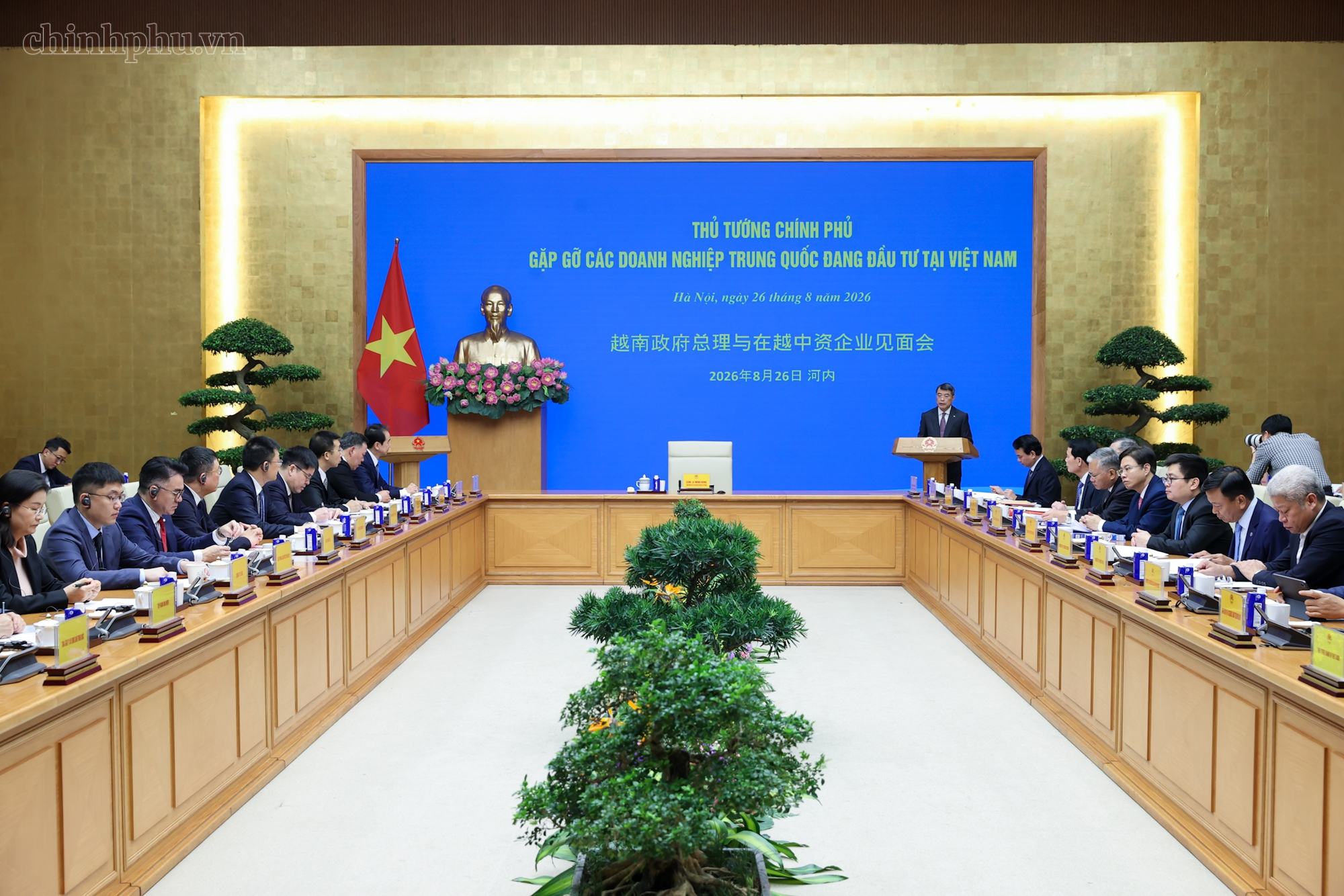
On the same day, Vietnamese Prime Minister Le Minh Hung met representatives of Chinese companies investing in Vietnam across six sectors, including manufacturing, energy, infrastructure, high-technology agriculture, telecommunications, and finance.
Hung asked Chinese companies to strengthen research and development, help Vietnamese firms join their supply chains, and improve the localization rate. The government head also called for genuine technology transfer, workforce training, investments per green and sustainable standards, and greater social responsibility.
He identified priorities for Chinese businesses in Vietnam, including strategic infrastructure such as Vietnam-China railway links, urban railways, logistics and smart border gates, clean energy, modern manufacturing, the digital economy, AI, semiconductors, 5G, and big data.
As of the end of July, Chinese investors held more than 7,000 active projects in Vietnam with the total registered capital of $37 billion, focusing on sectors of manufacturing, infrastructure, energy, electronics, and technology.