

AI is moving into routine work across Singapore, yet adoption remains uneven. The Singapore Digital Economy Report 2025 found that 14.5 percent of small and medium-sized enterprises used AI in 2024, compared with 62.5 percent of non-SMEs. The gap is significant in an economy where SMEs employ about 70 percent of the workforce.
Many organizations have begun with individual experimentation. Employees use readily available tools, while core systems, governance processes and job roles change more slowly. The next stage calls for redesigning how work is organized, building trust around AI use and helping people develop their skills over time.
From experimentation to redesigned work
Enterprise adoption begins to deliver value when teams can identify where AI supports a real workflow, rather than treating it as a separate productivity exercise. In manufacturing, for example, AI can support predictive maintenance, quality inspection and process optimization. Those applications require operational data, clear ownership and people who understand the context in which a recommendation is made.
Educational institutions have a role alongside employers and technology providers. They can help students and adult learners build foundational AI literacy, while working with companies on the practical questions that emerge when new tools enter day-to-day operations. For many small firms, access to skills and practical examples can be as important as access to software.
The work is also broader than technical training. Managers may need to rethink decision rights, frontline staff need confidence to challenge a system’s output, and leaders need a clear view of the risks they are prepared to accept. AI fluency should therefore include judgment, quality control and an understanding of when human review is required.
Governance belongs in the workflow
Industrial settings underline the need for this approach. A weakly governed AI deployment can introduce data, safety and accountability risks. Governance cannot be left until after a pilot has been built. It needs to shape the design of the use case, the data that is used and the controls that sit around it.
AutomationSG’s Trusted Industrial AI-Ready Framework offers one practical route. It is designed to help manufacturers, integrators and technology providers assess a defined AI use case, identify risks, assign accountability and build evidence for responsible deployment. The framework gives companies a starting point, especially when they may not yet have a large internal AI governance function.
Singapore Polytechnic is the framework’s founding training partner. That partnership reflects an important shift in enterprise adoption. The question for a company is no longer only which tool to procure. It also includes whether the workforce, data practices and operating processes can support the intended use safely and consistently.
Capability building takes time
Organizations commonly approach training as a one-off intervention that follows a technology rollout. In practice, capability building needs to continue as workflows change. A staff member may first need to learn how to use an AI-enabled tool; later, that person may need to validate outputs, interpret exceptions or contribute to a redesigned process.
This is where industry-academia collaboration can be valuable. Companies can share the conditions they face in live operations, while faculty and learners gain exposure to current tools and business needs. The feedback loop is useful for both sides, particularly in sectors where technology changes quickly and the consequences of a poor deployment can be material.
Singapore’s AI ambitions will be shaped by how widely and responsibly companies can adopt the technology. Large organizations may have dedicated technology and risk teams. Smaller businesses often need clearer starting points, accessible training and trusted partners who can help translate broad policy goals into workable practices.
A shared responsibility
Workforce readiness is therefore a shared responsibility. Employers need to invest in their people and give them room to apply new capabilities. Education providers need to keep learning aligned with real operating environments. Industry bodies and public agencies can help establish practical frameworks that improve trust without making adoption unnecessarily difficult.
The aim is to help people work with AI in ways that improve judgment, productivity and resilience. When training, governance and workflow design develop together, companies are better placed to move beyond isolated experimentation and build capabilities that can endure.
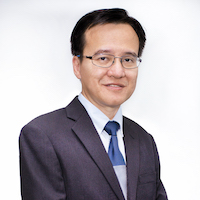
Toh Ser Khoon is Senior Director of the Engineering Cluster at Singapore Polytechnic. He also serves as Managing Director of Singapore Polytechnic International and the Institute for Financial Literacy.
Editor’s note: This contributed article has been lightly edited for clarity, length, and style. Where appropriate, TNGlobal may verify, qualify or omit factual claims that cannot be independently corroborated. The views and arguments expressed remain those of the author.
Share your perspective: TNGlobal welcomes contributed insights and expert commentary from across Asia’s technology and innovation ecosystem. Submit a contribution for editorial consideration, or explore more conversations in our TNGlobal INSIDER and TNGlobal Q&A and Interviews archive.
Skills built faster than work redesigned to use them: Singapore Polytechnic