

As many as 86 percent of financial institution leaders across Asia Pacific believe AI has increased the sophistication of fraud and scams, while 79 percent say their institutions have already encountered attacks utilizing agentic AI, according to a survey conducted by network and computer security firm BioCatch.
The survey, commissioned by BioCatch, collected responses from 340 fraud management, anti-money laundering, and risk and compliance leaders at banks in Singapore, Indonesia, Thailand, India, and Australia.
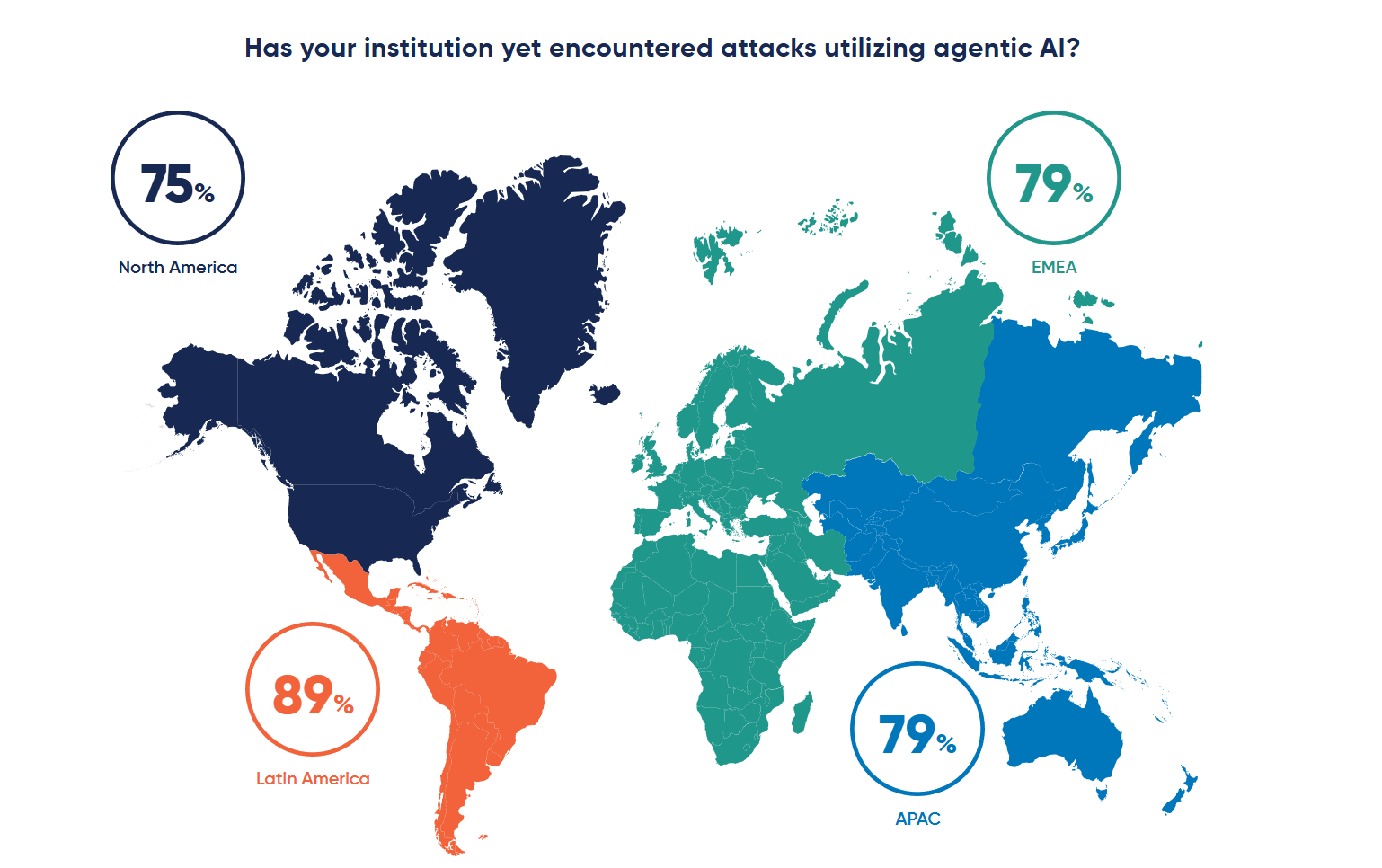
BioCatch reported that 86 percent of Asia Pacific respondents believe AI agents could be the industry’s next largest exploitable vulnerability within the next year, and 78 percent believe it will be very challenging to distinguish legitimate AI-assisted actions from malicious or manipulated activity.
Fraud losses are already significant as 49 percent of respondents say their institution loses more than $10 million to fraud every year, with 22 percent reporting losses above $25 million. On the customer side, 46 percent say their customers lose more than $10 million annually to authorized fraud and scams.
Other key findings include that 81 percent of Asia Pacific respondents say fraud attempts at their institution are increasing, 78 percent say fraud losses are increasing, and 80 percent are very concerned about the increased speed of fraudulent activity.
Two-thirds of Asia Pacific banking leaders said their organization’s approach to fraud prevention has resulted in a net loss of customers, with 53 percent attributing this to unreimbursed losses and 46 percent to excessive friction.
There is strong appetite for collaboration to address these challenges. About 93 percent of respondents believe interbank intelligence sharing would have a significant positive impact on their ability to stop fraud, while 92 percent say gaining real-time intelligence on receiving accounts would significantly improve their ability to recognize and stop scams.
Gadi Mazor, CEO of BioCatch, said AI is reshaping how customers interact with financial institutions and how criminals execute fraud, and that the industry must move beyond static identity checks toward a deeper understanding of behaviour, intent, and trust.
Sea stands out as AI transforms ASEAN digital economy – Maybank