

Across Southeast Asia, millions of workers still enter confined and hazardous spaces to keep cities and industries running – from storage tanks and pipelines to boiler rooms, ship compartments, and other industrial facilities.
But as technology advances, a more fundamental question is emerging: do they need to be there at all?
For decades, workplace safety has focused on protecting workers in dangerous environments through training, procedures, and protective equipment. These measures remain essential. But they start from the assumption that a person must be physically present where the risk exists.
Today, that assumption is being challenged. The next step in workplace safety is not just better protection, but redesigning work so that people no longer need to be exposed to the hazard in the first place.
As ASEAN (the Association of Southeast Asian Nations) continues to urbanize and industrialize, companies are under increasing pressure to deliver work that is not only efficient but also safe and reliable. Safety is no longer just a compliance requirement; it is becoming part of how businesses improve productivity, resilience, and long-term competitiveness.
Engineering out human exposure
Confined and hazardous environments leave little margin for error. Oxygen levels can drop, toxic gases can accumulate, and visibility can disappear within moments. These are conditions that challenge even the most experienced workers.
In such environments, the safest approach is often to change how the job is done. Instead of sending a person into an uncertain space, a robot can enter first, collecting data and sending real-time information back to an operator outside. The worker remains central to the task, focusing on supervision, interpretation, and decision-making from a safer position.
This principle has shaped much of our work at the Singapore University of Technology and Design (SUTD). One example is Iguana, a tethered four-wheel-drive crawler designed to inspect narrow pipelines. It can travel up to 120 meters within confined spaces while transmitting high-resolution, real-time video to operators outside.
With this approach, the worker no longer needs to enter an uncertain environment simply to understand what is inside. The robot performs the initial inspection, and the human interprets the findings and determines the next steps.
The same concept applies across a range of hazardous scenarios. The FalconX was developed to inspect building services at elevated or hard-to-reach spaces, such as false ceilings, minimizing the need to work on ladders and physical strain. Sable autonomously scans rooftops for mosquito breeding sites, minimizing workers’ exposure to fall-from-height risks and heat stress. Hornbill performs high-pressure water jetting on vertical surfaces (e.g., ship hulls), keeping operators away from hazardous forces and harmful substances.
Each of these systems starts from a simple question: how can we complete the task while eliminating or minimising direct human exposure to risk?
Safety as a business advantage
This shift – from protecting workers to designing work that eliminates risk – is not only an ethical mandate. It is also a business imperative.
Across ASEAN, industries are scaling rapidly. At the same time, customers, investors, and supply chains are placing greater emphasis on how companies manage risk. Organizations that can operate safely and consistently will be better positioned to grow and compete.
Redesigning hazardous work improves operating performance. Tasks become more predictable, inspections more consistent, and downtime reduced.
More importantly, skilled workers can also be deployed more effectively, especially in sectors where manpower is already stretched.
ASEAN’s opportunity in safety innovation
While Singapore provides a useful testbed for these ideas, the opportunity extends far beyond a single market. Many ASEAN economies face similar conditions – dense cities, aging infrastructure, rapid industrial growth, and rising expectations around worker safety.
These shared challenges create a strong foundation for innovation. The region has both the engineering talent and industrial demand to develop safety solutions that are not only locally relevant but also globally applicable.
My own experience moving from academic research to commercial deployment has underscored the importance of connecting engineering capability with real industry needs. For many years, robotics systems showed strong technical potential in controlled environments, but adoption remained limited. Progress accelerated when research and deployment were closely aligned with industry needs such as usability, cost, and operational integration.
This helped transform research into deployable solutions used across multiple markets. It also demonstrated that ASEAN is well-positioned to lead in developing practical, scalable safety technologies.
As conversations continue across industry platforms – including forums such as The Singapore WSH Conference 2026 – the challenge is no longer a lack of awareness. For ASEAN, the question now is how quickly organizations can translate insight into action.
From protection to redesign
The technologies needed to reduce exposure to hazardous work already exist. What is required now is broader adoption, supported by applied research, industry testbeds, and regulatory frameworks that recognize and reward genuine risk reduction.
Businesses also play a critical role. Safety innovation should not be treated as a compliance function, but as part of core operational strategy, alongside productivity, resilience, and growth.
The future of work in ASEAN will not be defined by automation alone, but by how intelligently that automation is applied.
The question is no longer whether we can make dangerous work safer.
It is whether we are ready to design work so that humans no longer need to face that danger at all.
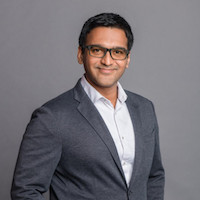
Professor Mohan Rajesh Elara is a Professor with the Engineering Product Development Pillar at SUTD, leading world-class research in self-reconfigurable platforms, robot ergonomics and autonomous systems. He has published over 200 papers and earned prestigious honors, including the A’ Design, IDA, and Tan Kah Kee Young Inventors’ Awards.
In addition to his academic role, he co-founded Lionsbot, a company specializing in autonomous cleaning robots, and serves as visiting faculty at Zhejiang University. His work, supported by the National Robotics Programme, includes innovative projects like the Dragonfly, a reconfigurable robot designed for mosquito control.
TNGlobal INSIDER publishes contributions relevant to entrepreneurship and innovation. You may submit your own original or published contributions subject to editorial discretion.
Featured image: ThisisEngineering on Unsplash
Intelligent shopping: The future of discovery and commerce in APAC