

Turning an enterprise AI pilot into a production system requires more than model performance. Regional languages, security, data readiness and integration with existing operations can be as important as the models themselves.
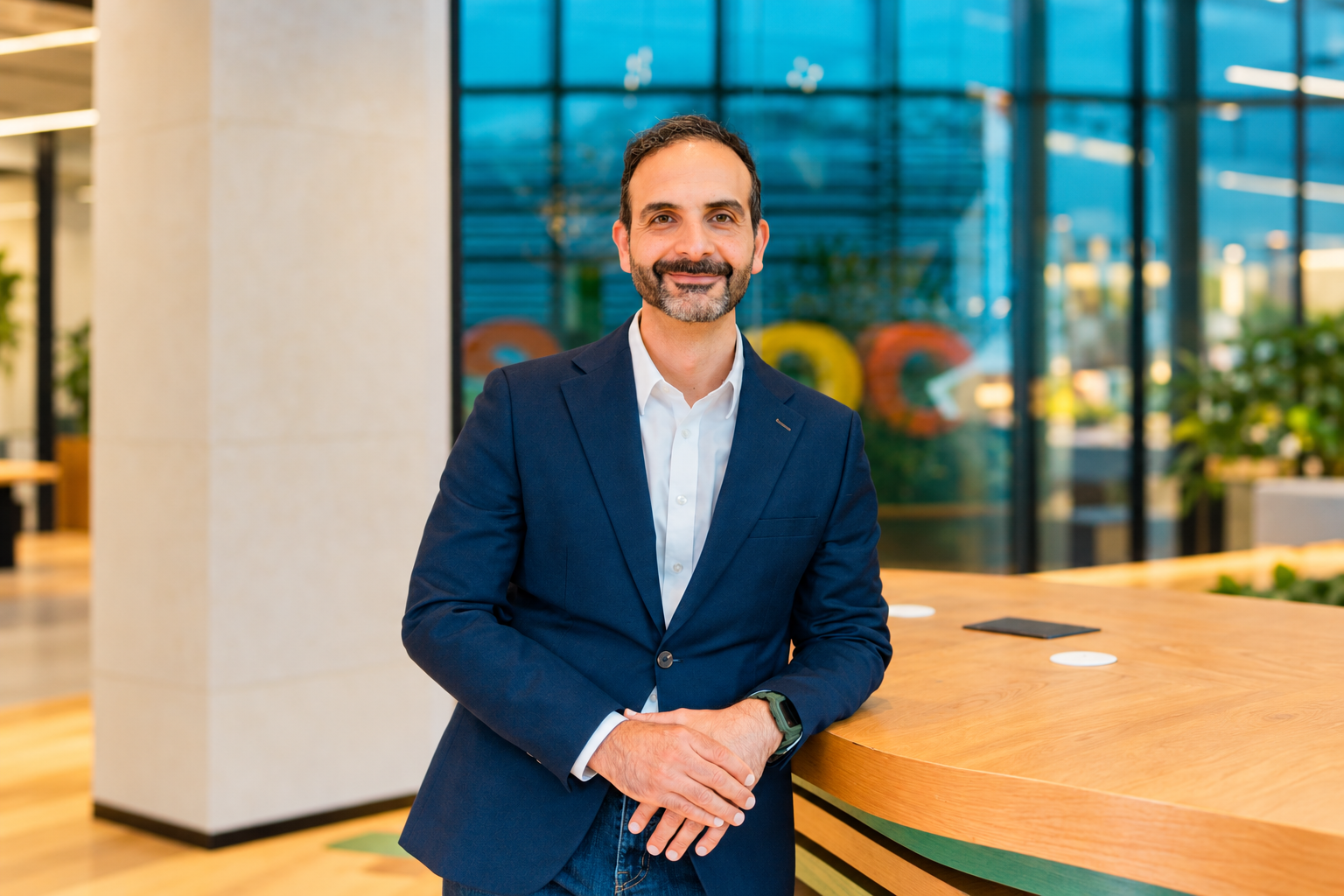
In this TNGlobal Q&A, Moe Abdula, vice president of technology and customer engineering for Asia Pacific and Greater China at Google Cloud, discusses its Singapore Engineering Center, enterprise governance and the economics of production AI.
Google has positioned the Singapore Engineering Center as a place where regional enterprises and startups can work more directly with engineering teams to move AI into production. Beyond model quality, which technical bottlenecks most often prevent a successful AI pilot from becoming a production deployment in Southeast Asia, particularly around data readiness, infrastructure, evaluation, security, latency and integration?
A true test of engineering is building for the immense diversity, speed, and scale of Asia Pacific. Across Southeast Asia, the biggest bottleneck moving from pilot to production isn’t model capability; it’s context and integration. In a sandbox, a generic model works fine. But in production, enterprises run into real-world friction: adapting to complex regional multilingual nuances, managing strict data sovereignty and security regulations across fragmented markets, and meeting the ultra-low latency demands of mission-critical systems. When a cloud platform isn’t pre-tuned to handle these regional complexities, the burden falls on the customer to patch and re-architect everything after the fact, causing deployments to stall. That is why the Singapore Engineering Center (SEC) was built—so our engineers can work shoulder-to-shoulder with customers to solve these data, storage, and networking challenges into the core platform from day one, making the path from pilot to global production fast, smooth, and resilient.
Organizational barriers can be just as significant as technical ones. Where do projects tend to stall because ownership, governance or business processes have not caught up with the technology?
Today, some of the biggest organizational risks we see are:
Shadow AI and fragmented experiments: Employees bringing unvetted consumer tools into the enterprise, putting proprietary data at risk, while departments run disconnected experiments that don’t speak to each other.
Siloed data estates: Having fragmented platforms where autonomous agents only see a fraction of the enterprise picture. You simply cannot afford to have agents making critical business recommendations without access to a secure, holistic data universe.
Agent sprawl: Teams spinning up custom agents for specific tasks but never deprecating them once the project ends, creating unmanaged, insecure operational deadweight across the organization.
Unregulated ‘token shock’: A total lack of tokenomics governance, where organizations have no visibility into who is running what queries, leading to staggering, unexpected cloud bills at the end of the month.
To move past this, enterprises need a governed, unified platform—where data permissions, agent lifecycles, and cost observability are managed under a single architectural roof—is the only way to scale safely from pilot to production. Solving this is a core premise of Gemini Enterprise, our unified AI platform that removes this friction by providing a secure, governed foundation for employees and agents alike. It allows organizations to ground AI directly in their internal data while strictly inheriting enterprise access policies, data residency requirements, and security guardrails.
Singapore is often used as a regional testbed. What makes a solution developed or validated there transferable to other Southeast Asian markets, and where do differences in regulation, language, infrastructure or customer behavior require substantial adaptation?
A great example of this is the work we’re doing with Grab. One of the biggest challenges for Grab’s customers is trying to overcome language barriers during critical moments when traveling internationally. To overcome this, Grab is testing Gemini 3.5 Live Translate to help drivers and travelers communicate across languages during pickups, a practical use case for a platform that handles over 10 million voice calls each month. The new model translates speech in near real time across more than 70 languages while preserving the speaker’s tone and pace.
The center is intended to bring Google Cloud engineers, Google DeepMind researchers and customers closer together. What kinds of problems benefit most from that tighter collaboration, and what should enterprises realistically expect from the process, rather than treating it as an innovation lab disconnected from deployment?
These problem statements and opportunities are vast and varied. They range from solving dynamic, real-time consumer touchpoints across drivers, passengers, and merchants like what Grab is doing (details above), to powering regional e-commerce and gaming companies that require hyper-scalable, ultra-low latency infrastructure to serve millions of concurrent users across fragmented markets.
As agentic AI becomes more practical, what new production requirements are emerging around observability, permissions, human oversight and failure handling compared with conventional generative-AI applications?
Those emerging requirements are real, and the critical challenge is enforcing them consistently across the enterprise. When agentic tools live isolated on an individual’s desktop or browser, you lose governance entirely—there is no centralized audit trail, no corporate policy enforcement, and an immediate risk of unmonitored actions touching sensitive systems.
That is why Gemini Enterprise treats an AI agent like a newly hired employee within a managed organization. You wouldn’t hand a new hire the keys to the entire building on day one—they only get access to the specific data they need, their actions are logged and audited, and high-stakes decisions require a manager’s sign-off. Gemini Enterprise brings that exact operational discipline to software: our agents inherit the strict permissions of the user, leave a clear audit trail, and require human approval before taking critical actions, ensuring agentic AI is secure, governable, and production-ready from day one.
There is growing pressure to show measurable returns from AI investment. What indicators do you think enterprises should use to determine whether an AI deployment is genuinely production-ready and creating business value rather than simply demonstrating technical feasibility?
The first non-negotiable indicator is sound unit economics, ensuring token and compute costs scale predictably against business returns to avoid token shock.
Beyond cost discipline, leaders should look for sustained frontline adoption, where teams rely on the tool daily rather than abandoning it post-pilot, alongside operational resilience within existing security and governance boundaries.
Without positive unit economics and clear business ownership, a deployment remains an experiment rather than a production asset.
Looking across APAC, which capabilities or skills do you think will become most important over the next two to three years as companies shift from experimenting with AI to operating it as part of core business systems?
Operating AI at scale requires practical capabilities across the entire organization, so to me the most critical skills over the next few years have to also be non-technical.
This starts at the top with leadership capability. Executives do not need to write code, but they must know how to translate strategic priorities into viable AI use cases, understand unit economics, and lead by example.
Across business teams, the essential skills will be workflow redesign, knowing how to partner with automated agents, and applying critical judgment around data governance and verification.
When organizations build these practical capabilities at every level, AI shifts from an abstract technical concept into an everyday operational tool.
Moe Abdula is the Asia Pacific and Greater China lead for the Technology Team at Google Cloud, where he is responsible for architecture and engineering teams supporting customers and partners across this diverse and rapidly growing region of the world.
Moe is passionate about working with customers to address their business opportunities through innovative and leading-edge technologies including the transformative potential of Generative AI. He is focused on developing technical and business capability across the global Google Cloud ecosystem while ensuring this is closely aligned to the needs of the APAC market. Moe was engaged early in the Cloud market, leading some of the pioneering implementations of container technologies along with signature customer adoption projects. Now, he’s similarly at the forefront of helping businesses understand and implement Generative AI
solutions, fostering a culture of innovation and responsible AI adoption. Moe documents much of his learnings in the Cloud Adoption Playbook, which he helped co-author in 2018.
Moe has 27+ years experience in Software development, Product Management, Solution Architecture and Technology Strategy. Prior to joining Google Cloud, he held a variety of senior leadership roles at Amazon and IBM, as well as SaltStack, where he was part of the founding team, helping lead the business to a successful acquisition by VMware.
Moe is a proud father of two young adults, who fill his life with adventure. He lives in Singapore. He earned a Bachelor of Electrical and Computer Engineering degree from Leeds University. When not working on AI and Cloud, Moe is often consumed by his fervor for football (soccer) and reading.
Editor’s note: This Q&A has been lightly edited for clarity and TNGlobal house style. The substance of the interviewee’s responses has been preserved.
Share your perspective: TNGlobal welcomes contributed insights and expert commentary from across Asia’s technology and innovation ecosystem. Submit a contribution for editorial consideration, or explore more conversations in our TNGlobal INSIDER and TNGlobal Q&A and Interviews archive.
CARSOME’s Eric Cheng on building sustainable used-car unit economics [Q&A]