

TechNode and Jumpstart by TNGlobal took center stage at the Hong Kong Electronics Fair (Autumn Edition) 2026, bringing together technology founders, investors and industry participants to explore China’s technology globalization, AI commercialization and the next wave of startup innovation.
Through a GoGlobal seminar, startup showcase and panel discussion, TechNode Group and Jumpstart by TNGlobal examined how technology companies can expand into international markets, turn artificial intelligence (AI) innovation into commercially viable solutions, and unlock new opportunities in smart hardware and edge computing. The four-day fair provided a platform for industry players to exchange insights on bridging technological innovation with global market opportunities.
China’s tech innovation looks beyond domestic markets
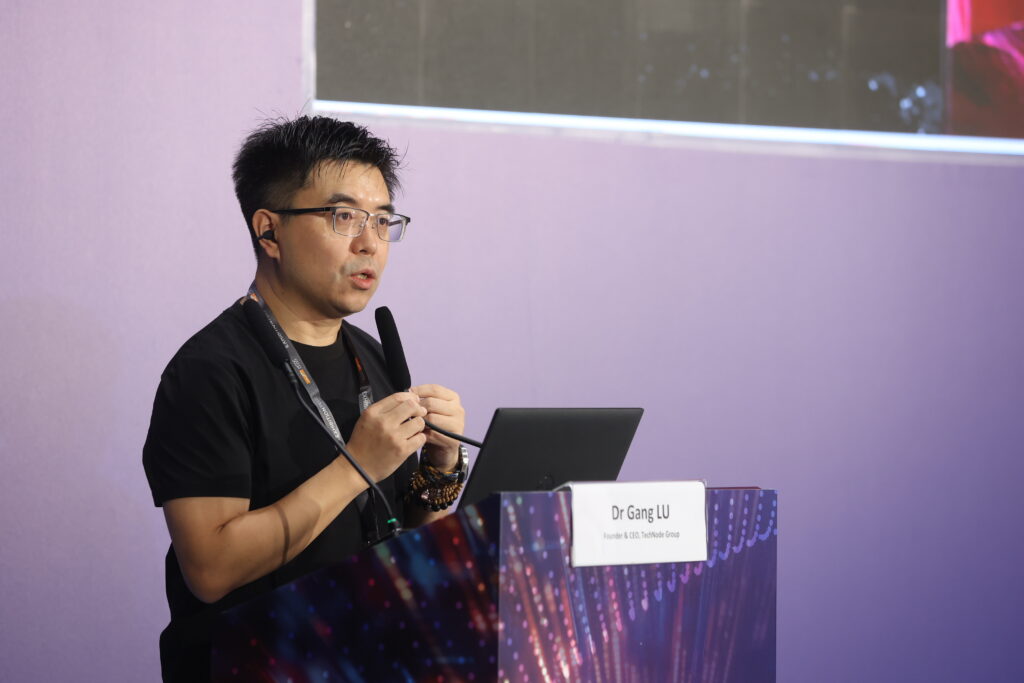
At the “GoGlobal: Scaling Smart Consumer Innovations Worldwide” forum on Oct 13, Dr Gang Lu, founder and CEO of TechNode Group and co-founder of BEYOND, shared insights into the latest trends shaping China’s technology innovation landscape.
In his session, “GoGlobal: The Latest Trends in China Innovation Tech,” he examined developments across AI, robotics, smart hardware and other emerging technologies, while highlighting opportunities for Chinese technology companies to expand into international markets.
As Chinese technology companies increasingly look overseas for growth, international partnerships and connections with global innovation ecosystems are becoming increasingly important.
For technology companies developing products for global markets, the challenge is not only to build competitive technology but also to identify the right markets, establish partnerships and understand the requirements of customers outside China.
The GoGlobal discussion reflected the broader shift in China’s technology sector towards internationalisation, as companies seek to take products, technologies and business models beyond their home market.
Jumpstart powered by TNGlobal showcases five emerging technology companies
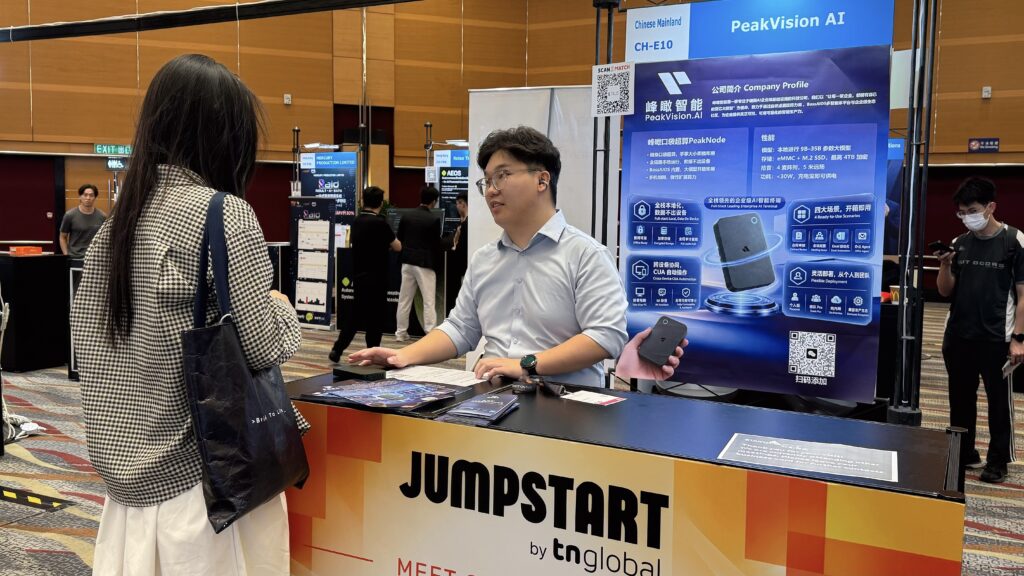
The globalization theme continued at the Jumpstart powered by TNGlobal Pavilion, located within the Startup Zone of the Hong Kong Electronics Fair.
Five companies participated in the pavilion, showcasing products across AI hardware, robotics, wearable technology, edge computing and AI-enabled commerce.
MorTech Co., Ltd showcased a portfolio of AI-powered consumer products, including an AI PIN, AI alarm clock, AI smart projector and AI companion toy.
Space-Time Pump Robotics Ltd presented its Xiaogui Desktop Robot Series, a range of compact robots designed for applications including home entertainment, gaming, parent-child DIY activities and education.
Shanghai Super Vibe Technology presented VIA Halo, an AI wearable memory camera designed for outdoor hiking and travel. The device automatically records a user’s journey and generates personalised travel stories.
Hangzhou PeakVision Intelligent Technology showcased its Pocket Supercomputer, a compact edge AI computing box measuring 142mm by 80mm by 22mm.
The device delivers 60 TOPS of AI computing power and can run 9B large language models locally. Its on-device AI inference is designed to keep user data within the hardware, supporting applications such as private AI agents, local knowledge bases and vertical AI applications.
AIRSHELF PTE. LTD. presented an AI platform designed to help manufacturers and distributors turn verified product information into AI-generated answers and qualified sales enquiries.
Its platform connects product claims with source evidence and seller approval, while separating information such as product models, compatibility and regional specifications. It also supports AI storefronts and website sales agents.
The five companies demonstrated how AI is increasingly moving into physical products and specialised commercial applications rather than remaining limited to general-purpose software.
AI beyond the hype: commercialization becomes the next test
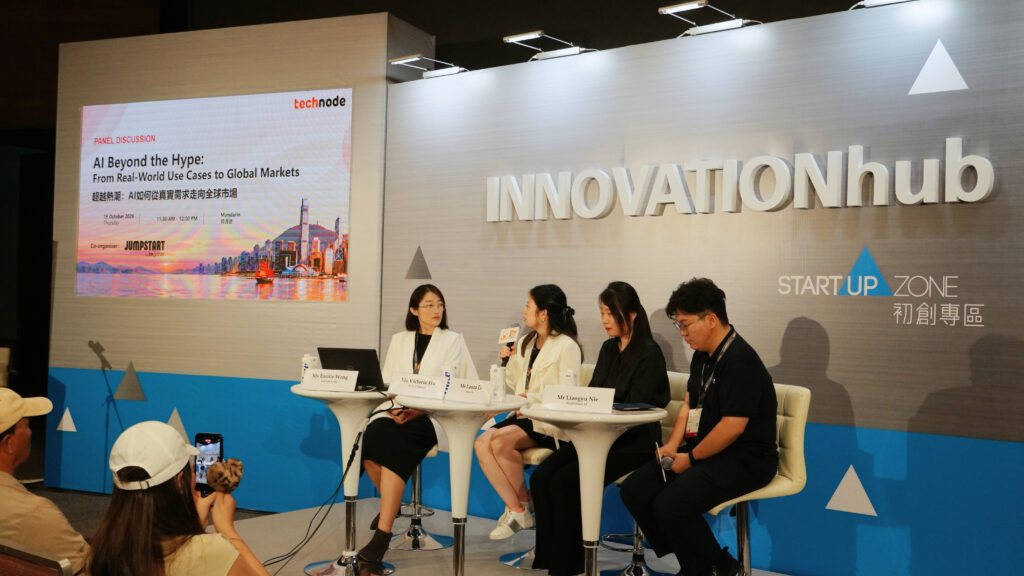
The question of how AI companies can translate technology into sustainable businesses was further explored during the panel discussion “AI Beyond the Hype: From Real-World Use Cases to Global.”
Held on Oct 15 at the Startup Zone, the session was moderated by Emilie Wang, Marketing and Communications Director at TechNode Group, with panellists Victoria Hu, vice president of 3C AGI Partners; Laura Li, Co-Founder and Director of Overseas Business at Mortech; and Liangyu Nie, Co-Founder of PeakVision AI.
The discussion brought together perspectives from AI investment, consumer smart hardware and enterprise AI to examine the real-world value of AI products, market validation and international expansion.
A central message from the discussion was that AI needs to solve genuine problems rather than simply add an “intelligent” function to an existing product.
For consumer AI products, ease of use, improved efficiency, user retention and willingness to pay are important indicators of whether a product is delivering sustained value.
For enterprise AI, customers are more likely to focus on operational efficiency, cost control, data security, system reliability and return on investment. This makes commercial validation increasingly important as the AI market matures.
From prototype to paying customers
The panellists highlighted different approaches to validating AI products. Consumer AI companies need to demonstrate that users continue to use their products after the initial novelty wears off and are willing to pay for them over time.
For enterprise AI, validation can take place through proof-of-concept projects, pilot deployments, formal procurement and ultimately contract renewals.
These stages can provide a clearer indication of whether an AI solution is addressing a genuine customer problem and generating measurable business value.
Rather than relying on short-term market attention, the ability to consistently solve customer problems and deliver reliable outcomes will be increasingly important to successful AI commercialization.
Going global requires more than exporting a product
International expansion was another key theme of the discussion. The panellists noted that startups should assess potential markets based on actual customer demand, purchasing power, distribution resources and the cost of entering a market.
While technology platforms can be designed to scale globally, products and business models may need to be adapted to local conditions.
Data security, regulatory requirements, user behaviour and commercial models can differ substantially between markets.
Local partnerships and continuous market feedback can therefore help startups refine their products and improve their chances of successful international expansion.
For Chinese technology companies in particular, this creates an opportunity to combine strong product and technology capabilities with local market knowledge and international partnerships.
Startup Smart Launch puts founders in front of the market
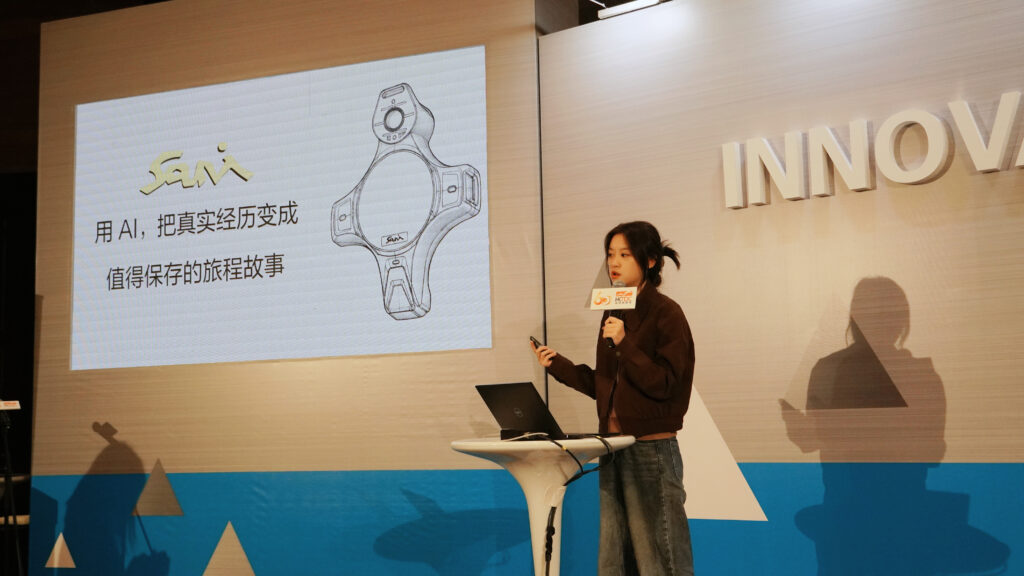
The “Jumpstart powered by TNGlobal Presents: Startup Smart Launch” session on Oct 15, 2026 provided another opportunity for emerging technology companies to present their products.
Shanghai Super Vibe Technology, MorTech, PeakVision.AI and AirShelf.AI took part in the pitching session at the Startup Zone.
The companies represented different approaches to applying AI across consumer technology, wearable devices, edge computing and AI-powered commerce.
Together with the pavilion and panel discussion, the session highlighted the role of startup platforms not only in showcasing new technologies, but also in connecting founders with investors, potential customers and international markets.
Hong Kong Electronics Fair provides global meeting point
The Hong Kong Electronics Fair (Autumn Edition) 2026, organized by the Hong Kong Trade Development Council (HKTDC), was held from Oct 13 to Oct 16, 2026 at the Hong Kong Convention and Exhibition Center.
Held alongside electronicAsia, the fair brought together more than 3,200 exhibitors, with AI, robotics and frontier technologies among the key highlights.
The 2026 edition also introduced the Future Industries Zone, covering areas including AI, robotics, smart living, immersive entertainment, electronic components and advanced manufacturing.
More than 120 young enterprises and startups participated, primarily through the Startup Zone.
Against this backdrop, the activities organized around the Jumpstart powered by TNGlobal Pavilion reflected a broader shift taking place across the electronics and technology industry: innovation is moving rapidly from the laboratory and prototype stage into commercial products, while startups increasingly look beyond their home markets for growth.
For AI companies, the next challenge may therefore be less about demonstrating what the technology can do, and more about proving that it can solve real problems, generate sustainable revenue and compete across global markets.
HKTDC to host Electronics Fair (Autumn Edition) & electronicAsia in Hong Kong from Oct 13-16