

Australia-based Seeing Machines has published a technical paper showing that its Human Mesh Recovery technology can reconstruct a detailed 3D representation of a person in real time on NVIDIA Jetson Thor hardware, extending its human-sensing work into robotics and other Physical AI systems.
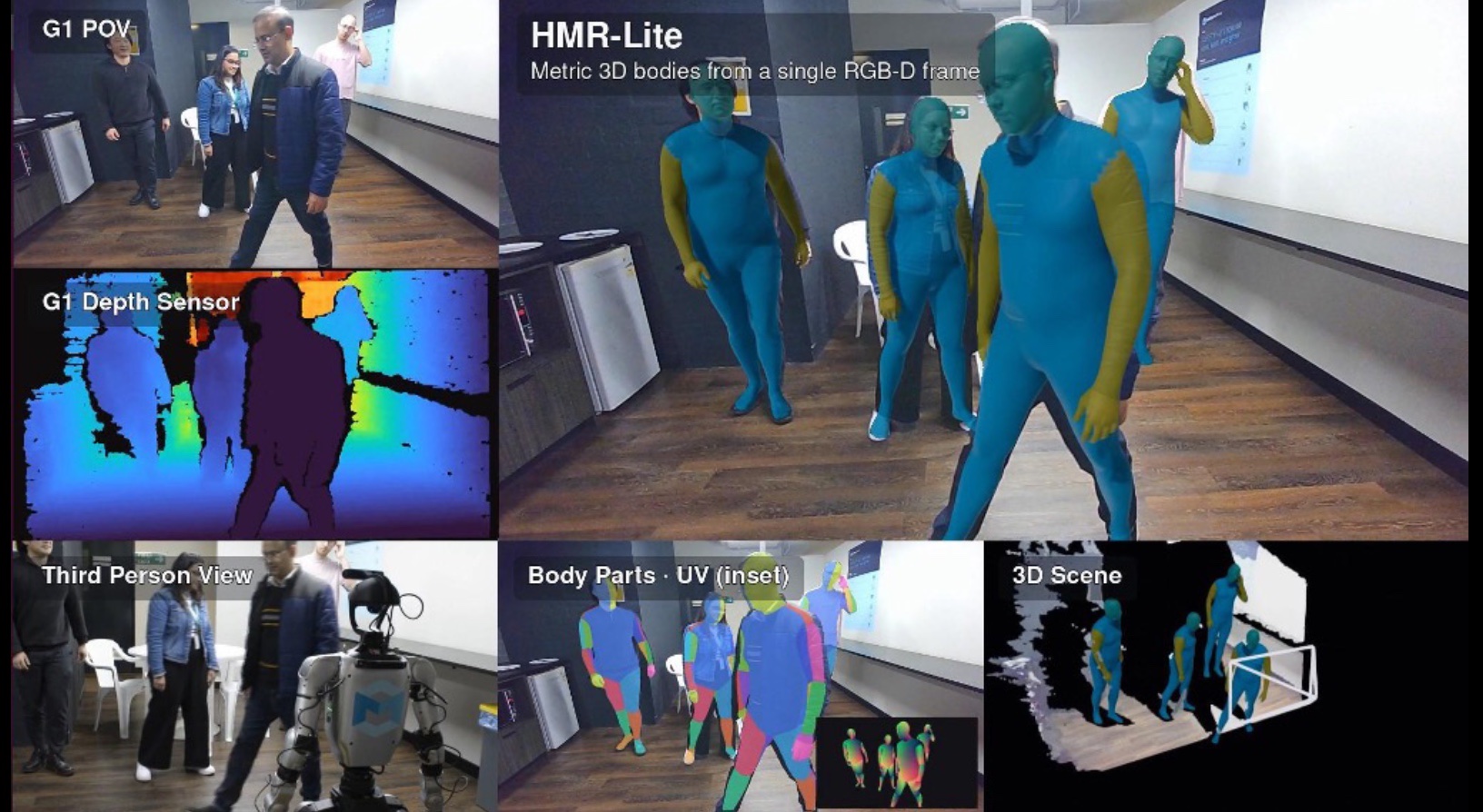
The company said the system uses a single camera view to estimate a person’s location, posture and movement, allowing machines to interpret human motion locally rather than relying on a remote cloud connection. Seeing Machines is positioning the capability for environments such as factories, hospitals, warehouses and other settings where robots and people operate in close proximity.
3D human understanding moves to embedded hardware
High-fidelity 3D human reconstruction has typically required substantial computing resources, which can make real-time use on embedded systems difficult. Seeing Machines said its Human Mesh Recovery, or HMR, model is designed to balance accuracy, inference speed and model efficiency so that the workload can run at the edge.
According to the technical paper, HMR was demonstrated on NVIDIA Jetson Thor, with the company arguing that the result shows detailed 3D human reconstruction can be performed in real time on embedded hardware. The model supports both standard RGB cameras and RGB-D cameras without increasing its parameter count.
Local processing matters for robotics because delays in understanding a person’s position or movement can affect how quickly a machine responds. For systems operating around people, that can influence both usability and safety.
Seeing Machines extends automotive human sensing into robotics
The HMR work is part of the broader Physical AI Platform that Seeing Machines launched in August. The platform builds on the company’s experience in driver and occupant monitoring and applies similar human-centered perception concepts to robotics and industrial automation.
Paul McGlone, CEO of Seeing Machines, said robots working around people need to understand more than whether a person is simply present. The company is focusing on the combination of location, posture and movement so that machines can respond to changing human behavior in real time.
The company said HMR is one capability within a wider platform that combines computer vision, human-behavior modeling and safety-oriented AI. Seeing Machines has spent more than two decades developing human-sensing systems for automotive, commercial fleet, aviation, rail and off-road applications.
Physical AI competition shifts toward human-machine interaction
As Physical AI systems move from controlled demonstrations into workplaces and other environments shared with people, perception requirements become more demanding. Object detection can tell a robot that a person is nearby, but not necessarily how that person is moving, whether they are reaching into a work area or how their posture is changing.
Seeing Machines is betting that richer 3D human understanding can become part of the perception stack for robots that need to operate safely and naturally around people. Its latest paper focuses on whether that level of scene understanding can be delivered within the compute and latency constraints of embedded hardware rather than depending on cloud processing.
The company has published the technical paper, titled “Real-time 3D Human Mesh Recovery at up to 180 FPS on NVIDIA Jetson Thor,” alongside a demonstration video.
Seeing Machines launches Physical AI Platform to power the next generation of humanoid robots