

Getting an AI agent to work in a controlled pilot is becoming easier. Getting the same system to operate reliably inside a business, with live data, real permissions, costs and consequences, remains much harder.
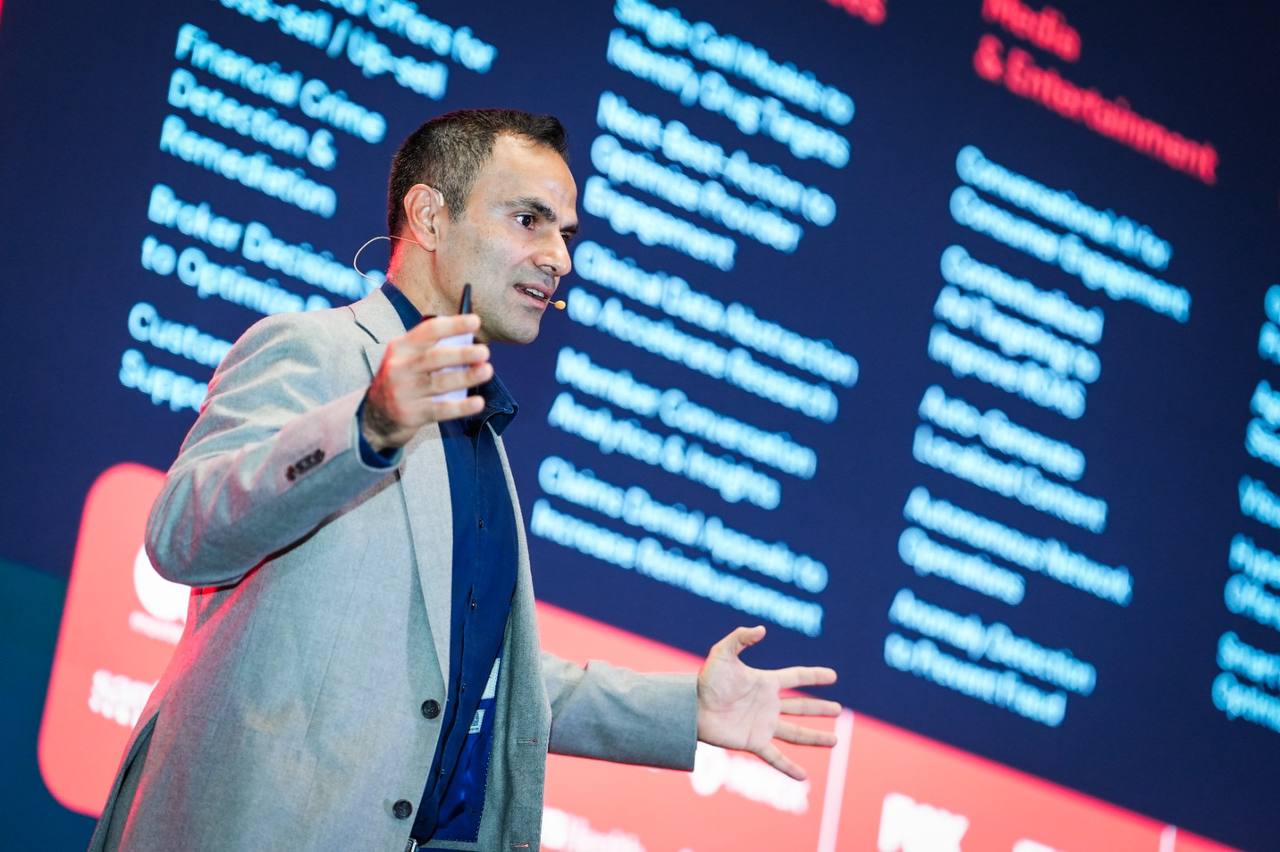
In this TNGlobal Q&A, Kunal Taneja, AVP of Field Engineering for APJ at Databricks, discusses why agent projects stall between pilot and production, how enterprises should control access to operational data, and what executives need to measure before giving agents greater autonomy.
He also discusses multi-model governance, the economics of agentic systems and some of the implementation challenges that are particularly pronounced across Asia Pacific.
Many enterprises can demonstrate an AI agent in a controlled pilot, but fewer scale it into daily production. What most often breaks?
Across APJ, the gap between a promising pilot and a production-grade agent almost never comes down to the model itself. It comes down to the data and governance foundation underneath it.
In a pilot, teams typically hand-pick a clean, narrow dataset and accept a level of human babysitting that does not scale. In daily operations, the agent needs to reason over fragmented data across different systems, with clear lineage and access controls, without a data scientist catching every edge case.
The quality of an agent depends on the quality and context of the data it can access. If that data is fragmented, poorly governed or difficult to access, an impressive pilot can struggle in the real world. Our State of AI Agents research found that companies actively using AI governance put 12 times more AI projects into production.
How should organizations give agents enough business context without creating overly broad permissions?
The principle is straightforward: an agent should have enough context to do its job, but no more access than it needs for that task.
Every additional agent, tool or model creates another potential security exposure if permissions are not managed centrally. Organizations need one governance layer across data, models, agents and the tools or services they call, with visibility into what an agent is doing at runtime rather than only what it is technically allowed to do.
That is the problem we are addressing with Unity Gateway. It applies governance across models, agents, tools, skills and MCP services and gives teams a common place to set security and cost controls.
How important is fresh operational data once an agent moves from answering questions to taking actions?
Fresh data becomes integral when agents are active decision-makers. If a system gives an answer based on stale information, a person may make a poor decision. If an agent autonomously acts on stale information, the consequence can become operational very quickly.
An inventory agent that does not know what sold in the last hour, or a customer agent that cannot see the latest transaction, may reason correctly from an incorrect view of the business.
This is also an infrastructure problem. Enterprises have historically separated transactional and analytical systems and bridged them with pipelines and replicas. That architecture becomes more strained when many agents continuously read, reason and act. We built Lakebase, a serverless Postgres database for AI agents, to let applications operate on the same governed data foundation used for analytics and AI.
Our research found that 96 percent of AI requests globally were already being processed in real time, with 82 percent in Asia Pacific. An AI strategy and data strategy cannot really be separated.
What governance and observability capabilities matter in a multi-model environment?
Multi-model is becoming normal. Different models are better for different tasks, and their economics change quickly. Our data shows 77 percent of companies now use two or more model families.
The problem is that companies may run models across several vendors without a common way to track cost, enforce budgets or attribute spend to teams. Observability needs to sit above the individual model, with consistent guardrails and spending limits.
The most capable model is not necessarily the right model for every task. If a less expensive model can perform a routine task at the required quality, organizations should route work there and reserve more expensive models for tasks that genuinely need them.
What should enterprises measure before deciding whether an agent is economically viable?
The mistake is to look only at token prices. What matters is the total cost of delivering a successful business outcome.
An agent may call a model multiple times, retrieve context, interact with tools, query databases, retry failed tasks and eventually require human review. Enterprises need visibility into cost per task and cost per successful outcome alongside quality, latency, failure rates and human intervention.
Internally, Unity Gateway reduced our average task cost by more than 30 percent while roughly matching the quality of the most expensive model in the working set. The relevant point was not simply the savings. Quality held while cost fell. The goal is the best outcome per dollar, not the cheapest individual run.
Where should human approval gates remain explicit as agents become more autonomous?
Autonomy thresholds should depend on the consequences of an action and how easily it can be reversed.
There is a major difference between summarizing information, updating an internal workflow and making a decision that moves money, changes a customer’s account or has regulatory implications. As potential consequences rise, the bar for evaluation and human oversight should rise as well.
Teams should build autonomy progressively: start with recommendations, compare them with expert decisions, test real scenarios and edge cases, and understand how the agent fails. Then allow low-risk, reversible actions while retaining explicit approval for high-impact decisions.
The goal should not be maximum autonomy. It should be the right level of autonomy for the task’s risk and value.
Are there implementation challenges that are especially pronounced in Asia Pacific?
Asia Pacific is not one market. It is dozens of markets with different regulatory regimes, data-residency requirements, languages and legacy infrastructure. That creates real complexity when an enterprise tries to scale one agent across countries.
At the same time, we see APJ organizations moving as fast as, and sometimes faster than, global peers because many are building governance in from the start.
Digital Nasional Berhad in Malaysia is one example. It uses a unified data and AI foundation to monitor network performance and flag anomalies, surfacing issues to people when judgment is needed. DNB has reported cost savings of up to 70 percent from its broader data and AI work. Company-specific results like these depend on the deployment and should not be treated as a universal benchmark.
Twelve months after an agent moves into production, what evidence should executives expect?
Executives should look at metrics that matter to the organization: efficiency, revenue impact, quality of outcomes and whether the AI investment reduces risk.
We have seen customers use governed data foundations to shorten analysis and planning cycles and improve customer engagement. Suntory Beverage & Food International, for example, reduced time-to-insight from weeks to minutes across a business operating in more than 80 markets. AIA Hong Kong and Macau has said personalized recommendation models contributed to more than twofold growth in customer engagement and financial advisers’ lead generation.
Accuracy, latency and model performance still matter, but those metrics show whether the system is running well. The longer-term test is whether the deployment is anchored in outcomes that the business and its customers actually benefit from.
Kunal Taneja is AVP of Field Engineering for APJ at Databricks, leading Field Engineering for ASEAN and Greater China. He has more than 15 years of experience in enterprise data and AI, with previous roles at Cloudera, MongoDB, SAP and Oracle. He holds a master’s degree in Financial Mathematics from King’s College London and a bachelor’s degree in Computer Engineering.
Editor’s note: This Q&A has been lightly edited for clarity and TNGlobal house style. The substance of the interviewee’s responses has been preserved.
Share your perspective: TNGlobal welcomes contributed insights and expert commentary from across Asia’s technology and innovation ecosystem. Submit a contribution for editorial consideration, or explore more conversations in our TNGlobal INSIDER and TNGlobal Q&A and Interviews archive.
Blackstraw.ai’s Atul Arya on counting the real cost of agentic AI [Q&A]