

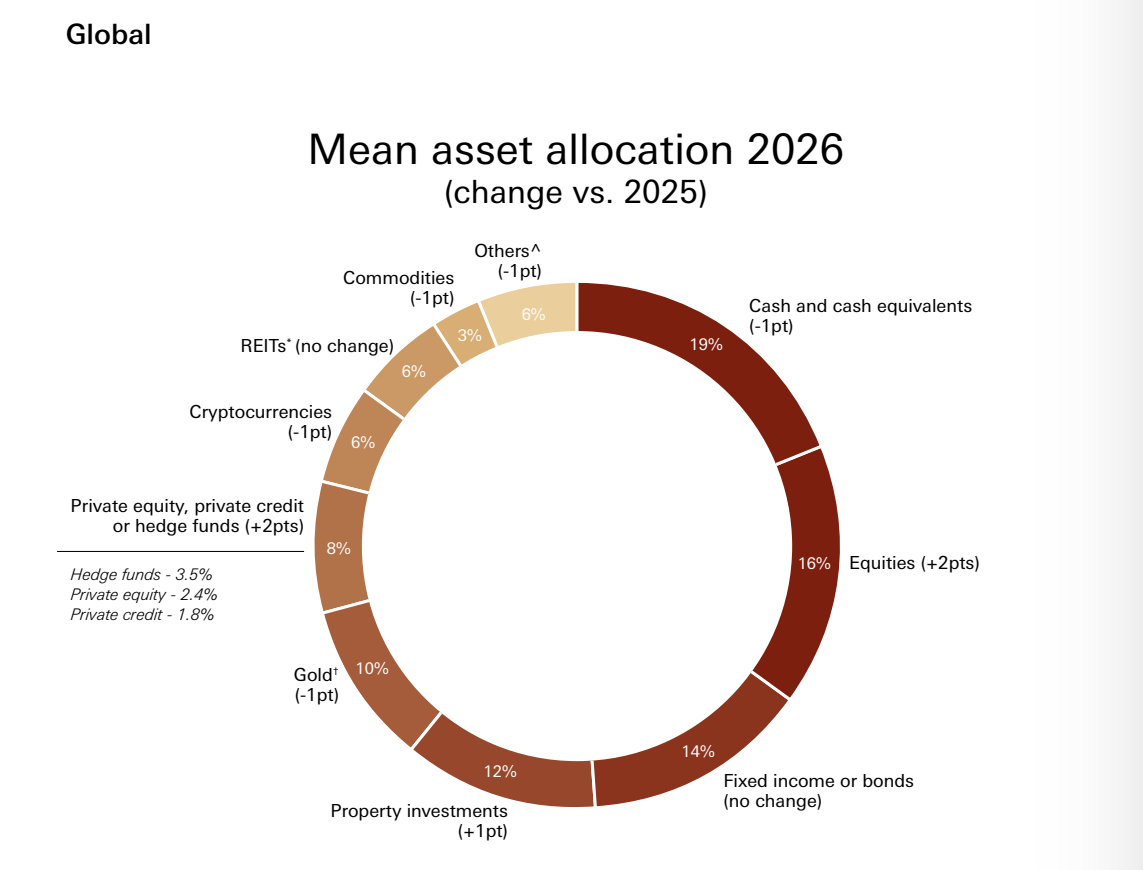
Cryptocurrencies account for 6 percent of the mean asset allocation among affluent and high net worth investors globally in 2026, down one percentage point from 2025, according to the HSBC Affluent Investor Snapshot 2026.
The survey was conducted among 9,993 investors aged 21 to 69 between January 6 and February 6, 2026. Respondents were classified as affluent investors with minimum investable assets of $100,000 or high net worth investors with minimum investable assets of $2 million. The ten markets were mainland China, Hong Kong, India, Malaysia, Mexico, Singapore, Taiwan, the UAE, the UK, and the United States.
Globally, cash and cash equivalents remain the largest single allocation at 19 percent, down one point, while equities stand at 16 percent, up two points. Fixed income or bonds stayed unchanged at 14 percent. Private equity, private credit, and hedge funds collectively account for 8 percent, up two percentage points.
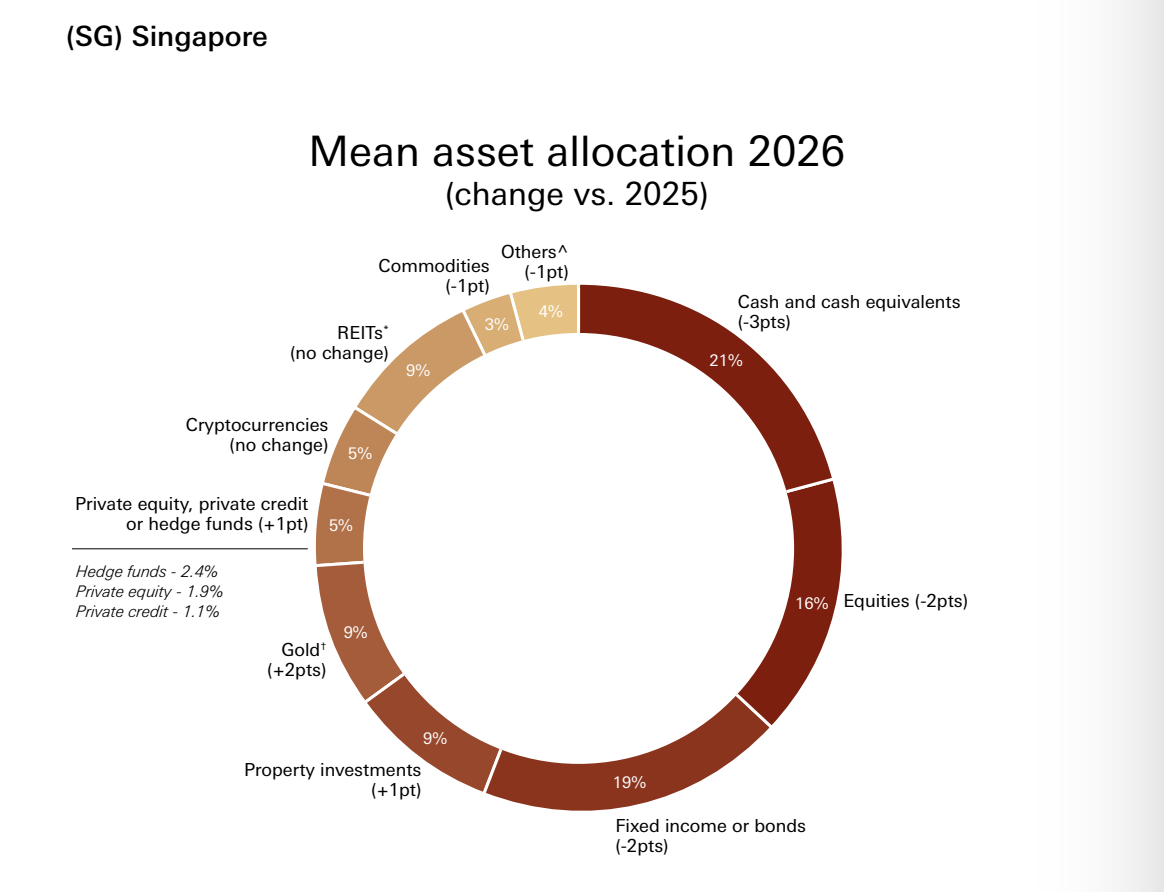
In Singapore, cryptocurrency allocation stands at 5 percent, unchanged from 2025. Thirteen percent of Singapore respondents intend to decrease their cash allocation over the next 12 months, compared with a global average of 12 percent.
Singapore investors are adding fixed and term deposits, up 18 percentage points among planned increases, followed by alternatives at 15 points, including private equity up 11 points, and gold at 14 points, of which physical gold accounts for 12 points and digital gold 11 points.
The top three financial products currently held by Singapore respondents are stocks at 57 percent, insurance at 47 percent, and fixed and term deposits at 41 percent.
Singapore’s top three financial goals are preparing for retirement at 51 percent, preserving and protecting wealth at 49 percent, and gaining wealth for financial security at 45 percent. Fifty percent of Singapore respondents prefer investment exposure outside their home market, above the global average of 47 percent.
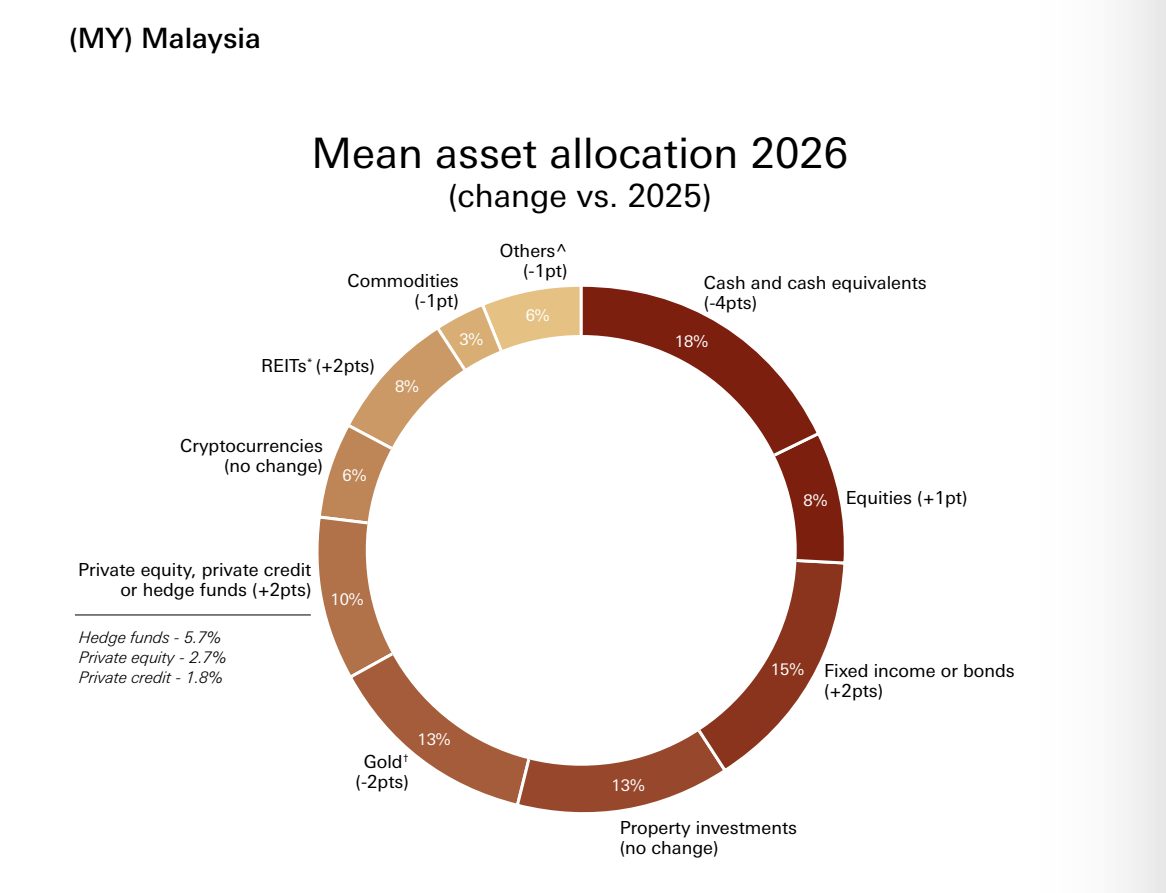
In Malaysia, cryptocurrency allocation also stands at 6 percent, unchanged from 2025. Cash and cash equivalents account for 18 percent of the mean asset allocation, down four points from 2025, while fixed income or bonds stand at 15 percent, up two points, and gold at 13 percent, down two points.
Within gold holdings, physical gold accounts for 34 percent and digital gold for 22 percent. Sixteen percent of Malaysian respondents intend to decrease their cash allocation over the next 12 months, above the global average of 12 percent and higher than Singapore at 13 percent and Taiwan at 9 percent.
Planned increases are led by gold at 20 percentage points — of which physical gold accounts for 17 points and digital gold for 15 points — fixed and term deposits at 19 points, and alternatives at 17 points, including hedge funds at 11 points and private equity at 10 points.
The top three financial products currently held by Malaysian respondents are insurance at 48 percent, stocks at 44 percent, and gold at 43 percent.
The three top financial goals among Malaysian respondents are building extra wealth to curb inflation at 43 percent, preserving and protecting wealth at 42 percent, and preparing for retirement at 42 percent.
On investor confidence, 77 percent of Malaysian respondents are confident in achieving short-term goals of up to three years, 68 percent are confident in medium-term goals of three to five years, and 77 percent are confident in long-term goals of more than five years.
Linda Yip, HSBC Malaysia Country Head of International Wealth and Premier Banking, said affluent and high net worth individuals are rebalancing their portfolios with awareness of inflationary pressures and retirement planning needs. Their product choice is becoming more intentional, with investors adding alternatives, gold, and term deposits alongside traditional holdings in insurance and stocks.
Singapore’s Crypto.com secures $400M strategic investment from Citadel Securities