

Email’s death has been predicted for more than a decade. Yet inboxes remain busier than ever, and email continues to be one of the most effective digital marketing channels available. What has changed is how those emails are built and sent.
Today, 79 percent of senders are using, or plan to use, AI as part of their email programs. But many are not applying it in the ways that matter most.
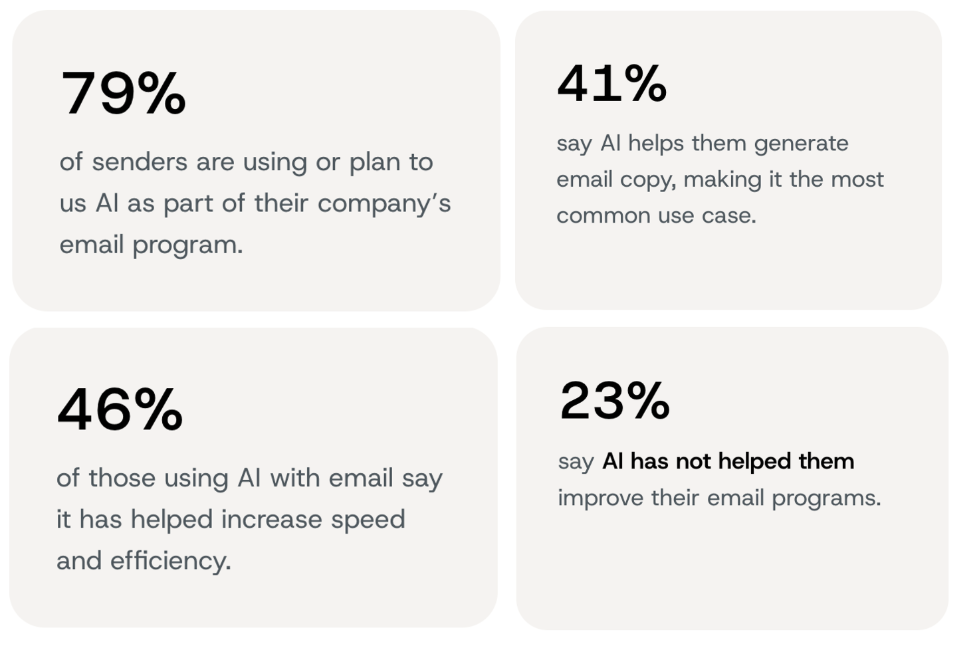
Across APAC, marketing teams have been quick to put AI to work in email. It is drafting subject lines, generating copy, and accelerating A/B testing. According to Sinch’s Mailgun Email Impact Report, 46 percent of senders say AI has improved speed and efficiency, while 41 percent are using it for content creation. That is progress, but it overlooks the questions that most directly determine performance:
- Is this the right audience for the best chance of engagement?
- Is the message actually reaching the inbox?
- Can results be clearly measured and justified?
Right now, AI is often handling copywriting while these more critical decisions are left to outdated processes, poor segmentation, weak deliverability, and limited personalization.
The friction you can’t see
The report found that nearly one in five emails sent in 2025 never reached the inbox. What makes that number so damaging is its invisibility. Deliverability failures rarely generate alerts. There is no warning when a campaign is filtered into spam. The dashboard may appear healthy, while open rates soften and teams blame the subject line.
This is how performance erodes quietly. Poorly timed or irrelevant emails lead to weaker engagement, signalling to mailbox providers that messages are unwanted. Over time, more mail is filtered out. By the time the issue appears in reporting, sender reputation may already be damaged.
In markets such as Singapore and Australia, where customer acquisition costs remain high, the consequences are significant. When an email fails to arrive, it is more than a missed impression. It is a missed opportunity with a customer who opted in and expected to hear from you. In APAC’s more digitally mature markets, trust is difficult to win and even harder to rebuild.
The 23 percent problem: Smarter use of AI, not just faster
The report shows that 23 percent of respondents say AI has not improved their email programs at all. The instinct may be to question the tools, but the issue is often simpler: AI is being applied to the wrong part of the workflow.
Content is rarely the sole reason an email program underperforms. More often, the constraints are operational: who you are sending to, how often you are sending, and whether your sending patterns are strengthening or weakening reputation. These are the areas where AI can create meaningful gains.
The strongest-performing teams have already made this shift. They use AI for more than content creation, producing emails that are not only well written, but delivered to the right people at the right time. The returns can be substantial. According to the report, 60 percent of companies generate more than US$10 for every dollar spent on email.
The ROI disconnect: Moving from faster content to smarter strategy
The irony is that while 79 percent of organizations plan to increase investment in email, fewer than half can confidently measure its ROI. That points to a clear disconnect: investment is growing, but not always in the areas that create the most value.
Email does not need more content. It needs more intelligence. The real power of AI is not in producing faster copy, but in acting as a decision engine for the issues that matter most. An intelligent email strategy should focus AI on three core functions:
- Smarter targeting
Before a single word is written, AI should validate contacts and build dynamic audience segments based on real-time behaviour. That ensures messages are sent to people most likely to engage. - Stronger deliverability
AI should be used to monitor inbox placement, identify reputation risks, and optimise sending behavior in real time, keeping campaigns out of spam folders. - Measurable ROI
AI should move beyond vanity metrics and connect email activity directly to commercial outcomes, giving marketers clearer proof of value and better guidance for future investment.
Especially in a region as diverse as APAC, where customer trust is hard-won and easily lost, the organizations that make these shifts early will be best placed to drive stronger engagement and more sustainable returns.

Ginger Kidd is a senior marketing and growth executive with more than 25 years of experience leading SaaS, technology, and customer communications businesses across EMEA and APAC. Currently serving as VP of Marketing and Communications for APAC at Sinch, Ginger brings a deep regional expertise combined with a global perspective. At Sinch, she focuses on reimagining how brands connect with their customers and leveraging smarter, AI-driven, and personalized communications to build trust in an evolving digital landscape.
Prior to joining Sinch, Ginger served as the Chief Growth Officer at JobAdder, where she successfully led initiatives across marketing, partnerships, and community building to expand the recruitment software platform’s global reach. Her extensive career also includes her tenure as VP of Global Marketing at Xplor Technologies, as well as over a decade at Salesforce. Joining Salesforce in 2012, she initially led commercial marketing for the UKI region before relocating to Australia to serve as the APAC Marketing Director for small businesses.
Throughout her career, Ginger has held sales, marketing, and channel leadership positions with leading global technology companies including Oracle, IBM, GE Digital, and Siebel Systems (Oracle). She is recognized for her ability to drive growth across diverse markets, build high-performing teams, and create customer-centric strategies that deliver measurable business outcomes.
TNGlobal INSIDER publishes contributions relevant to entrepreneurship and innovation. You may submit your own original or published contributions subject to editorial discretion.
Featured image: CHUTTERSNAP on Unsplash
Why grid readiness is becoming Southeast Asia’s next tech constraint