

We have the proclivity to believe that technology is an inherently neutral force. We view every technological innovation as a gateway toward a utopian world.
This credulity is not only naïve but also dangerous. Technology is the amplifier of human intent. But historically, the intent has not always been used to contribute to the benefits of humanity, but to satisfy a group of powerful people.
Our future depends on a pivotal choice: Will technology be harnessed for the plenitude of our provenance or weaponized for the self-serving needs of a few elites?
When the radio became popular in the 1930s, people hailed it as a miraculous invention to connect with others. Yet, the technology was deployed by Joseph Goebbels, the Nazi Minister of Propaganda, to manipulate public opinion. He orchestrated the Volksempfänger (the people’s receiver) which was heavily subsidized to ensure one sat in every German home.
The seemingly benevolent technological rollout was, in truth, a calculated mechanism for absolute psychological dominion. It was a daylight robbery of the collective psyche in action. The populace enjoyed the convenience of the radio, entirely oblivious to the deleterious propaganda that would soon poison their living rooms.
Similarly, the push for AI in warfare is marketed as a way to keep soldiers safe. But when a decision to strike is buried within a black box algorithm, the moral weight of the act is diffused. If technology makes warfare convenient, it will lower the threshold for violence.
History shows us that malevolent use of power brews in the shadows of convenience instead of announcing itself with a cataclysmic decree.
A few forgiven transgressions masquerading as governance accumulate insidiously. By the time society recognizes the malfeasance, the architecture of control becomes irreversible. It becomes a total fait accompli.
The stakes are exponentially higher today because the majority of us have integrated technology into our biology. Most of us can’t function without a smartphone, a smartwatch, or a health tracker. We have conceded much of our lives to the governance of esoteric algorithms, which are engineered to harvest attention and consolidate influence.
Instead of believing that the oligarchs will self-regulate, it behooves every one of us to actively steer the usage of these gargantuan technological forces away from malicious ends. The responsibility of our next world does not rest in the hands of the elites, but in our collective refusal to be subjugated.
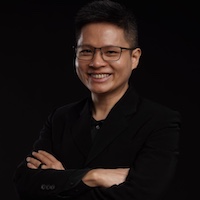
Said Hasyim has earned a reputation as a dynamic and accomplished Director of Innovation & IT with expertise in building strategies and leading projects. His progressive experience has led to resounding success across his 17+ year career, including multiple promotions. Easily able to move from high-level planning to hands-on analysis and training, he ensures that companies and clients enjoy the best possible results.
After advancing into leadership, Said successfully launched six software startups, demonstrating a rare balance of technical depth, business acumen, and executional rigor. He is also the award-winning author of five books on productivity, resilience, and self-mastery, with his sixth book currently in progress.
Said drove top-tier results as a Senior Project Manager at ICS Multimedia. Here, he orchestrated a team of 10 to achieve smooth execution across complex project lifecycles, ensuring the effective use of resources as a primary client liaison. In this role, he guided the ‘Parks Integrated Management System (EVE)’ project that was valued at S$7.2M+ for the National Parks Board, using practices that earned immediate recognition and are now considered a company gold standard. He also incorporated Lean Six Sigma concepts and PMI methodology as a subject matter expert, elevating the efficiency of internal processes and bringing up problem resolution SLA to 100%. Among his peers, Said is known for his innovative problem-solving, superb knowledge of emerging technologies, leadership skills, and tireless work ethic.
Supporting these achievements are Said’s noteworthy training qualifications. These include PMP, PRINCE2 Agile Practitioner, Prince2 Practitioner, ITIL, and Lean Six Sigma Green Belt designations.
An invited speaker at Nanyang Technological University (NTU) and various professional development circles, he shared actionable insights on the intersection of AI-driven innovation, leadership, and inner mastery.
Passionate about nurturing future leaders, Said serves as an Official Mentor for the NTU Connecting Minds program. He mentors young professionals, helping them develop not just leadership, but also the art of living well — with virtue, kindness, and a grounded philosophy of life.
Outside of work, he enjoys reading, writing, martial arts, and healthy living.
TNGlobal INSIDER publishes contributions relevant to entrepreneurship and innovation. You may submit your own original or published contributions subject to editorial discretion.
Featured image: Jakub Dziubak on Unsplash