

Singapore’s Digital Economy grew to S$144.1 billion ($113 billion) in 2025, or 19.3 percent of the country’s GDP, up from 18.8 percent in 2024.
Singapore’s Infocomm Media Development Authority (IMDA), the regulator and development agency for the technology and media sectors in the country, released the figure in a statement on Monday.
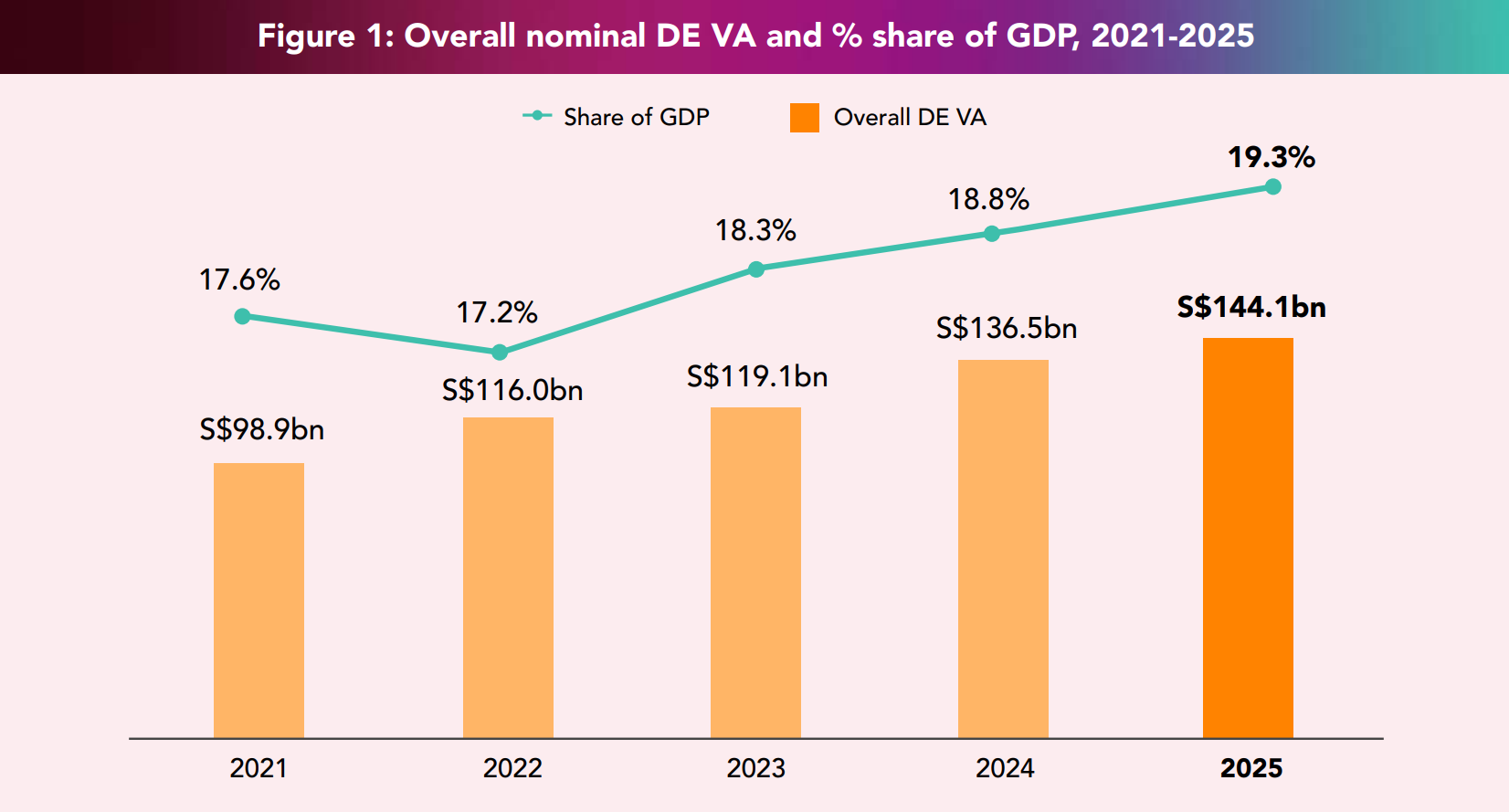
Most of the growth came from outside the technology sector, according to the IMDA’s annual digital-economy report. Non-tech sectors contributed more than two-thirds of the total, worth S$97 billion, up 3.6 percent, while the infocomm and media sector grew 6.1 percent to S$47.1 billion.
Technology employment rose 3.8 percent to 222,200 jobs, with faster growth outside the tech industry than within it and demand strongest for AI, data and cybersecurity roles.
The median monthly wage for resident tech workers was S$8,000 ($6,250), 60 percent above the overall resident median, the agency said.
AI adoption broadened sharply. Among small and medium-sized enterprises it rose to 23.4 percent from 14.5 percent a year earlier, and among large local firms to 70.4 percent from 62.5 percent. The share of non-adopters planning to take up AI within a year more than doubled from 2023, to 12.1 percent.
Most AI-using firms rely on off-the-shelf tools, and about two in five are expanding or fully integrating AI, the report said.
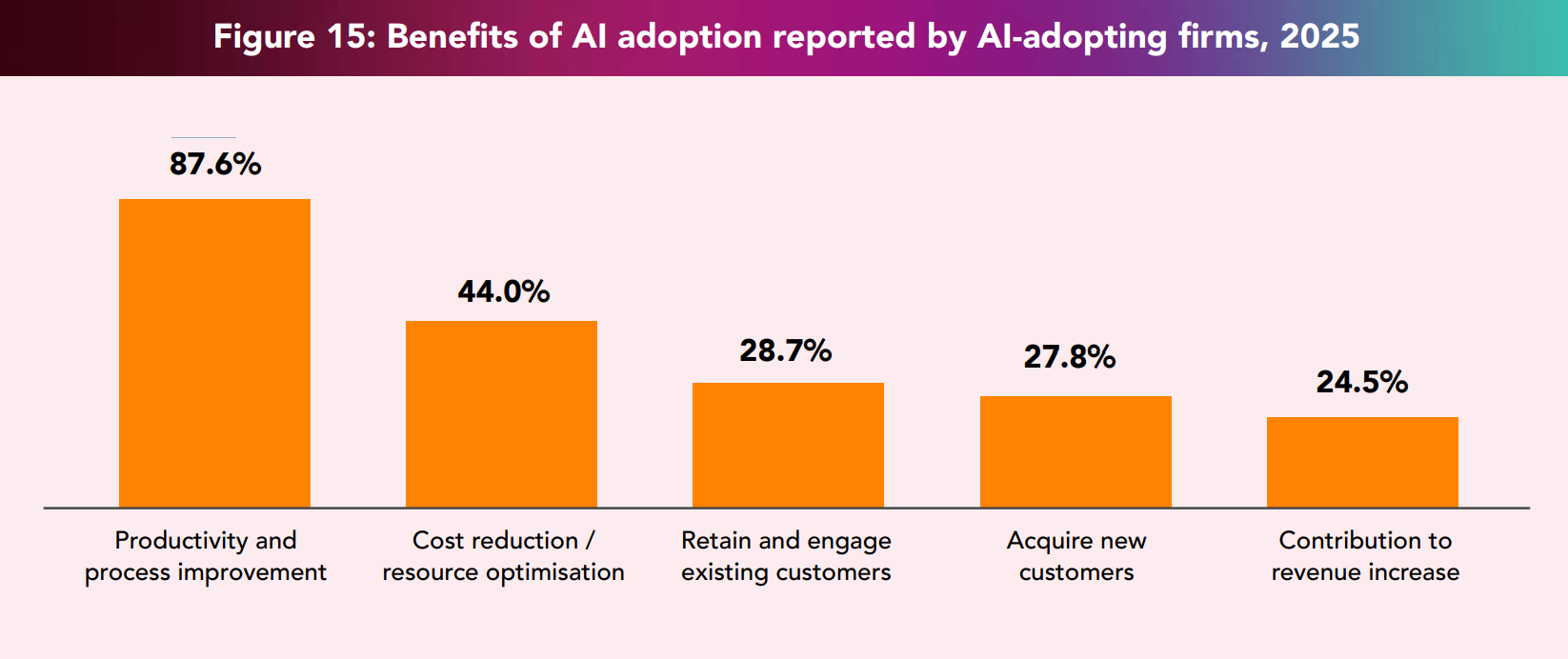
Among AI-adopting firms, 87.6 percent cited gains in productivity and processes and 44 percent cited cost savings. Small firms adopting approved digital tools under a government grant reported average cost savings of 49.5 percent, the agency said.
AI use among workers rose to 86 percent in 2026 from 78 percent a year earlier.Users reported gains in productivity, quality, and problem-solving, and most of those saved up to an hour a day. Content creation was the most common use.
A gap remains between demand and training. About 68 percent of workers saw a need to build AI skills, but only 37 percent had attended AI training in the past year. To narrow it, the agency said it would expand training to upskill 40,000 technology professionals over three years and 100,000 non-tech workers in AI by 2029.
IMDA’s chief executive, Ng Cher Pong, said the digital economy’s growth reflected strong momentum among both firms and workers, and that the agency would keep investing in practical, domain-specific AI skills.
IMDA partners TikTok to develop local microdrama expertise and fuel a new pipeline of original IP