

Editor’s note: TNGlobal was invited to cover X-Digital@ Thailand Korea Pavilion.
At Techsauce Global Summit 2026 in Bangkok, eight Korean technology companies brought a wide-ranging display of applied AI, healthcare, education and extended reality to the Korea Pavilion ‘X-DIGITAL@THAILAND’, under the 2026 Digital Content Convergence Enterprise PR, Marketing, and Export Support Project.
Organized by South Korea’s Ministry of Science and ICT (MSIT) and the National IT Industry Promotion Agency (NIPA), the pavilion provided a platform for Korean technology companies to showcase their products and explore opportunities in Thailand and the wider Southeast Asian market.
The companies — MarkAny, Newbase, Apposter, PlayCurio, Healcerion, BNV Solutions, NamoWebiz and Melaka Corp — spanned cybersecurity, medical simulation, wearable healthcare, augmented reality learning, portable ultrasound, AI education, semiconductor training and multimodal content creation.
Their products offered a more grounded view of the technology’s potential — from preventing sensitive information from being photographed off screens and training nurses in virtual hospitals, to helping teachers automate repetitive tasks and giving students virtual access to semiconductor fabrication processes.
For the companies exhibiting under X-DIGITAL@THAILAND, Southeast Asia represents a market where demand for digital healthcare, AI-powered education, workforce training and enterprise technology is growing, while localization, affordability and practical deployment remain key considerations.
Protecting what a camera can see
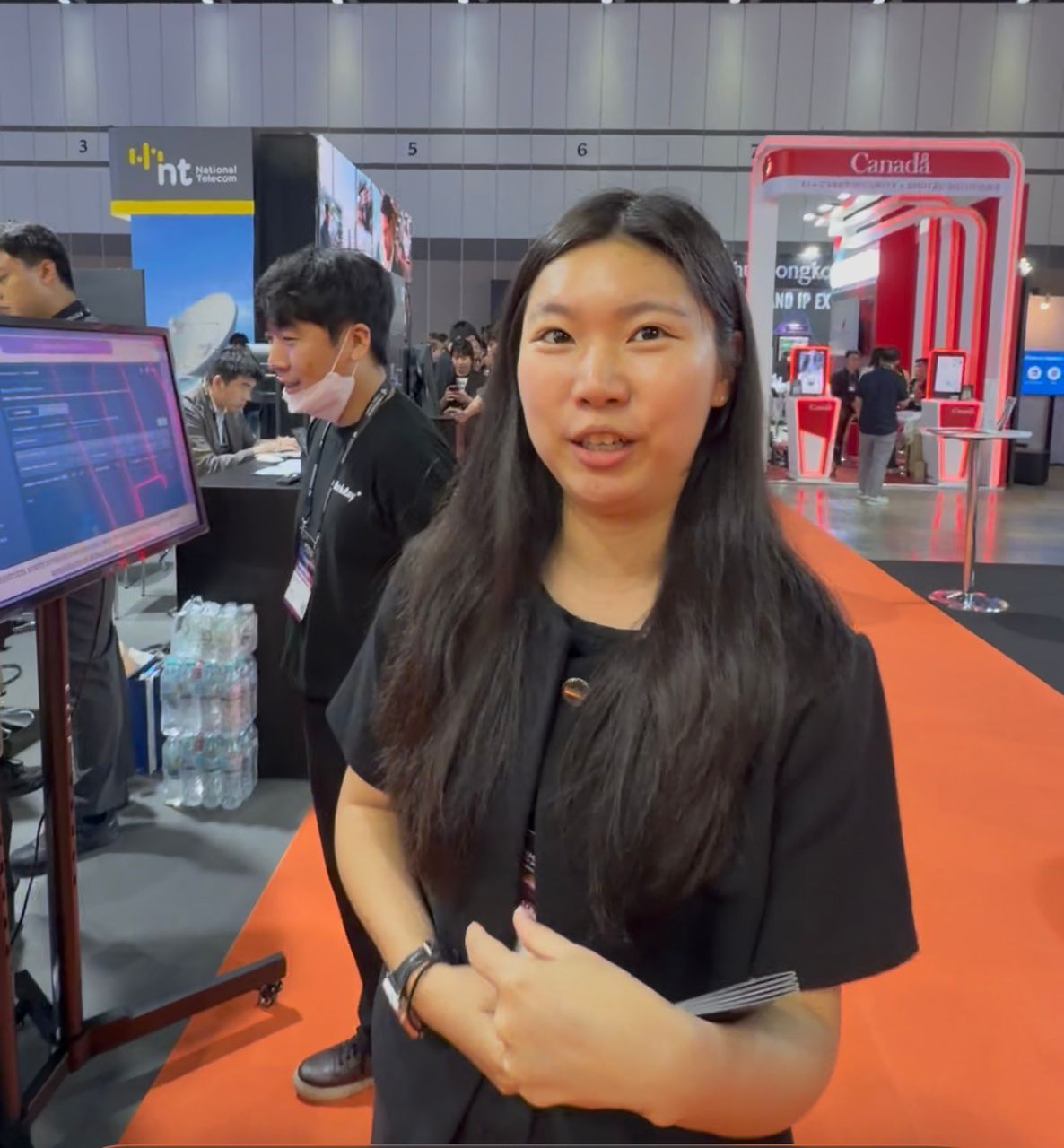
According to MarkAny Manager Youngsin Lim, the problem the company was tackling was one that conventional cybersecurity tools can easily overlook: what happens when someone simply takes a photograph of a computer screen?
“Whenever someone put up a phone or camera to take a photo, it will put up a ‘screen protector’,” she told TNGlobal when met at Techsauce Global Summit last Thursday (Aug 27).
The company’s Ciphermark SaaS solution meanwhile, projects an invisible watermark across a screen, embedding traceable information without affecting what users see. If confidential information is photographed and leaked, the company’s AI detector can reconstruct the watermark even from a damaged image and trace it back to information such as an employee ID, IP address and time of capture.
The approach addresses a gap between digital security and the physical world. Passwords, access controls and endpoint security may protect a file, but they cannot necessarily stop someone from using a smartphone to photograph information that is already visible.
The company also positioned Ciphermark as a scalable security service, offering both on-premise and cloud-based subscription models for companies and public institutions that may lack extensive cybersecurity resources.
Bringing the hospital into the classroom – Newbase
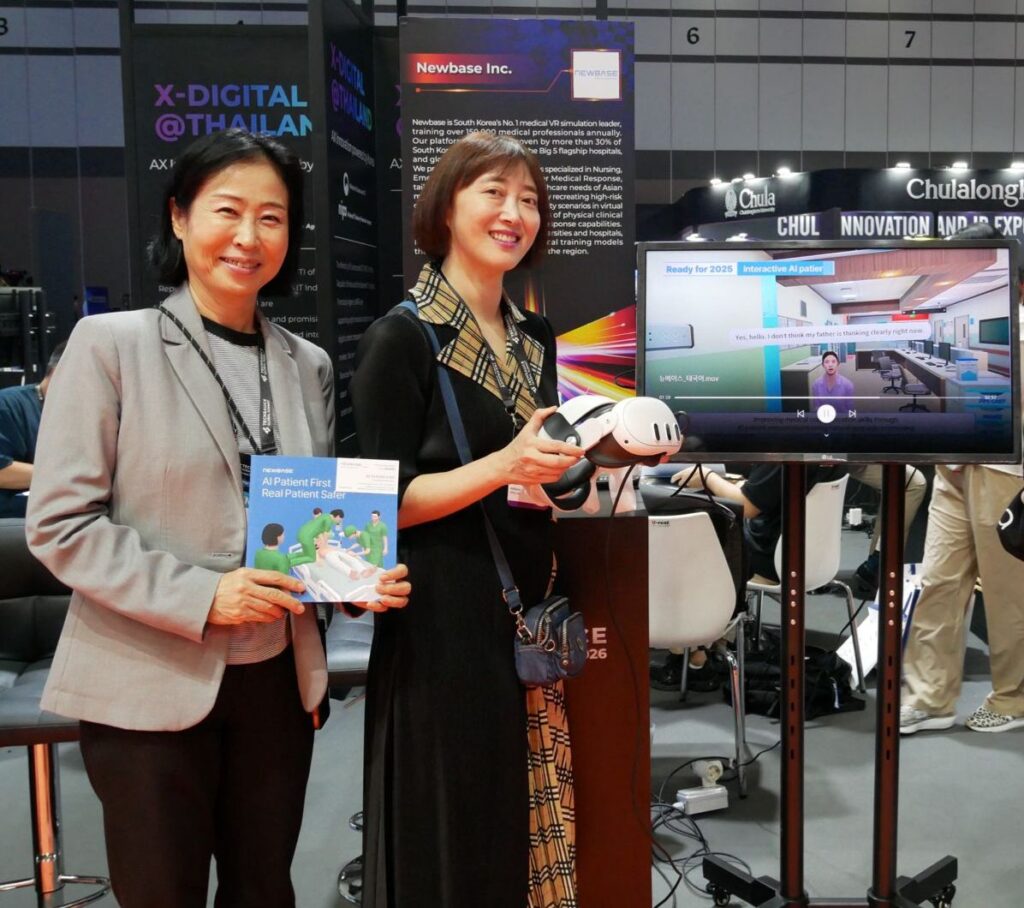
Healthcare education was another prominent theme at the Korea pavilion.
Newbase presented Medicrew, a medical and nursing simulation platform that creates virtual patients and vital signs based on real medical data. Available through VR and mobile devices, the platform allows learners to practise clinical scenarios without being tied to a physical classroom or simulation lab.
“We want to expand into Southeast Asia, specifically targeting Vietnam, the Philippines, and Thailand,” Newbase CEO Seon-Young Park told TNGlobal.
Besides nursing, the technology is used to train doctors on new clinical skills through AI simulations, told TNGlobal.
“Our technology is already being used in South Korea and we also export to the Philippines, Mongolia, Saudi Arabia, Indonesia,” she said.
A smart healthcare ring – Apposter
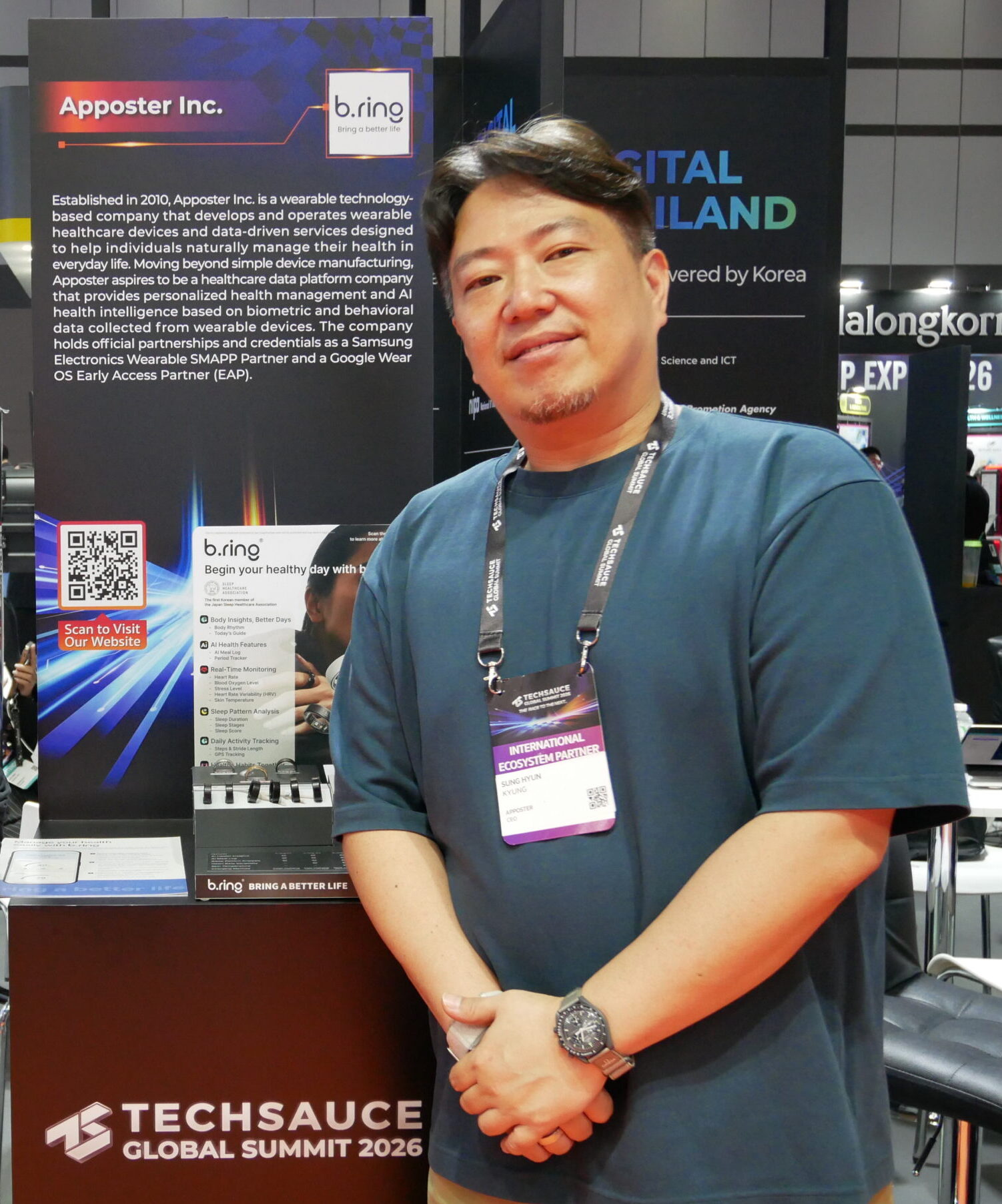 Apposter took a different approach to wearable technology with B.RING, a lightweight smart healthcare wearable designed to be worn on the finger around the clock.
Weighing about 2.9 grams, the device tracks biometric data including sleep, heart rate, blood oxygen saturation, stress, heart-rate variability and skin temperature. Its AI health model analyses fatigue and recovery patterns to provide personalised guidance around sleep, exercise and focus.
But Apposter’s pitch was not simply another consumer smart ring.
“You don’t have to keep subscribing. We are more affordable and you can choose the different materials,” Apposter CEO Sung Hyun Kyung told TNGlobal.
The company is positioning B.RING as a B2B healthcare SaaS product that combines hardware, software and AI in a single subscription. That includes enterprise-level management capabilities that are generally absent from consumer-focused smart rings.
“We launched in Korea and Japan last year. We want to enter the Southeast Asia market especially Thailand. We are targeting the elderly market,” he added.
Making learning less dependent on screens – PlayCurio
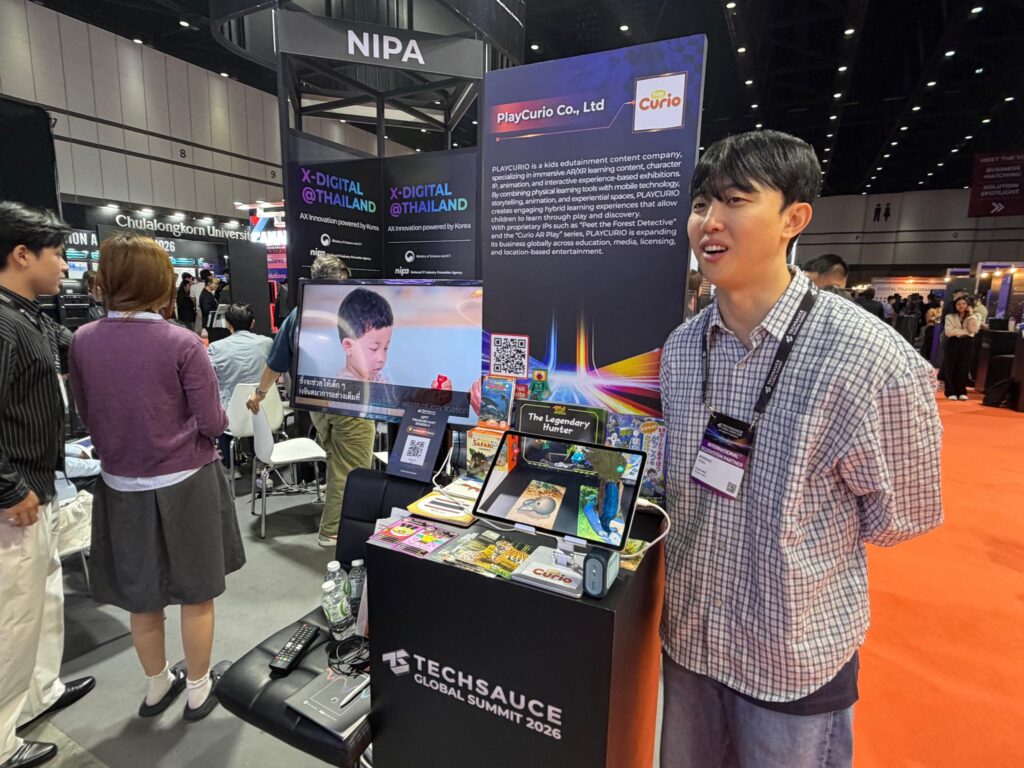
Not every company at the showcase was trying to replace physical experiences with digital ones. PlayCurio’s Curio AR Play series instead sought to combine them.
The company’s educational products use physical learning materials alongside augmented reality, allowing children to interact with subjects including nature, English, mathematics and science. Its Detective Pete series, meanwhile, is a children’s IP and edutainment project co-produced with Korean broadcaster EBS.
“CurioSafari is one of the popular products. Children can also learn about other animals like dinosaur, ocean animals, among others,” PlayCurio Team Lead Jeongho Yoon told TNGlobal.
The hybrid approach is deliberate. By combining physical cards with 3D AR content, PlayCurio aims to create a more immersive learning experience while addressing concerns around excessive screen exposure. Its products can also operate offline and support multilingual localisation for overseas markets.
Ultrasound without the cables – Healcerion
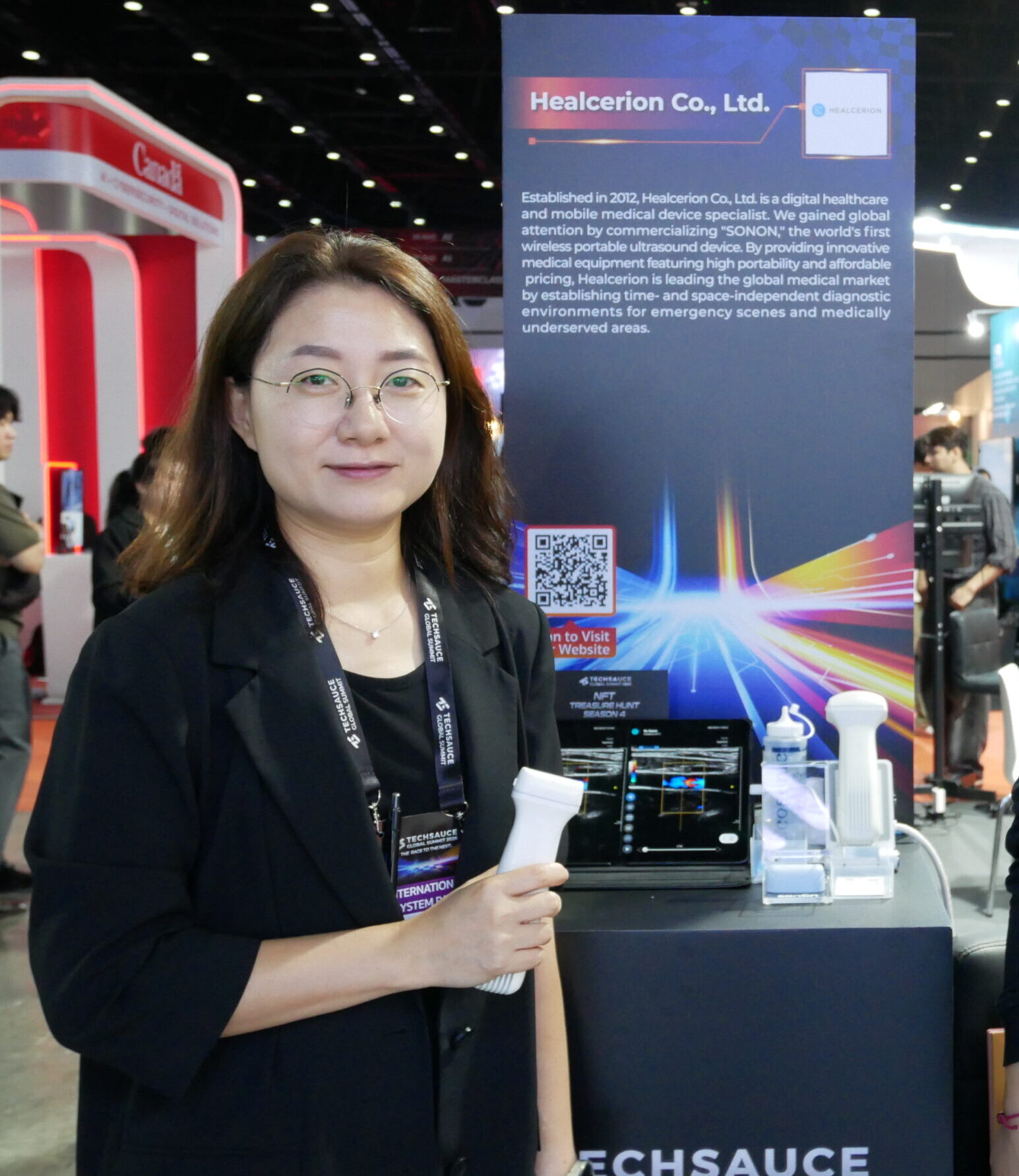
Healcerion brought medical hardware into the showcase with SONON 500L, a wireless linear ultrasound device that connects to smartphones and tablets. “Our product is portable product. So doctors can use it anywhere, anytime,” Healcerion representative from international sales and marketing Jieun Hwang told TNGlobal.
She also highlighted the several main advantages of the products, including ease of use that does not limit medical workflows, does not require a subscription and allowing customers to access all functions without recurring costs. “We are looking for partners and distributors in Thailand and Southeast Asia,” she added.
The device uses AI image processing to improve ultrasound visibility and is designed for applications including dermatology, vascular access during dialysis, remote emergency care and disaster relief.
Its wireless design removes cables from the workflow and allows ultrasound images to be transmitted to mobile devices and PCs over Wi-Fi. The accompanying AI software filters noise and enhances contrast in real time.
That combination of portability and lower cost is particularly relevant for telemedicine and emergency settings, where conventional ultrasound equipment may be difficult or expensive to deploy.
An AI tutor that takes on the repetitive work – BNV Solutions
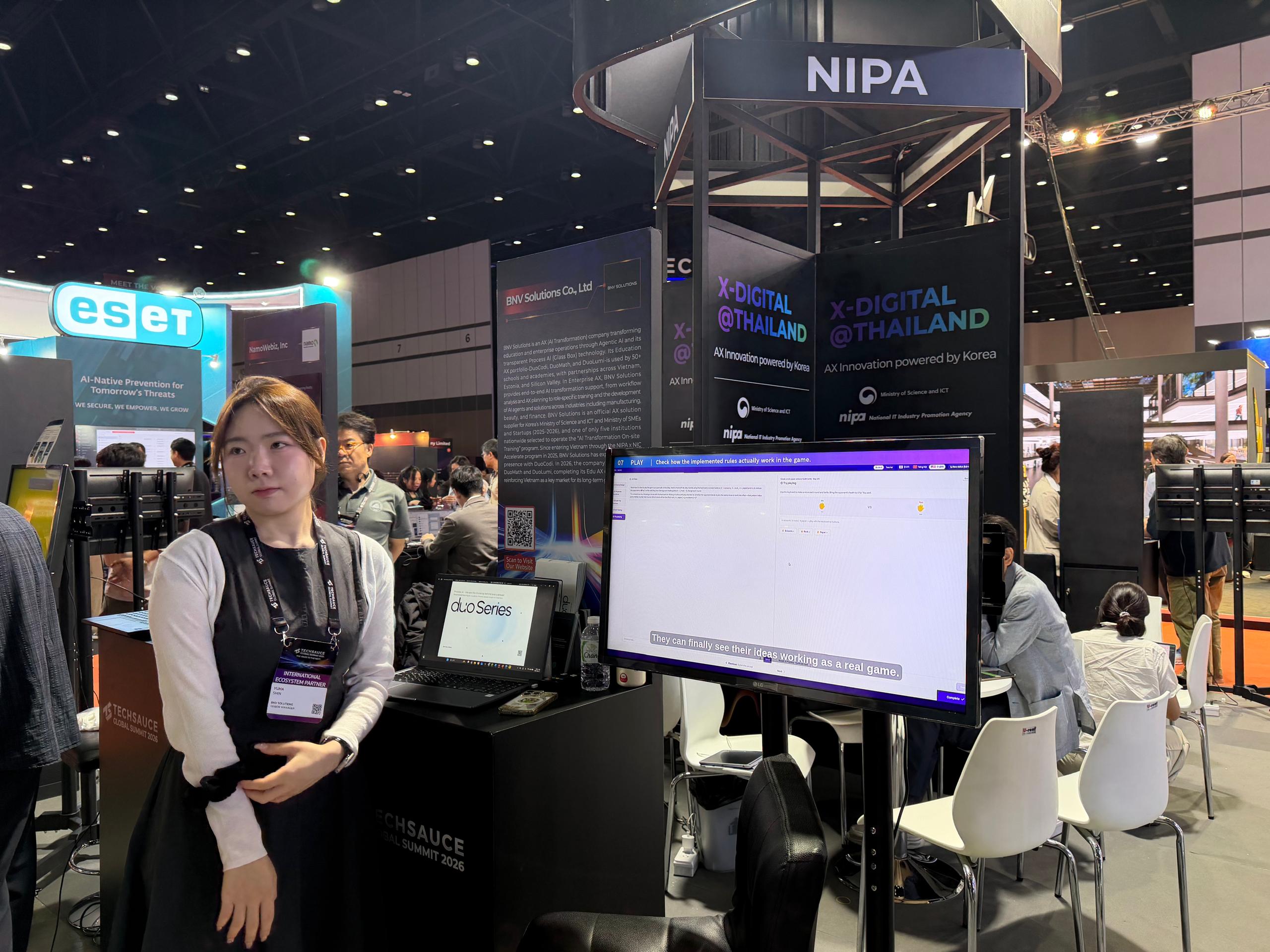
BNV Solutions focused on reducing the amount of repetitive work teachers have to perform, according to Isla Shin, senior manager at BNV Solutions.
Its DuoCodi platform uses AI agents to analyse coding patterns in real time and provide personalised tutoring. The company also offers DuoTutor and DuoMath, which track learner activity and achievement to provide tailored feedback and automated assessments.
The company’s proposition goes beyond using AI as a chatbot for students. BNV Solutions described its approach as agentic AI, with systems capable of setting goals, making decisions and executing repetitive tasks such as curriculum and content creation.
The idea is to separate teaching from coaching: let AI handle more repetitive instructional tasks, while teachers spend more time on higher-level guidance, critical thinking and individual coaching.
“We want to expand our market to Southeast Asia, starting with Vietnam and Thailand. We are trying to find partners,” Shin told TNGlobal when met at Techsauce.
Training semiconductor engineers in virtual cleanrooms – NamoWebiz
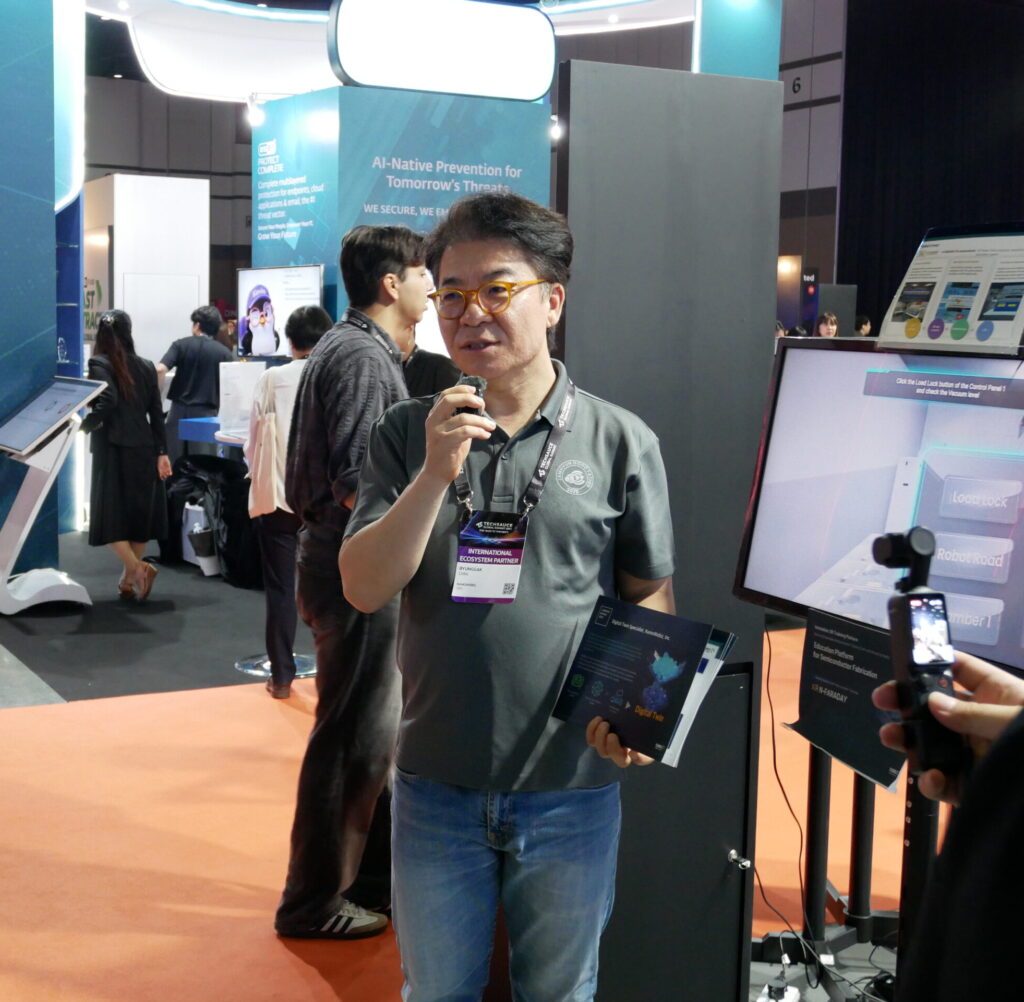
NamoWebiz brought XR into one of Asia’s most strategically important industries: semiconductors.
Its N-Faraday XR S1 platform is designed for university-level semiconductor engineering education, simulating processes including furnace operation, lithography, cleaning, cluster processes and evaporation, the company’s President ByungGak Chin said.
The system recreates a 50-step N-MOSFET front-end fabrication process in an immersive XR environment, allowing students to repeatedly practise equipment operation, safety procedures and responses to errors without requiring constant access to a physical cleanroom.
That could address one of the biggest barriers to semiconductor training: the cost and availability of physical fabrication facilities.
“We will go to Southeast Asia, Vietnam, Thailand and others,” he said.
One platform for text, images, music and more – Melaka Corp
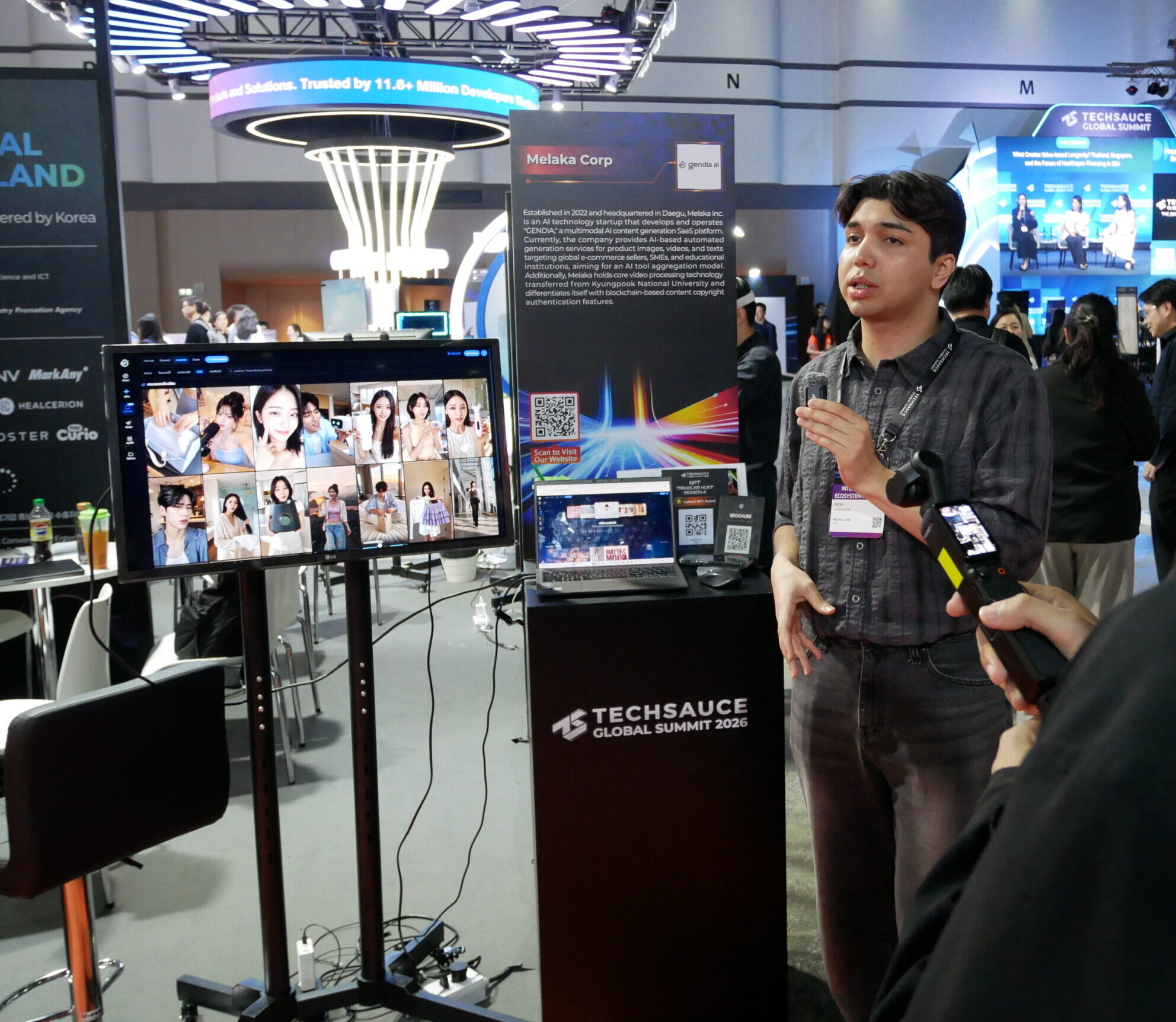
Melaka Corp presented its product Gendia AI, a multimodal content generation SaaS platform at the pavilion.
Rather than requiring users to move between separate AI tools for writing, voice generation, music, scripts and images, Gendia AI brings those capabilities into a single workflow, Melaka Corp CTO Fatih Karakurt told TNGlobal as he showed some of the final videos produced by his company.
“We offer different languages because it’s a global platform. We have different options of language. Korean, English, German, Portuguese, Vietnamese and others,” he said.
The company is targeting the marketing secgor in Southeast Asia due to high demand for cost-effective social media presence, he added.
The company also aims for global expansion rather than limited to Korea, levaraging its diverse international team.
From Korean innovation to Southeast Asian markets
Taken together, the eight companies at the X-DIGITAL@THAILAND Korea Pavilion offered a snapshot of where applied AI and emerging technology are heading.
The technologies varied widely, but most were built around a tangible problem: stopping information leaks, improving healthcare training, making medical diagnostics more portable, reducing teachers’ administrative workloads, lowering the cost of semiconductor education or making digital content creation accessible to non-technical users.
The X-DIGITAL@THAILAND showcase underscored that Korea’s technology story is no longer confined to its domestic market. For these startups, the opportunity lies in translating that innovation into solutions that can work — and scale — across the region.
Besides the Korea Pavilion at Techsauce Global Summit, the participating companies have also joined an official pitching session at Techsauce Global Summit on Thursday (Aug 27), giving the startups an opportunity to present their technologies and business propositions directly to potential partners, investors and industry stakeholders in Thailand and across the region. Together, the activities aim to move the engagement beyond product showcases and towards business connections and potential market opportunities in Southeast Asia.
Earlier on Wednesday (Aug 26), the organizers had also hosted a networking event at The Westin, Bangkok, bringing Korean companies and tech leaders together with the regional tech ecosystem.
Featured Photo credits: Global News Network AVING