

Across Southeast Asia, I’ve seen how the narrative of innovation often revolves around billion-dollar valuations and high-velocity startups. Yet behind those headlines lies a quieter truth: most of the region’s real economic energy still comes from small and midsized enterprises. The manufacturers, logistics operators, and service providers that keep our cities running.
And it’s precisely these businesses that I see struggling to be heard.
Traditional credit systems still ask SMEs to fit narrow definitions of “bankable.” Venture funds, meanwhile, chase disruption but often overlook durability. Somewhere in between lies the real economy, asset-rich but liquidity-poor, growing but unseen.
The question isn’t whether these firms deserve capital. It’s whether today’s capital still knows how to listen.
From speed to structure
Over the past few years, I’ve watched funding in Southeast Asia grow more polarised. Late-stage deals have surged, but seed and early-stage funding have contracted sharply. The pattern suggests a market that values maturity over momentum, yet it also reveals how little structural support exists for SMEs that never fit the startup mold to begin with.
What these businesses need isn’t another “growth story.” They need financing that aligns with the rhythm of their operations, loans that move with inventory cycles, repayment terms that reflect market volatility, and investors who understand that resilience sometimes matters more than returns.
In my view, the real innovation isn’t speed. It’s in structure.
The missing ingredient: Trust
Trust may be the least analysed variable in private capital, yet I believe it underpins every successful transaction.
In emerging markets, where data can be patchy and legal frameworks uneven, relationships still matter more than algorithms. Financing models that embed trust, through transparent governance, local presence, and shared accountability, often outperform those that rely solely on credit scores or valuations.
That doesn’t mean abandoning rigour. It means recognising that rigour itself can take different forms: a business owner’s track record, a community’s reputation, or an asset’s proven utility. In many cases, I’ve found that these informal signals of credibility are more predictive of repayment than any spreadsheet.
The capital that listens pays attention to those signals.
Designing for reality
I’ve come to view finance not just as a product, but as a design exercise. We need to prototype new structures, revenue-linked models, milestone-based repayment, or collateralisation through non-traditional assets, that mirror how real businesses actually operate.
This is what I call governed capital: money deployed with both structure and empathy. Responsible lending isn’t about avoiding risk; it’s about understanding it. It’s about designing financial systems that reflect the lives and cycles of those they serve, rather than forcing businesses to contort themselves to qualify.
Beyond ESG: Building systems that endure
Much has been said about “impact investing,” but I’ve often seen the region treat it as an aesthetic, a badge of responsibility rather than a redesign of intent. Real impact investing must be slow capital: patient, cyclical, and local.
It should finance the middle of the market, the businesses that hire, train, and sustain, not only those that promise exponential growth. And it should measure success in systems built to endure market shocks, not in exits achieved before the cycle turns.
That philosophy demands more than new metrics. It demands new mindsets, from investors, regulators, and entrepreneurs alike.
What comes next
If Southeast Asia’s next decade is to be defined by capital that listens, I believe a few principles can guide the way forward:
- Local fluency over global templates. Effective capital requires proximity, to markets, to culture, and to people.
- Governed flexibility. Rules and empathy are not opposites; they are co-designers of trust.
- Measured ambition. Growth that compounds slowly is often the kind that lasts.
When finance learns to operate at human scale, SMEs cease to be an afterthought. They become the architecture of regional resilience, proof that in an age of noise, the most transformative capital may be the kind that moves quietly, listens deeply, and stays long enough to matter.
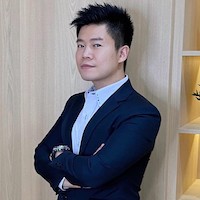
Jack Yang is Regional Director of GlobalTech Horizons Asia.
TNGlobal INSIDER publishes contributions relevant to entrepreneurship and innovation. You may submit your own original or published contributions subject to editorial discretion.
Featured image: barbaracascao on Pixabay
Why AI needs a doctor’s hand to build reliable healthcare technology