

A founder in Ho Chi Minh City reads her first term sheet. The pre-money valuation is VND 40 billion, roughly US$1.5 million. She does the mental math, decides she will keep most of the company, and starts planning her hiring. Weeks later the cap table lands, and her ownership is several points lower than she expected. Nobody lied. Nobody broke the contract. A single clause did the work: the option pool shuffle.
As more international funds write checks into Southeast Asian startups, this clause is arriving in markets where many first-time founders have never heard of it. It deserves a closer look, because it moves real money without ever changing the headline number.
What the option pool shuffle actually does
Almost every serious funding round includes an employee stock option pool, a block of shares reserved for future hires. The real question is not whether to have a pool but when it is counted in the valuation math. There are two ways to do it.
In the first, the pool is created after the round closes. Every shareholder is diluted proportionally, including the new investor. In the second, the pool is created before the round and counted inside the pre-money valuation. This is the shuffle. The new investor prices their check against a company that already contains the larger pool, so the investor is not diluted by it. Only the founders and existing shareholders are.
In plain terms, the founders end up paying for the new investor’s future hiring plan out of their own stake.
Why it works as a hidden valuation cut
If an investor asked outright to lower the pre-money valuation from VND 40 billion to VND 35 billion, most founders would push back immediately. The shuffle avoids that conversation. The headline pre-money number on the term sheet stays exactly where it was. What changes is what that number contains.
That is why experienced investors favor it: it achieves the economics of a discount without a negotiation over the visible figure. It is also why founders who focus on the headline valuation can feel they won the negotiation and still leave with less than they expected.
A worked example
Assume a seed round with a VND 40 billion pre-money valuation and a VND 10 billion investment. The post-money valuation is VND 50 billion, and the investor buys 20 percent. The founder was planning for a 10 percent pool, a common size at seed stage. The investor proposes 15 percent, counted before the round.
| Scenario | Founders and existing holders | New investor | Option pool |
|---|---|---|---|
| A: 10% pool created after the round, dilution shared | 72% | 18% | 10% |
| B: 15% pool counted in pre-money (the shuffle) | 65% | 20% | 15% |
The founders drop seven points. In scenario B the investor still holds the full 20 percent they paid for, while the founders’ stake is worth VND 32.5 billion at the round price instead of the VND 36 billion it would be worth in scenario A. The effective pre-money valuation for existing holders is about 19 percent below the VND 40 billion headline. The gap is roughly VND 3.5 billion today, or about US$135,000, and it grows with every later round if the company succeeds.
Some of that difference comes from the larger pool itself, and a bigger pool can be justified. The point is that the structure decides who pays for it.
Why this catches founders in emerging markets
Many Southeast Asian term sheets are adapted from templates such as the Y Combinator documents or the NVCA model legal documents, while local founders are trained on their national company law. The vocabulary gap is real. A pool clause reads like routine boilerplate, and few founders have a lawyer or advisor who will build a before-and-after cap table for them.
In my experience coaching first-time founders, the pool clause is one of the lines most often skimmed. Foreign funds usually apply it because it is standard practice in every market they invest in, not because they are trying to harm anyone. But a standard practice is still a negotiable one.
How to negotiate it
Size the pool from a real hiring plan. Instead of accepting a round-number 15 or 20 percent, list the senior roles you will hire in the next 12 to 18 months and the equity each one realistically needs. A pool sized to the plan is usually smaller than the default and is much harder for an investor to argue with.
Ask to share the dilution. Propose that the portion of the pool above what you had planned be counted post-money, so the new investor absorbs a share of it.
Demand a full before-and-after cap table. Before signing, ask for a simulated cap table showing the percentage held by every party. Ownership percentages are far harder to misread than valuation language.
Trade, do not just resist. If you are about to hire a CTO and a COO right after closing, a large pool may be legitimate. In that case, trade for something in return, such as clean vesting terms for your own shares or a pro-rata right in the next round.
The bottom line
The option pool shuffle is not a trap, and it is not a scandal. It is a pricing mechanism that rewards whoever reads the term sheet more carefully. Before you sign, ask one question of your lawyer or advisor: is the pool counted before or after the pre-money valuation? Then insist on seeing the cap table that results. The percentage you own after the round is the number that matters, and it is the one the headline valuation will never show you.
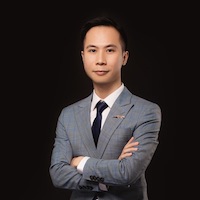
Hai H Nguyen is the founder of BeginGuru, a Forbes 30 Under 30 Asia (2017) honoree, and a fundraising coach who has served on the boards of several Vietnamese companies, including Nina Ecom Center, VCO Group, and HOPE Corp. He has spent 14 years working with founders on valuation, fundraising, and governance.
Editor’s note: This contributed article has been lightly edited for clarity and TNGlobal house style. The views expressed are those of the author. This article was originally published in Vietnamese.
Share your perspective: TNGlobal welcomes contributed insights and expert commentary from across Asia’s technology and innovation ecosystem. Submit a contribution for editorial consideration, or explore more perspectives in TNGlobal INSIDER and conversations in the TNGlobal Q&A and Interviews archive.
Featured image: charlesdeluvio on Unsplash