

Editor’s note: For this special report series, TNGlobal spoke with investors, ecosystem builders, capital-market leaders and founders to examine the opportunities and challenges shaping Hong Kong’s next chapter in technology.
Hong Kong is seeking to turn its strengths in research and finance into a new generation of technology businesses, as artificial intelligence, robotics and biotechnology gain prominence in the city’s innovation agenda. The ambition is to bridge the gap between university laboratories and commercial markets, drawing on the Greater Bay Area’s (GBA) manufacturing capabilities and Hong Kong’s access to international capital.
For venture capital firm Gobi Partners, the opportunity lies in building the investment and commercial networks needed to take deeptech companies from research to scale. In an interview with TNGlobal, Gobi Partners Managing Partner Chibo Tang discussed Hong Kong’s evolving technology ecosystem, the challenges of commercializing research, and the city’s potential to connect Chinese technology with Southeast Asian markets and global investors.
Founded in 2002, Gobi Partners is an Asia built venture capital firm shaped through multiple market cycles. The firm operates across East Asia, Southeast Asia, South Asia, and adjacent growth markets, with on the ground teams embedded within the region.
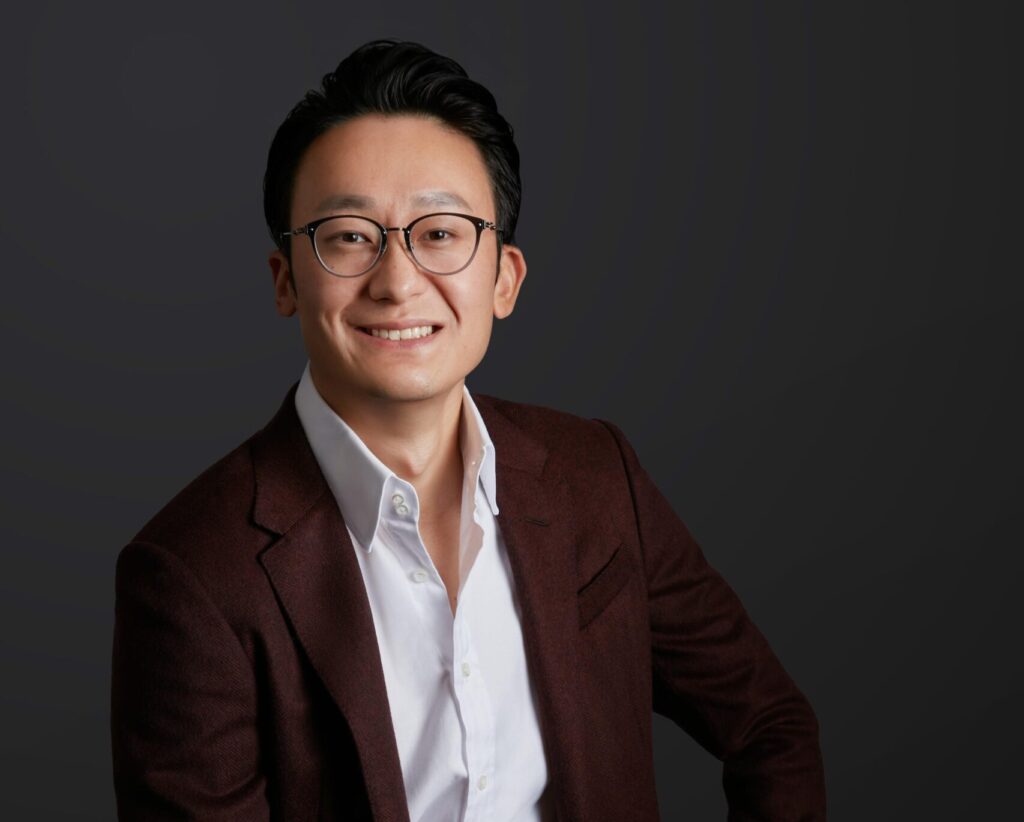
Below are the edited excerpts:
How do you assess Hong Kong’s technology and startup ecosystem today, and what has changed most significantly in recent years?
We have witnessed the depth and breadth of Hong Kong’s ecosystem grow significantly over the past few years. Where fintech, e-commerce, and logistics were the main sectors driving the I&T ecosystem in the past, Hong Kong has now transitioned into an ecosystem driven by future-defining technologies like AI, biotechnology, robotics, space and climate technology.
This means that Hong Kong is rapidly becoming one of the most important innovation hubs in the world. Much of this is driven by the world-class academic institutions in Hong Kong, and as the government and private sectors continue to invest in bridging the gap between research and commercialisation, more industry-leading technologies will be able to reach their full potential.
Gobi has been a leading investor in the deeptech sectors in Hong Kong, and we have built extensive partnerships with nearly all of the universities, including the University of Hong Kong (HKU), The Hong Kong University of Science and Technology (HKUST), The Hong Kong Polytechnic University (PolyU), and Hong Kong Baptist University (HKBU) to name a few.
These partnerships are crucial to help more research make its way out of laboratories. For example, the Gobi-Redbird Innovation Fund (launched with Hong Kong Investment Corporation Ltd and HKUST in October 2025) and Gobi-HKU Fund I (launched March 2026) are examples of our investment vehicles with a mission to help Hong Kong’s university research spin out into sustainable businesses.
Gobi-Redbird Innovation Fund’s initial investments include robotic lawnmower company Lymow and space tech startup Stellerus, while Gobi-HKU Fund I has backed spatial intelligence company Manifold Tech, which develops 3D reconstruction and robotics technology, and AI drug discovery company AilsynBio, among others.
In addition to the new opportunities on the investment front, financing and exit pathways are also evolving in favour of startups.
In 2023, Hong Kong Exchanges and Clearing Ltd (HKEX) introduced Chapter 18C for pre-revenue and pre-profit specialist technology companies to go public on the Main Board; this is in addition to the previously launched Chapter 18A guideline for biotechnology-related companies.
It then introduced the Technology Enterprises Channel in 2025, providing more support for technology and biotech listing applicants. All of these initiatives provide founders and investors more assurance that there are defined exit strategies for startups.
What are Hong Kong’s biggest strengths as a technology and investment hub, and where does the ecosystem still need to improve?
Hong Kong sits at the intersection of research talent, international finance, and proximity to the GBA’s engineering and manufacturing resources. This means that founders can innovate in Hong Kong, then iterate in the GBA to turn their research into a product. The ecosystem also benefits from strong IP protection, access to institutional capital, and the HKEX as an exit pathway.
We are also seeing Hong Kong increasingly grow into its role as a regional hub and launchpad between different parts of Asia, thanks to its status as a global financial center, its access to the Chinese Mainland, and central geographic location. For example, it connects Middle Eastern capital, including sovereign wealth funds and private investors, to the Chinese Mainland’s deep tech ecosystem, and serves as a launchpad for startups from Southeast Asia to both China and the Middle East.
As Hong Kong becomes more focused on deeptech opportunities, one area to prioritize is the ability to connect research teams with experienced operators, customer channels, and later stage financing, in order to help those startups clear the “valley of death” between initial validation and commercial sustainability. This is where venture capital value creation offers real guidance and practical support–our connections give us the ability to help guide a successful prototype to repeat orders and other key commercial milestones.
How important is Hong Kong’s connection to Mainland China and the Greater Bay Area to its technology ecosystem?
The relationship between Hong Kong and the rest of the GBA is fundamental to the growth potential of its technology ecosystem, especially in emerging technologies and deep tech. Hong Kong’s world-class capabilities in research and funding can be significantly compounded when connected to the GBA’s supply chain, manufacturing expertise, engineering talent, and large domestic market.
The robotics and AI hardware sectors are a great example. Hong Kong’s universities can contribute core research and development and industry-leading experts.
Once those teams and technologies are spun out, they can then set up entities in the GBA to hire more engineers to create initial products, and iterate quickly with world-class supply chain capabilities at their fingertips. After the products are ready to sell to global markets, the companies can then go back to Hong Kong, hire international talent and ship out directly to the world.
Do you see Hong Kong primarily as a market in its own right, or as a bridge connecting Mainland Chinese technology and capital with international markets?
We believe it actually serves both roles. Hong Kong is a valuable launch pad for companies to test products and validate their business model in a competitive market with discerning customers and investors. Its international connections can then help startups when they start to expand to other markets.
Sandbox VR is a good example of a Hong Kong startup going global. Its first location in Hong Kong allowed the team to not only validate that there is customer demand for their on-location virtual reality experiences, but also ensure their unit economics were sustainable before expanding into the United States. Now Sandbox VR operates more than 80 locations in 13 countries, including North America, Europe, and Asia.
Hong Kong’s role as a bridge also goes both ways. It can help bring in companies from other markets and give them access to investors, research partners, and the GBA’s industrial capabilities. At the same time, Hong Kong can help companies from the Chinese Mainland expand further overseas.
Gobi has deep experience across Southeast Asia. How do you see Hong Kong fitting into the broader Hong Kong–Southeast Asia technology and investment corridor?
Hong Kong is at the northern end of what Gobi refers to as the “Crouching Panda, Hidden Tapir” corridor: the interflow of capital, talent, and companies between Northeast Asia and Southeast Asia.
One of the biggest opportunities for both regions is in how well they complement each other. Hong Kong and the GBA offer research, especially in deep tech and fintech, and financing. Southeast Asia has its own industrial expertise (semiconductors, fintech, AI infrastructure), local partners, talent pool, and very large regional markets.
WeLab’s partnership with Astra Financial in Indonesia is one example. The two built digital banking service Bank Saqu and launched it in 2023. It combines WeLab’s digital banking technology and experience with Astra’s understanding of local markets and its business connections. The combination helped enable Bank Saqu to reach 3.8 million customers by June 2026.
Deep tech creates further opportunities, too. In robotics, Southeast Asia can contribute training data from various working environments, as well as technology development. For Hong Kong and GBA space tech startups, Southeast Asia offers important commercial applications in climate monitoring and weather-related use cases.
There are also many opportunities for investment partnerships. Gobi served as the strategic partner for HKIC’s July 2026 delegation to Malaysia and Brunei, with 10 startup participants from sectors like AI, biotech, new energy, and green tech. The delegation is an example of how technology companies can be connected with potential industry and investment partners.
Looking five years ahead, what would you like Hong Kong’s technology and investment ecosystem to be known for?
I would like Hong Kong’s technology and investment ecosystem to achieve and create a positive feedback loop – with more startups becoming successful, investors are able to return capital through more exits, and both founders and investors can then recycle their returns back into the next generation of startups.
As the ecosystem becomes more mature, experienced founders and operators can also serve as mentors to new teams and increase the pool of global talent who have the experience to continue to scale businesses successfully.
The strongest proof of Hong Kong’s potential will be seeing Hong Kong-originated technology in daily use across Asia and the world, solving real problems across all walks of society, including in healthcare, climate, industry, and finance.
Featured photo credits: Gobi Partners