

Johnson Controls has joined the National University of Singapore’s Sustainable Tropical Data Centre Testbed 2.0, a program that will evaluate AI-ready data center technologies under real-world tropical conditions.
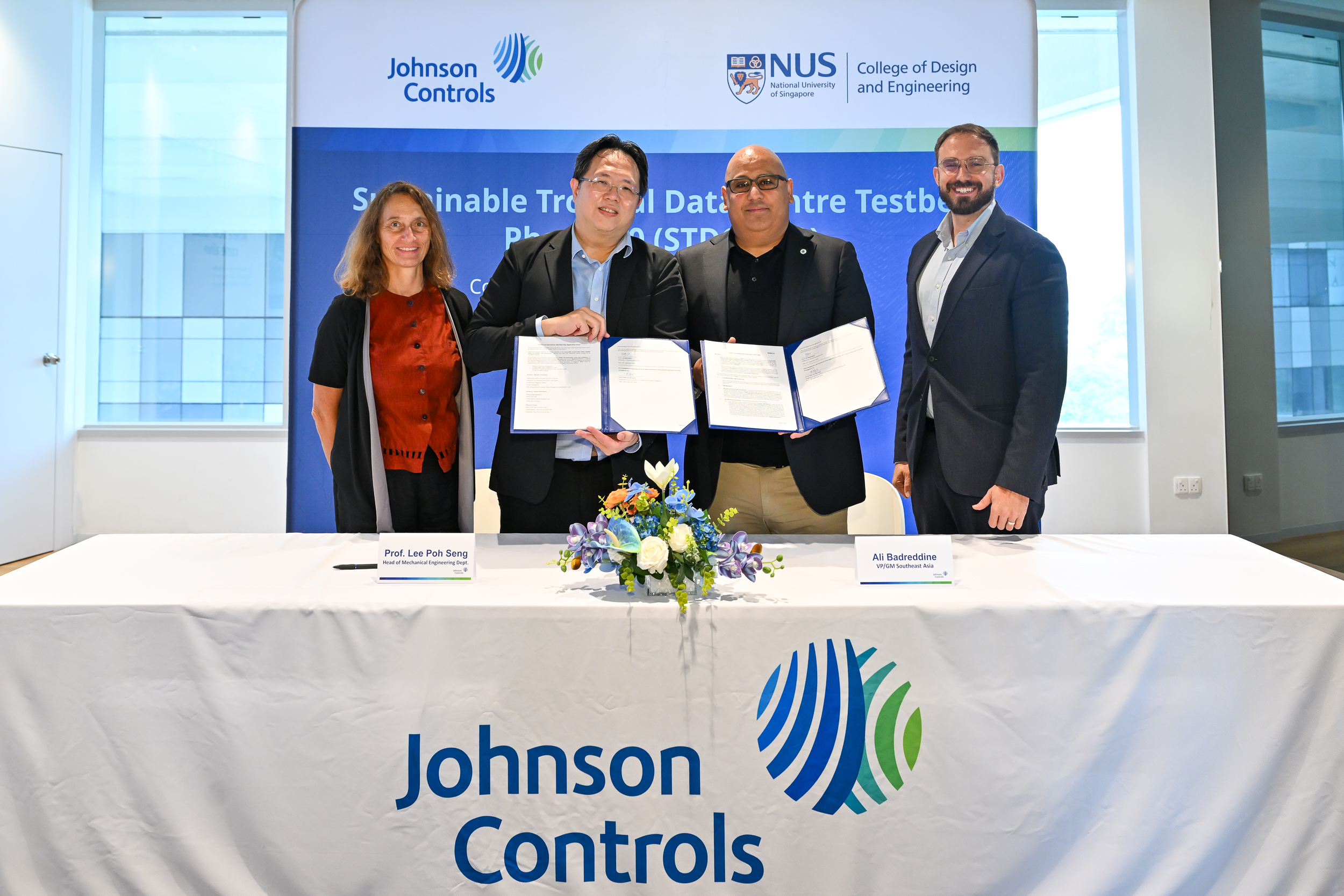
The testbed, hosted by NUS’ College of Design and Engineering on Jurong Island, is examining how higher-density computing infrastructure can be deployed while managing constraints around power, water, cooling and space. Johnson Controls will contribute thermal-management technology, smart controls, engineering expertise and data center operating experience.
The company said a modeled integrated thermal-management design could reduce non-IT energy consumption by up to 50 percent compared with conventional cooling methods. In a separate 1-gigawatt reference design, Johnson Controls said using waste heat for absorption chilling could enable up to 97 MW of additional AI computing capacity while reducing cooling-related electrical demand by up to 44 percent. These figures are based on company modeling rather than results from the NUS testbed.
The collaboration is intended to produce findings that can inform data center designs in Singapore and other tropical markets. STDCT 2.0 will also support research, workforce training and industry collaboration as Singapore adds low-carbon data center capacity.