

Asia’s technology transformation has been built on decades of innovation, from becoming the world’s manufacturing backbone to emerging as a global leader in artificial intelligence, semiconductors, digital platforms, and advanced infrastructure. The next chapter of this evolution may be shaped by one of the most complex and transformative technologies of the 21st century: quantum computing.
Quantum computing represents more than a new generation of processors. It represents a fundamental shift in how societies approach computation, scientific discovery, cybersecurity, and economic competitiveness. As nations across the world race to develop quantum capabilities, Asia faces a critical opportunity to shape its own future rather than becoming dependent on technologies developed elsewhere.
The quantum race is not only about building the most powerful quantum computers. It is about creating an entire ecosystem of talent, research, applications, cybersecurity frameworks, and industries that can responsibly utilize quantum technologies. For Asia, quantum sovereignty will become increasingly important as technology becomes deeply connected with national resilience, economic security, and digital independence.
The 101 of quantum physics and how it connects to quantum computing
Quantum physics is the scientific field that studies how matter and energy behave at the smallest scales, including atoms, electrons, and photons. Unlike classical physics, where objects generally follow predictable rules, quantum systems operate according to probabilities and unique behaviors that challenge traditional understanding. Quantum computing applies these principles to information processing. Traditional computers operate using bits, where information is represented as either zero or one. Quantum computers use quantum bits, known as qubits, which utilize quantum properties to process information in fundamentally different ways.
The advantage of quantum computing does not come from simply making computers faster. Instead, it comes from solving certain types of complex problems differently. Quantum systems have the potential to transform areas such as molecular simulation, advanced materials discovery, logistics optimization, financial modeling, climate research, and cybersecurity.
According to McKinsey & Company, quantum computing is expected to create significant opportunities across multiple industries as the technology progresses from research environments into commercial applications. However, quantum computing will not replace classical computing. The future will likely involve hybrid systems where classical computers, artificial intelligence, and quantum technologies work together to solve increasingly complex challenges.
The convergence of AI and quantum computing: Building the next intelligence layer
The future of technology will increasingly be defined by the convergence between artificial intelligence and quantum computing. Artificial intelligence has already transformed how organizations analyze information, automate processes, and make decisions. However, modern AI systems require enormous computational resources, especially as models become larger and more sophisticated. Quantum computing introduces the possibility of enhancing specific AI processes through quantum machine learning, advanced optimization, and faster simulations.
Two fundamental quantum principles explain why quantum computing has attracted global attention: superposition and entanglement.
Superposition allows quantum systems to exist in multiple possible states before measurement. In computing terms, this enables qubits to represent complex combinations of possibilities rather than only a single binary state. While this does not mean quantum computers can instantly solve every problem, it provides a new computational approach for specific challenges.
Entanglement describes the unique relationship between quantum particles where their states become mathematically connected. Within quantum computing, entanglement enables qubits to work together in highly complex ways, allowing certain algorithms to process information more efficiently.
Together, these principles create new possibilities for industries that depend on advanced computation. The combination of AI’s ability to recognize patterns and quantum computing’s ability to model complex systems could unlock breakthroughs in healthcare, cybersecurity, scientific discovery, and industrial innovation.
Global quantum ventures are building the foundation
The global quantum ecosystem is rapidly expanding beyond universities and research laboratories. Governments, investors, and technology companies are increasingly recognizing quantum computing as a strategic technology that could influence the future of industries and national competitiveness.
United Kingdom: Oxford Ionics and scaling quantum hardware
The United Kingdom has emerged as one of the world’s leading quantum technology ecosystems, supported by strong academic research and a growing deep technology startup environment. Oxford Ionics, a UK-based quantum computing company, is developing trapped-ion quantum technology designed to address one of the biggest challenges in the industry: creating scalable and reliable quantum processors. The company has attracted significant international investment, reaching a valuation approaching US$1 billion, demonstrating growing market confidence in quantum hardware innovation.
Its work highlights the importance of translating scientific breakthroughs into commercially viable technology. As quantum computing moves closer toward practical adoption, companies capable of solving scalability, reliability, and performance challenges will play a critical role in shaping the global quantum landscape.
China: Origin Quantum and building a national quantum ecosystem
China has identified quantum technology as a strategic priority and has invested heavily across quantum computing, communication, and research infrastructure. Origin Quantum is among China’s leading quantum computing companies, focusing on quantum hardware development, software platforms, and commercial applications. The company represents China’s broader ambition to establish an independent quantum ecosystem spanning research, engineering, manufacturing, and industrial adoption.
China’s approach demonstrates that quantum leadership requires more than scientific breakthroughs. It requires long-term investment in talent development, supply chains, infrastructure, and partnerships between government, academia, and industry. As global competition intensifies, countries that develop complete quantum ecosystems will have a stronger position in the future technology economy.
Singapore: Government-led quantum innovation
Singapore has positioned itself as one of Asia’s leading quantum research hubs through strategic government investment and collaboration between academia and industry. The Centre for Quantum Technologies has played an important role in advancing quantum research, developing scientific expertise, and building partnerships that connect fundamental research with practical applications.
Singapore’s approach provides an important model for smaller economies seeking to participate in emerging technology sectors. Rather than competing only through scale, nations can build specialized capabilities through research excellence, talent development, and international collaboration. The country’s quantum strategy reflects a broader understanding that future technology leadership depends not only on infrastructure but also on knowledge, innovation networks, and the ability to commercialize research.
Malaysia’s quantum opportunity: Leading the conversation through application and systems innovation
While many countries are focused on developing quantum hardware, Malaysia’s opportunity lies in shaping the application layer and systems integration that will allow quantum technologies to create real-world impact.
UnBound is leading the conversation in Malaysia around how quantum technologies can be integrated with emerging digital ecosystems, particularly through quantum simulation, quantum AI applications, and future cybersecurity frameworks. The focus is on understanding how quantum capabilities can support practical challenges faced by industries and governments, from optimizing complex systems to preparing organizations for the transition toward quantum-safe digital infrastructure. For emerging economies, quantum leadership does not necessarily require competing directly with countries building quantum processors. Instead, it requires developing expertise in applications, industry adoption, talent development, and regional collaboration.
Malaysia has the opportunity to become a bridge between quantum research and real-world implementation, ensuring that advanced technologies are translated into solutions that benefit society.
Why Asia needs quantum sovereignty
Quantum technology will become increasingly important to economic competitiveness, cybersecurity, national security, and digital resilience. For Southeast Asia, the conversation around quantum sovereignty is not about technological isolation. It is about ensuring that countries have the capabilities, partnerships, and knowledge required to participate meaningfully in the next technological revolution.
Quantum advances could significantly impact cybersecurity, defense systems, financial infrastructure, healthcare research, and industrial competitiveness. Strategic research organizations have highlighted that quantum technology could reshape security environments, particularly through its implications for encryption, communications, and advanced computing, including analyses published by the East Asia Forum and the S. Rajaratnam School of International Studies.
Asia must therefore begin preparing today by developing quantum talent, supporting research commercialization, strengthening quantum-safe cybersecurity, and encouraging collaboration between governments, universities, startups, and investors. The countries that succeed in the quantum era will not only be those that build advanced machines. They will be those that understand how to integrate quantum technologies responsibly into society and the economy.
Quantum as Asia’s new technology gold standard
Asia’s technology story has evolved through multiple generations, from manufacturing excellence to digital transformation, artificial intelligence, and semiconductor innovation.
Quantum computing represents the next frontier.
The region now faces a defining choice: whether to become primarily a consumer of quantum technologies or a contributor to the global quantum ecosystem. The future of quantum leadership will require scientific innovation, entrepreneurial vision, responsible governance, and regional cooperation. As AI continues to reshape industries, quantum computing will become the next foundational technology layer that determines who leads the future digital economy.
For Asia, building quantum sovereignty may become the newest form of strategic advantage. A technology gold standard that strengthens innovation capacity, economic resilience, and digital independence for generations to come.
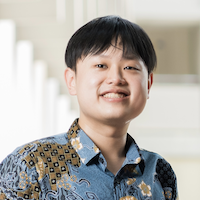
Ryan Kang is a technology entrepreneur, researcher, and TEDx speaker, and serves as Director of UnBound®. His work focuses on artificial intelligence, augmented reality, and immersive digital learning systems that are adopted by leading universities globally to advance the democratization of education in ASEAN, the US, the UK, Australia, and the GCC. He holds a non-executive director role at the ASEAN-Australia Strategic Youth Partnership, where he contributes to initiatives supporting regional development and cross-border collaboration. Ryan is also an active contributor to Asia Society Australia, engaging in discussions around technology, policy, and regional innovation. He is a Fellow of the Royal Academy of Engineering, UK, recognizing his contributions to engineering innovation and leadership. Recognized by Sunway Education Group, his expertise further spans ICT infrastructure development, including 5G ecosystems and smart city public infrastructure.
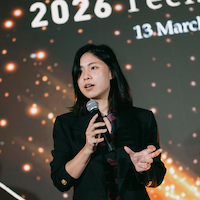
Natalie Loi is Head of Technology at UnBound® Malaysia & Australia. She was recognized with the Gen A Emerging Leader Award at the Melbourne Asia Game Changer Awards 2025, is an Australian High Commission Award winner, and is a Women in Tech advocate. She also received the Innovation Award at the Front & Female Awards 2026 by Tatler Asia and is an international keynote speaker. Natalie serves as a board advisor to the Southeast Asia Research Centre for Digital Technology and Society at Monash University Malaysia. Her work focuses on artificial intelligence, augmented reality, and advanced data systems, driving innovation in smart city development, national digital transformation, and immersive learning platforms deployed across global markets.
TNGlobal INSIDER publishes contributions relevant to entrepreneurship and innovation. You may submit your own original or published contributions subject to editorial discretion.
Featured image: Dynamic Wang on Unsplash