

Over the past five years, Indonesia went from 3.8 million retail equity investors to 26 million. Crypto investors grew from under one million to 19 million over the same period. India, Brazil, the Philippines, and Vietnam are seeing similar patterns. When you step back and look at what’s happening across emerging markets, it’s clear that the next wave of people entering capital markets globally will come from markets just like ours.
What is most interesting is that these new investors look nothing like the ones who came before them.
Starting from a different place
The traditional path into investing assumed a certain kind of person: someone with a brokerage account, a computer, disposable income, and at least some familiarity with financial statements. That profile fit a specific kind of market. It doesn’t fit most of the markets where investor growth is actually happening today.
In Indonesia, the typical new investor is under 30, earns in a local currency that fluctuates against the dollar, and does almost everything on their phone. Many of them didn’t start with equities at all. They started with gold, which has deep cultural trust as a savings vehicle here, or with cryptocurrency, which offered something the traditional banking system didn’t: instant access, low minimums, and a feeling of participation in something global.
We’ve seen this play out at Pluang. When we launched in 2019, we started with digital gold because that’s where trust already existed. Users could invest with as little as Rp10,000. From there, we expanded into crypto, mutual funds, US stocks, and eventually derivatives and options. Now, with the launch of Indonesian equities on our platform, we offer every major asset class in a single app. But the order in which our users adopted these products is what I keep coming back to. It tells a story that’s relevant far beyond Indonesia.
Why the existing playbook doesn’t quite fit
Most wealthtech platforms globally were built for users who already understand diversification, who already have a bank account and a retirement savings wrapper, and are looking to optimise what they have. Products like robo-advisors, automated rebalancing, and tax-loss harvesting solve for sophistication.
But the next 500 million investors aren’t looking for optimization. They’re looking for a starting point.
That’s a different design challenge, and it’s one we think about every day. It means making investing simple enough for someone making their first investment, while building a platform that can grow with them as they become more experienced. It means keeping entry points affordable and offering enough asset classes that they can diversify without needing multiple apps. It also means accepting that many users will explore asset classes in their own order, and designing for that reality rather than against it.
But more than a product design challenge, it is a fundamentally different economic challenge. When your users are starting with less than a dollar, the traditional, VC-subsidized hyper-growth playbook completely breaks down. You cannot acquire a sub-dollar investor through expensive paid marketing channels and expect to build a viable business.
Distribution looks different too. The best way to reach people isn’t always through your own app. Sometimes, it’s embedding your products inside platforms people already use every day, such as ride-hailing apps, e-commerce platforms, and digital wallets. Meeting people where they are, rather than asking them to come to you, has been one of the most effective ways to lower the barrier to that first investment. It’s also why 75 percent of our users come to us organically, driving a customer payback period of under six months. That unit economics model is what made profitability possible.
The real cost of fintech profitability
The global conversation around fintech profitability has become very loud recently, but most of it remains theoretical. Across emerging markets, only a handful of wealthtech platforms have actually crossed the line, and the path there looks nothing like the growth-at-all-costs narrative that dominated the last decade. From a practitioner’s perspective, reaching profitability – which we did in 2025 while growing revenue multiple times over – requires making difficult operational trade-offs. It is about what you choose not to do.
While the broader tech industry was caught up in the hyper-hiring boom of the last few years, we made the deliberate decision to keep our team to a manageable size. Running a 200-person team means you have to, at times, say a repeated “no” to growth initiatives that don’t make immediate unit-economic sense. You have to trade the appeal of a large team for the discipline of operational efficiency.
This operational constraint forces you to be hyper-deliberate about where you automate. For us, that has meant building systems that can handle onboarding at scale, manage compliance across multiple regulators simultaneously, and give users access to market insights, without ever crossing the line into financial advice. The goal is to leverage technology to keep the organization lean and structurally sustainable, not just to build tech for tech’s sake.
Regulation as a foundation, not a friction
One thing we’ve learned building in Indonesia is that regulation, while complex, is actually what makes sustainable growth possible.
Our regulatory environment isn’t simple. Capital markets are supervised by the Financial Services Authority (OJK), while commodities and derivatives fall under a separate regulator (Bappebti). Running a multi-asset platform means holding multiple licenses, maintaining separate legal entities, and navigating compliance requirements that don’t always align with each other.
But that complexity has been valuable. It creates a level of seriousness that protects users who are investing for the first time and filters for platforms that are willing to invest in the infrastructure required to serve them properly. In a market where millions of people are making their first investment, that matters.
When we expanded into the Philippines last year, we chose to go through the Securities and Exchange Commission’s regulatory sandbox rather than looking for a faster route. It’s slower, but it builds the kind of institutional trust that you can’t shortcut. We’ve always believed in taking things step by step, and that applies to how we enter new markets as much as how we build products.
A different kind of opportunity
The global conversation about the future of investing still tends to focus on a narrow set of markets. AI-powered portfolio management for high-net-worth clients, the latest in algorithmic trading, optimizing for users with significant investable assets.
Meanwhile, the fastest-growing investor populations in the world are in markets where someone’s first investment might be less than a dollar. Where the first financial product someone uses could be digital gold rather than a stock. Where financial literacy is being shaped not by courses or content alone, but by the experience of investing itself, even in small amounts.
We believe the platforms that will shape the next chapter of wealth management won’t necessarily be the ones serving the most sophisticated investors. They’ll be the ones that bring the most people into the system for the first time and build the trust to keep them there.
But winning this wave requires more than just a great app. It requires mastering the gritty, unglamorous reality of unit economics at the grassroots level. The future belongs to the platforms that can prove you can serve the next 500 million investors both profitably and sustainably.
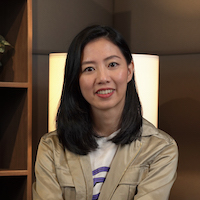
Claudia Kolonas is the co-founder and CEO of Pluang, Southeast Asia’s leading multi-asset investment platform. A Harvard MBA graduate, Claudia’s career began in her family’s agribusiness before her transition into financial services led her to Celebes Capital. There, she spent over a decade spearheading transformative financial projects in Indonesia, including the launch of UOB’s Asset Management arm.
Originally a Molecular Biology scholar with a scholarship for vaccine research at UCLA, Claudia initially intended to pursue a PhD. However, she chose to return to Indonesia, where she recognised a critical gap in financial inclusion. This vision was solidified at Harvard Business School, where she met her future husband and Co-Founder, Richard Chua. Together, they launched Pluang to democratise wealth creation for millions of Indonesians.
Recognised as one of JP Morgan’s “Top 100 Women Business Leaders in Asia-Pacific” and a Tatler “Leader of Tomorrow,” Claudia is a prominent advocate for financial literacy and gender diversity in the tech sector.
TNGlobal INSIDER publishes contributions relevant to entrepreneurship and innovation. You may submit your own original or published contributions subject to editorial discretion.
Featured image: Jakub Żerdzicki on Unsplash
Southeast Asia’s e-commerce problem isn’t growth; It’s keeping up with it