

As digital transformation accelerates across industries, Singapore’s private healthcare sector is facing a critical bottleneck: while medical innovation and digital tools are advancing rapidly, the underlying infrastructure connecting providers, insurers, and patients remains fragmented.
Despite increasing adoption of electronic medical records, telemedicine, and digital claims systems, many core processes—such as referrals, pre-authorization, and care coordination—are still handled through disconnected platforms or manual workflows. Data is often siloed across clinics, hospitals, and insurers, limiting interoperability and real-time visibility into patient journeys.
In an interview with TNGlobal, Singapore-based integrated healthcare platform Foundation Healthcare Holdings (FHH) CEO Liaw Yit Ming stressed that the challenge is both technological and structural. “Many specialists operate as independent practitioners or in small group clinics, valuing clinical autonomy and ownership,” he said.
This results in a highly decentralized ecosystem, with the lack of integrated infrastructure further compounding this issue, according to the executive.

Fragmentation Meets Rising Demand
Singapore’s private healthcare system involves a complex network of general practitioners (GPs), specialists, hospitals, medical centers, and insurers. However, coordination across these stakeholders remains limited.
Administrative processes are often duplicated or handled inefficiently, while the lack of standardized data sharing makes it difficult to track patient outcomes, manage utilization, or optimize costs. In some cases, patients may be directed toward higher-cost treatment settings by default.
At the same time, healthcare demand is rising. Ageing populations, increasing chronic disease prevalence, and higher expectations for quality care are placing additional pressure on both public and private systems, the executive said.
“Misaligned incentives between doctors, medical facilitates, and payors are contributing to over-consumption, over-servicing, and rising healthcare costs in the private sector,” Liaw noted.
Integrated Platforms as Infrastructure
In response, a new class of healthcare players is emerging—those focused on building integrated platforms that connect stakeholders across the entire care continuum.
Foundation Healthcare Holdings is positioning itself within this segment through a model that combines specialist networks, medical centers, and a proprietary technology platform known as AVA™.
The platform functions as a digital infrastructure layer, linking GPs, specialists, insurers, and patients. It digitizes and standardizes workflows such as appointment bookings, referrals, pre-authorization, and claims processing.
By enabling real-time data sharing and coordination, the platform aims to reduce administrative friction while improving transparency and accountability across the system.
For providers, this translates into more efficient operations and better clinical decision-making. For insurers, it offers enhanced visibility into utilization patterns and cost drivers. For patients, it simplifies access to care and creates a more seamless healthcare experience.
Moving Care to Lower-Cost Settings
Another key shift reshaping private healthcare is the growing role of day surgery centers and outpatient facilities, Liaw stressed.
Many procedures that have traditionally been performed in hospitals can be safely conducted in day surgery settings, without the need for overnight stays or high-acuity infrastructure. These centers typically operate with leaner cost structures, as they do not require emergency departments or inpatient wards.
This transition allows hospitals to focus on more serious cases while expanding overall system capacity. It also delivers cost efficiencies for both patients and insurers.
When integrated within a broader platform, day surgery centers can further enhance coordination across the patient journey, from initial consultation to post-procedure follow-up.
Asia’s Healthcare Systems at a Turning Point
Across Asia, private healthcare ecosystems are undergoing a broader transformation. Fragmented, provider-led models are gradually giving way to more coordinated, system-oriented approaches, according to Liaw.
Demographic shifts are a major driver. In Singapore, individuals aged 60 and above are projected to make up more than one-fifth of the population by 2030. Similar trends are evident in markets such as Malaysia and Hong Kong, Liaw noted.
Rising healthcare expenditure is adding to the pressure, driven by longer life expectancy, increasing chronic disease burden, and growing demand for high-quality care.
At the same time, insurers are playing a more active role in shaping healthcare delivery, focusing on utilization management and outcomes. Patient expectations are also evolving, with increasing demand for transparency, convenience, and seamless experiences. Together, these factors are accelerating the need for integrated, technology-enabled healthcare solutions.
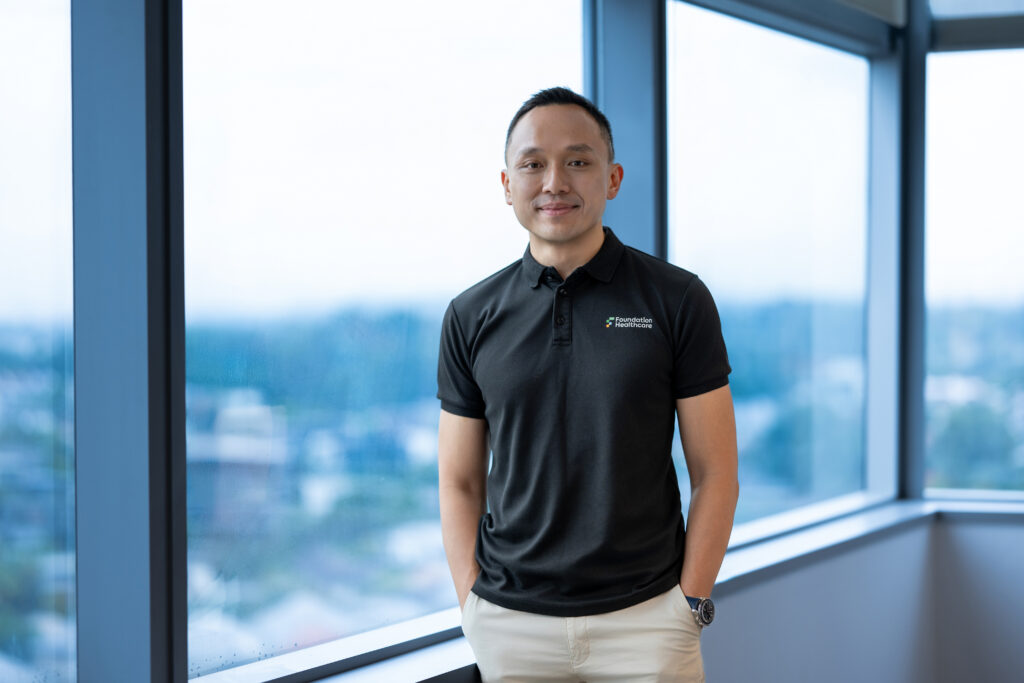
FHH’s growth strategy is centered on expanding across three key verticals: specialist practices, medical centers, and technology, said CEO Liaw Yit Ming.
On the clinical side, FHH is continuing to grow its network of specialists through a combination of selective acquisitions and organic recruitment. At the same time, FHH plans to develop and acquire more medical centers, in order to increase procedural capacity and enable care to be delivered in more efficient, lower-cost settings.
On the technology front, FHH focuses on driving deeper adoption of the AVA™ platform across the ecosystem. As more stakeholders come onto the platform, FHH can enhance integration across workflows, improve visibility into patient journeys, and increase predictability in care delivery.
Beyond Singapore, FHH believes there is strong potential to expand into other markets in the region that face similar structural challenges, such as fragmentation and rising healthcare costs. The approach will be opportunistic, focusing on building partnerships and extending our ecosystem where it makes strategic sense.
“Ultimately, our goal is to build a scalable, integrated platform that can deliver sustainable growth while improving outcomes and affordability across the healthcare system,” Liaw highlighted.
Why AI needs a doctor’s hand to build reliable healthcare technology